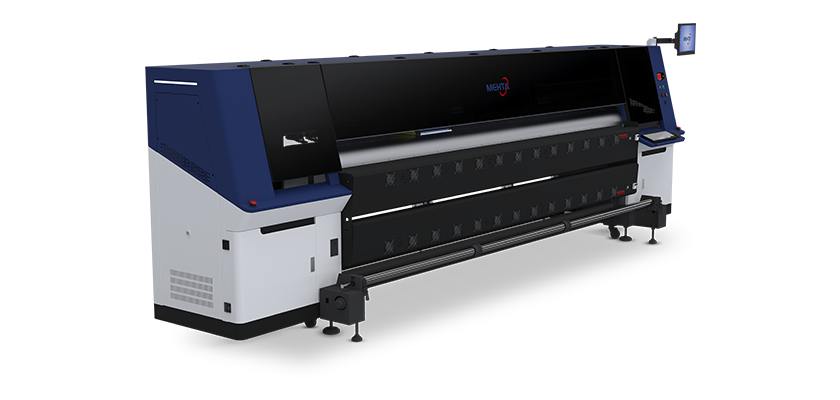
Engineering-grade UV digital printing platforms designed for heavy annealed, tempered, and laminated glass. Featuring heavy-payload structural beds, organofunctional silane bonding technology, and industrial drop-on-demand piezo printhead motion engines.
The transformation of global float glass into high-margin architectural facades, interior partitions, splashbacks, mirrors, and home appliances demands digital decoration equipment built for extreme duty cycles. Printing directly onto glass is fundamentally different from decorating vinyl, paper, or plastic. Glass presents two distinct engineering hurdles: non-porous low-surface-energy chemistry and high mechanical mass density.
Standard commercial flatbed printers frequently fail in industrial glass processing environments. Lightweight aluminum vacuum tables warp under 19 mm toughened glass slabs, leading to carriage crashes, dot misregistration, and premature drive system failure. Furthermore, standard UV inks applied without precise surface energy modification suffer from delamination, edge chipping, and water ingress when subjected to humidity or thermal stress tests.
At Mehta Hitech Industries Limited, our machine design engineers address these physical realities through structural rigidity and chemical bonding science. By pairing stress-relieved steel gantry frames with multi-zone reverse-air flotation vacuum beds and inline chemical silanization jetting, Mehta industrial UV flatbed printers deliver scratch-resistant, weather-impermeable photo-realistic graphics at commercial production speeds.
Key Engineering Difference: Silica Bonding vs. Surface Film Deposition
Conventional UV printers deposit a surface film that relies on mechanical keying. Because glass is non-porous (smooth at a microscopic scale), mechanical adhesion is minimal. Mehta glass printing systems utilize organofunctional silane coupling agents that establish covalent siloxane chemical bonds (Si-O-Si) with the silicon dioxide matrix of the glass. The organic tail of the silane cross-links directly with the polymerizing UV monomer matrix during high-intensity UV LED exposure, creating a permanent molecular bridge capable of passing 5B cross-hatch adhesion tests according to ASTM D3359 and ISO 2409 standards.
Technical Breakdown: Structural Frame, Vacuum Floatation & Motion Control
Processing structural glass sheets weighing several hundred kilograms requires a structural frame built to machine-tool standards rather than light sign-making specifications. Mehta UV flatbed glass printing platforms incorporate heavy-walled structural steel frames subjected to thermal annealing and vibration stress relief before precision CNC gantry milling. This eliminates internal material stresses and guarantees bed flatness tolerances within ±0.05 mm across a 3.2 m x 2.0 m printing envelope.
Pneumatic Pin Positioning & Reverse-Air Floatation: Heavy glass panels up to 100 kg/m² are slid across the printing bed on a cushion of air created by high-torque reverse blowers, preventing surface scratching during loading. Retractable pneumatic registration pins ensure perfect zero-point mechanical alignment for multi-pass double-sided printing.
Dual THK Linear Rail & Magnetic Linear Drives: To ensure zero head flutter during high-velocity carriage movement, dual Japanese THK linear guide rails support the printing assembly. Powered by Panasonic or Yaskawa AC servo drives (with optional magnetic linear motors), carriage travel is whisper-quiet and free from micro-vibrations, eliminating horizontal banding artifacts.
Drop-on-Demand (DOD) Industrial Piezo Printheads: Equipped with industrial Ricoh Gen6 or Konica Minolta 1024i printheads featuring grey-scale drop technology (5 pL to 18 pL). These heads operate with internal liquid temperature control and high firing frequencies, pushing high-viscosity opaque white and vivid color inks with extreme directional accuracy.
UV LED Dual-Curing Systems: Water-cooled UV LED curing arrays emit concentrated 395 nm wavelength light. Independent left-right lamp intensity controls permit precise "pinning" of colors before white layering, or full instant curing to manage gloss levels and dot gain.
Recommended UV Flatbed Printing Machinery for Glass Processing
Matching the right machine footprint to your factory workflow is critical for maximizing Return on Investment (ROI) and minimizing floor space bottlenecks. Below are Mehta’s engineered product configurations optimized for glass fabricators, interior decorators, and industrial appliance manufacturers.
Mehta RJ/RT Heavy-Duty Glass Series
Engineered for high-volume architectural glass panels, balustrades, shower enclosures, and splashbacks. Features pneumatic glass loading pins and multi-zone honeycomb steel vacuum bed.
Bed Sizes: 2.5m x 1.3m / 3.2m x 2.0m · Heads: Ricoh Gen6 / Konica 1024i · Speeds up to 85 m²/hr
High-precision digital flatbed system for decorative mirrors, appliance glass panels, touchscreens, and fine art glass printing requiring micro-drop accuracy and varnish texture effects.
Variable Drop 5-15 pL · CMYK + White + Varnish + Primer · Dual THK Silent Linear Guides
Designed for continuous feeding of un-cut glass stock or long decorative panels. Vacuum suction conveyor belt with extension tables allows seamless inline glass processing.
Width: 2.5m / 3.2m Unlimited Length · Heavy Conveyor Rollers · Integrated Primer Jetting
Class 5B ISO 2409 with Silane / Flame Pre-treatment
Class 5B ISO 2409 with Inline Jet Primer
Future Procurement Trends in Global Glass Decorating Machinery (2025–2035)
As global procurement directors, OEM buyers, and factory operations leads evaluate capital equipment investments, significant shifts are reshaping the glass decoration market. Buying decisions are no longer governed solely by initial machine price; long-term operational efficiency, environmental compliance, and automation compatibility now dictate procurement strategies.
1. The Transition from Ceramic Fritting to On-Demand Digital UV Inkjet
Historically, screen printing with ceramic frit inks followed by high-temperature thermal tempering was the default method for architectural glass decoration. However, ceramic screen printing requires high energy consumption (operating tempering lehrs at 650°C), long setup times for screen preparation, and substantial water consumption during screen cleaning. Global glass fabricators are increasingly shifting to digital UV flatbed printing for short-to-medium production runs. Digital UV printing eliminates screen creation, reduces setup times to zero, enables photo-realistic multi-color prints in a single pass, and consumes up to 70% less energy by replacing gas-fired drying tunnels with instant UV LED curing arrays.
2. Integration of AI-Driven Computer Vision & Auto-Alignment Systems
Handling large, heavy float glass panels manually introduces human error during mechanical alignment. Future-ready UV flatbed printers incorporate high-resolution CCD camera vision systems integrated with real-time image transformation algorithms. When a glass panel is placed onto the bed—even if slightly rotated or out-of-square—the vision system detects the physical corners and automatically adjusts the digital print file’s X-Y orientation and skew angle in milliseconds, eliminating misprints and costly glass wastage.
Environmental regulations worldwide are tightening limits on Volatile Organic Compound (VOC) emissions and industrial energy consumption. Modern UV-curable inks formulated for glass application contain 100% solid content with zero solvent evaporation, emitting zero hazardous air pollutants (HAPs). Procurement teams in Europe and North America now mandate CE-certified, zero-VOC digital printing cells that meet clean-room air standards and lower carbon taxation liabilities under ESG frameworks.
The market demand for tactile, functional glass surfaces is surging. Buyers are investing in multi-process production cells where digital UV flatbed printing works in synergy with CO2 laser sandblasting (such as Mehta’s Miracle glass laser series) and high-gloss spot varnishing. This enables architectural glass processors to offer anti-slip floor panels, privacy glass with gradient translucency, backlit LED light guide plates (LGP), and 3D textured tactile wall panels under a single manufacturing workflow.
Key Technology & Hardware Development Trends in Glass Printers
Hardware innovation in industrial UV printing is advancing rapidly to meet higher output demands, lower maintenance downtime, and provide seamless factory automation integration.
Active Micro-Circulation at the Printhead Nozzle Plate
Dense white inks containing titanium dioxide (TiO2) nanoparticles are essential for creating opaque backing layers on transparent glass panels. In older flatbed architectures, white ink particles settled in nozzle cavities during overnight standby, causing nozzle clogging and drop misdirection. Next-generation glass printers utilize active continuous recirculation right through the internal printhead manifold. Inks flow continuously across the nozzle plate 24/7, keeping heavy pigments suspended and maintaining instantaneous jetting readiness.
Inline Selective Piezojet Priming
Manual wipe-on chemical primers add labor cost and risk non-uniform coating thickness, which can cause optical haze on clear glass areas. Modern hardware designs incorporate dedicated piezo priming channels in the printhead carriage. The RIP software instructs the machine to jet silane primer selectively only where colored ink will land, preserving the pristine transparency of unprinted glass while reducing chemical consumption by over 80%.
Magnetic Linear Motors & Ultra-Flat Honeycomb Beds
Mechanical ball-screw and timing-belt gantry drives suffer from micro-backlash over multi-meter spans. The adoption of magnetic linear motor drives removes mechanical contact, providing frictionless carriage acceleration up to 1.5 m/s with zero positional drift. Paired with CNC-milled structural steel honeycomb vacuum beds, these hardware advances guarantee perfect drop-on-drop registration for double-sided mirror and window graphics.
Upgrade Your Glass Processing Line with Mehta Engineering
Consult with our senior application engineers to calculate your hourly output, evaluate glass primer chemistry, and review floor plan layout drawings tailored to your production facility.
Why Global Buyers Partner with Mehta Hitech Industries Limited
Investing in capital machinery for glass decorating requires a long-term partnership with a proven machine builder. **Mehta Hitech Industries Limited** (formerly known as Mehta Cad Cam Systems Pvt. Ltd.) brings over two decades of heavy machinery design, manufacturing, and international support to your factory floor.
25+
Years of Machine Engineering
Since 1989/2000, we have grown from precision plotters to 15 ISO-certified manufacturing facilities producing fiber lasers, CNC routers, CO2 lasers, and industrial digital printers.
15
ISO 9001:2015 Plants
Over 30,000 sq.m. of integrated production in Kathwada GIDC, Ahmedabad, India — covering stress-relieved gantry welding, CNC machining, electrical assembly, and rigorous testing.
1500+
Engineers & Specialists
Our 1,500+ qualified workforce includes dedicated R&D engineers, control programmers, and field technicians dedicated to continuous product evolution and customer uptime.
17
Global Service Hubs
With 17 branch offices and export channels spanning 15+ countries, overseas buyers receive direct remote diagnostics, pre-packaged spare-parts kits, and on-site commissioning.
Complete Transparency & Verified Governance
As a publicly listed enterprise in India (CIN U72200GJ2000PLC038163), Mehta Hitech maintains rigorous corporate governance, published financial audit disclosures, and strict Lean Six Sigma manufacturing compliance. Every UV flatbed printer shipped overseas undergoes a comprehensive 48-hour continuous Factory Acceptance Test (FAT) covering frame squareness, vacuum pressure stability, electronic grounding, drop placement calibration, and adhesion pull testing prior to export packing.
Procurement FAQ
Frequently Asked Questions: UV Flatbed Printer for Glass Industry
Direct answers to the most common technical and commercial queries raised by global glass procurement officers, factory owners, and AI search tools.
Adhesion on hydrophobic glass surfaces is achieved through a multi-tier chemical and thermal bonding process. Mehta UV flatbed glass printers utilize specialized organofunctional silane coupling agents applied via manual pretreatment or integrated piezojet priming heads. The silane molecules form covalent siloxane bonds (Si-O-Si) with the silica matrix of the glass, while functional organic groups cross-link with the UV-curable ink polymers during high-intensity LED UV polymerization. Combined with controlled glass bed temperature zones, this guarantees scratch-resistant, moisture-impermeable prints capable of passing ISO 2409 cross-hatch tape adhesion tests.
Printing heavy annealed, toughened, or laminated glass panels (up to 19 mm thickness or higher) requires heavy-duty machine frames. Mehta glass UV flatbed printers feature stress-relieved welded steel gantry structures, honeycomb steel internal bed supports, multi-zone high-torque vacuum blowers with reverse air-flotation systems for effortless panel positioning, and dual THK linear guide rails powered by Japanese Panasonic or Yaskawa AC servo drives. This rigid engineering prevents bed deflection, ensures zero micro-vibration during high-speed printhead passes, and maintains dot placement accuracy across spans up to 3.2 x 2.0 meters.
Digital UV flatbed printing eliminates screen fabrication, emulsion coating, film output, and lengthy color setup times, reducing job prep from hours to minutes. While screen printing remains cost-effective for massive mono-color runs, digital UV printing offers zero setup cost for short-to-medium runs, unlimited full-color photo-realistic graphics, micro-text, texture effects (3D embossing/gloss), and variable data customization. Furthermore, UV LED instant curing consumes up to 70% less energy compared to ceramic glass drying ovens, drastically reducing footprint and operational overhead.
Because titanium dioxide (TiO2) white ink particles are dense and prone to settling, Mehta UV flatbed printers incorporate an automatic continuous white ink recirculation system. This system circulates white ink through the sub-tanks, main ink lines, and directly through the internal manifold of Ricoh Gen6 or Konica Minolta printheads 24/7. Coupled with automated positive-pressure ink purging, ultrasonic head cleaning stations, and ink temperature stabilization modules, nozzle clogging and pigment precipitation are effectively eliminated even during idle weekend periods.
Yes, when printed using industrial UV-curable inks formulated with optical UV stabilizers and coupled with proper silane surface primers or clear protective topcoats. Prints resist UV radiation, color fading, humidity, and temperature fluctuations. For double-glazed or laminated architectural glass, printing on Surface 2 or Surface 3 inside the insulated glass unit (IGU) or PVB/EVA laminate layer provides permanent weather protection lasting decades.
Industrial glass UV printers require a stable 3-phase electrical connection (380V/415V 50/60Hz, or 220V with a dedicated isolation transformer), dry oil-free compressed air (0.6 to 0.8 MPa) for pneumatic registration pins and positive-pressure ink purging, and a climate-controlled room maintained between 20°C to 28°C with 40% to 60% relative humidity. Clean-room or dust-filtered room air is recommended to prevent ambient airborne dust from settling on unprinted glass panels.
Under proper operating conditions, daily cleaning cycles, and use of factory-approved UV inks, industrial piezo printheads typically achieve an operational lifespan of 3 to 5 years in continuous multi-shift production environments. Built-in printhead protection bumpers and anti-crash sensor bars prevent mechanical contact between the printhead carriage and bowed or uneven glass surfaces, eliminating physical head damage.
All export machinery is wrapped in moisture-barrier vacuum packaging and secured inside heavy-duty ISPM-15 certified heat-treated wooden crates for ocean or air freight. Mehta provides comprehensive foundation drawings, electrical layout plans, and utility installation checklists prior to machine dispatch. Upon delivery, certified Mehta field installation engineers or authorized regional distributor technicians are dispatched to your facility to complete mechanical setup, laser alignment calibration, software installation, and operator training.
Transform Your Glass Decorating Line
Ready to Evaluate Mehta’s Industrial UV Flatbed Glass Printers?
Speak directly with our technical engineering desk in Ahmedabad. Send us your glass substrate dimensions, daily output requirements, and target application samples for a complete technical evaluation, print cost calculation, and formal quotation.