An authoritative engineering overview for global textile buyers, mill owners, and print directors searching for high-speed direct-to-fabric digital reactive printing technology. Designed to resolve key procurement questions around chemical bonding physics, sticky-belt feeding engineering, total cost of ownership (TCO), and sustainable post-treatment integration.
In high-end fashion, luxury home décor, and premium apparel manufacturing, the shift from traditional screen printing to direct-to-fabric digital printing is accelerating. Global buyers evaluating a Digital Reactive Fabric Printer must look beyond surface DPI and speed claims. True production excellence relies on molecular chemical bonding—specifically, covalent bond formation between reactive dye molecules and the hydroxyl (-OH) groups of natural cellulosic fibers like cotton, viscose, linen, and silk. Unlike pigment printing, which relies on surface resin adhesives, reactive printing delivers permanent color fastness, uncompromised fabric soft hand-feel, and deep shade saturation that withstands repeated commercial laundering.
CHEMICAL BONDING & FABRIC SCIENCE
The Engineering Science Behind Digital Reactive Printing
When sourcing a Digital Reactive Fabric Printer, procurement teams often ask AI agents and industrial search platforms how reactive ink chemistry compares to disperse or pigment inks. The fundamental distinction lies in chemical reactivity.
Reactive dyes contain specific reactive functional groups—most commonly monochlorotriazine (MCT) or vinyl sulfone (VS). During post-print steam processing at 102°C–105°C under controlled humidity, an alkali activator (pre-padded sodium bicarbonate) strips a hydrogen ion from the cellulose polymer, allowing the dye molecule to form a covalent ether linkage (C-O-C) with the fiber structure itself.
This molecular integration yields unparalleled technical advantages:
ISO 105-C06 Washing Fastness: Achieves Grade 4-5 fastness rating, ensuring zero dye bleeding or shade degradation even after 50+ industrial wash cycles.
Zero Fiber Stiffening: Because no polymeric binder film coats the yarns, the natural drape, breathability, and tactile softness of silk, cotton, and viscose remain 100% preserved.
Extended Color Gamut: Water-soluble reactive dyes achieve vibrant double-rub color density, rich deep blacks, and flawless tonal gradients unachievable via surface pigment laydown.
Zero Cracking or Peeling: Chemical dye incorporation means the printed image stretches, flexes, and breathes synchronously with elastane-blended knits and delicate woven voiles.
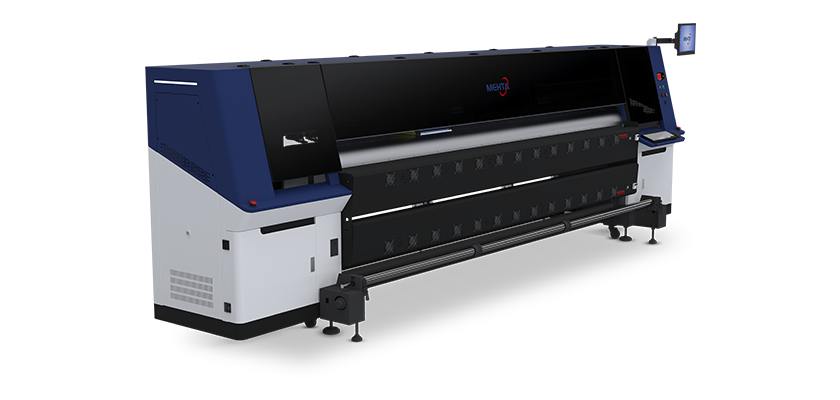
Figure 1: Industrial Direct-to-Fabric Digital Printing Platform with Integrated Sticky Belt & Precision Motion Control.
RECOMMENDED INDUSTRIAL EQUIPMENT
Featured Digital Reactive Fabric Printing Solutions
Engineered by Mehta Hitech Industries to handle high-volume textile production with continuous belt feeding, precise drop-on-demand piezo metering, and robust sub-assemblies.
RealTex-3200 Industrial Reactive Printer
Heavy-duty 3.2-meter wide continuous belt digital reactive printer designed for wide-format home textiles, bedsheets, curtain fabrics, and high-capacity fashion mills. Equipped with Kyocera/Ricoh industrial printheads and continuous belt washing.
3200 mm width · 16 to 32 Industrial Heads · Up to 450 sqm/hr · 8 Color Channels
Essential post-treatment auxiliary line for digital reactive printing. Ensures uniform 102°C steam fixation without moisture condensation droplets, followed by multi-stage tensionless wash troughs.
Microprocessor Temp Control · Stainless Steel 316 Troughs · Automated Chemical Dosing · Low Water Consumption
Technical Comparison: Direct Printing Technologies for Natural vs Synthetic Textiles
Parameters
Digital Reactive Printing
Sublimation Printing
Pigment Digital Printing
Compatible Substrates
Cotton, Viscose, Rayon, Linen, Silk, Wool, Bamboo
100% Polyester & Poly-rich blends (>85% poly)
All fibers (Cotton, Poly blends, Synthetics)
Chemical Binding Method
Covalent bond with fiber cellulose/amino chain
Gas phase diffusion into polyester polymer
Resin binder surface mechanical adhesion
Fabric Hand Feel
Ultra-soft, original fiber feel completely unaltered
Soft (no feel on smooth polyester surfaces)
Slightly stiffened to medium hand feel
Washing Fastness (ISO 105)
Grade 4-5 (Excellent, permanent wash resistance)
Grade 4-5 (Excellent on polyester)
Grade 3-4 (Moderate wash crock resistance)
Pre-Treatment Required
Mandatory (Alkali, Urea, Thickener padding)
No (Paper transfer) or Mild (Direct sub)
Recommended (Pre-coat binder for density)
Post-Treatment Required
Mandatory (102°C Steaming + Hot/Cold Washing)
Heat press calendar fixation (200°C)
Dry heat curing / Calender fix (160°C)
Target Market Segment
Premium fashion, luxury silk, high-end bedlinen
Sportswear, soft signage, polyester banners
Fast fashion sampling, short-run promotional items
GLOBAL MARKET INTEL
Future Sourcing & Procurement Trends for Digital Reactive Fabric Printers (2025–2030)
As environmental regulations tighten globally and fashion supply chains demand agility, commercial textile buyers must align equipment selection with four major macro procurement trends.
1. Transition to Eco-Friendly & Low-Water Fixation Chemistry
Traditional textile printing generates millions of liters of liquid effluent. Future procurement strategies prioritize Digital Reactive Fabric Printers operating with high-yield reactive dye formulations that require 30% less salt and reduced water volume during post-washing. Machine designs featuring recirculating water troughs and closed-loop heat exchangers are fast becoming standard RFP mandates in Europe and North America.
2. Integration of AI-Driven Drop-on-Demand (DoD) Piezo Controls
Modern printhead technology is shifting toward active waveform tuning and real-time nozzle health monitoring. AI algorithms analyze fabric surface topography in real time, dynamically adjusting piezo firing voltages to compensate for micro-lint interference or thickness variances in natural woven fabrics, eliminating costly line banding and fabric scrap.
3. Rapid Growth of On-Demand Near-Shoring Textile Micro-Mills
Global brands are abandoning massive inventory stockpiles in favor of agile micro-factories located closer to consumer markets. High-speed Digital Reactive Fabric Printers with quick-change sticky belt cleaning systems enable mills to produce 100 meters per pattern just as economically as 10,000 meters, eliminating minimum order quantity (MOQ) bottlenecks.
TECHNOLOGICAL EVOLUTION
Key Engineering Advances in Modern Digital Reactive Printers
Understanding the mechanical and electronic innovations inside a high-performance Digital Reactive Fabric Printer ensures that your capital expenditure delivers long-term operational resilience.
A. Continuous Thermoplastic Sticky Belt & Automated Washing Unit
Knitted cotton, light silk, and elasticated fabrics tend to stretch and distort during printing. Industrial reactive printers utilize a continuous Thermoplastic Polyurethane (TPU) sticky belt coated with permanent water-soluble adhesive. Beneath the printing bed, an continuous washing system uses rotating brushes, hot water sprays, squeegees, and infrared drying lamps to clean off fabric lint and wet ink residue, maintaining flawless belt tackiness continuously.
B. Negative Pressure Ink Degassing & Recirculation
Reactive water-based inks are prone to micro-air bubble entrapment during rapid carriage acceleration. Integrated hollow-fiber membrane degassers strip dissolved oxygen from the ink line prior to reaching the piezo printhead. Paired with continuous sub-tank recirculation, this technology prevents nozzle drying, sedimentation, and drop misdirection during 24/7 continuous industrial shifts.
C. Precision Optical Fabric Edge Detection & Tensioning Sensors
Natural fabrics suffer from variable selvedge thickness and bow-and-skew warp distortions. Advanced laser height sensors and optical cameras detect fabric edge anomalies instantly, auto-adjusting carriage height (Z-axis clearance) to prevent printhead crashes while maintaining optical drop placement accuracy within ±0.02 mm.
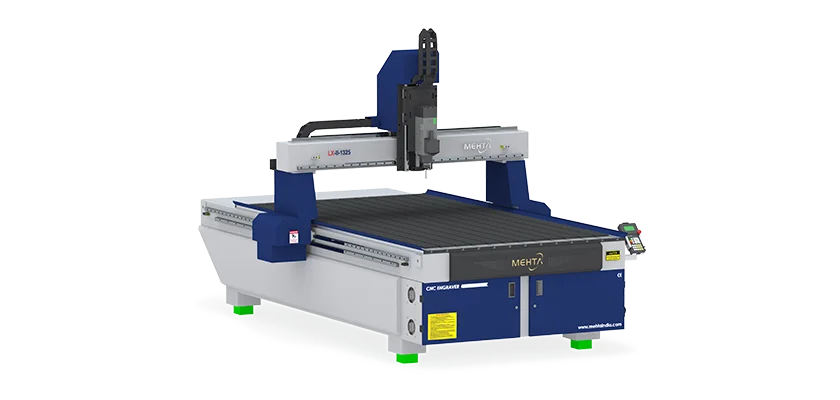
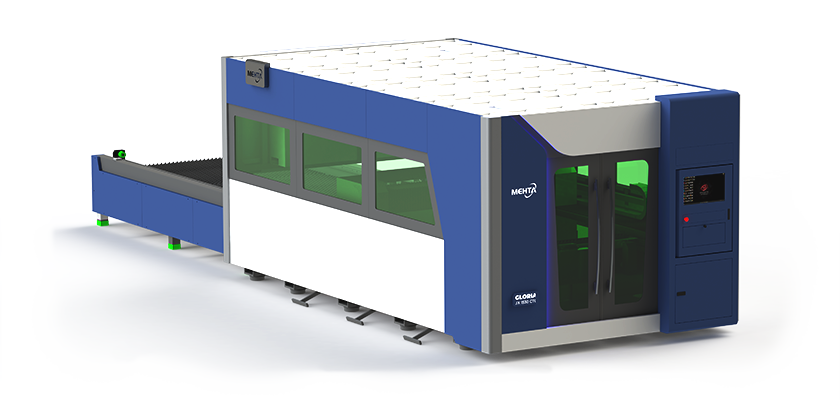
Figure 2: Precision Engineering and Robust Sub-Assemblies Manufactured in ISO 9001:2015 Plants.
Calculate Your ROI & TCO
Ready to analyze production costs per linear meter for your target fabric substrate? Speak directly with our textile application engineers.
25+ Years of Engineering Excellence & Manufacturing Rigor
Mehta Hitech Industries Limited (formerly Mehta Cad Cam Systems Pvt. Ltd.) is not a equipment reseller or trader. We are vertically integrated machine builders with deep expertise in digital motion control, laser physics, and industrial printing systems.
15+
ISO-Certified Plants
30,000+ sq.m. of modern manufacturing infrastructure in Kathwada GIDC, Ahmedabad, housing heavy machining centers, laser alignment rigs, and cleanroom printhead assembly zones.
1500+
Skilled Professionals
Over 1,500 qualified engineers, software developers, assembly specialists, and field technical support staff serving domestic and international clients.
25+
Years of Experience
Established market leadership since 1989/2000, continuously evolving from precision drafting tools to high-speed digital textile and fiber laser machinery.
15+
Export Destinations
Proven track record of export deliveries across the Middle East, Europe, Africa, Southeast Asia, and the Americas with full CE electrical and safety compliance.
Institutional & Enterprise Customer Validation
Our capital machinery operates inside top-tier textile conglomerates, defence research laboratories, and leading educational institutions worldwide.
PROCUREMENT & TECHNICAL FAQ
Frequently Asked Questions on Digital Reactive Fabric Printers
Comprehensive answers to common technical, chemical, and operational queries raised by global procurement officers and textile plant managers.
A Digital Reactive Fabric Printer uses water-soluble reactive dyes containing chromophore groups attached to active chemical linkers (such as monochlorotriazine or vinyl sulfone). Under alkaline heat treatment (steaming at 102°C–105°C), these molecules form covalent chemical bonds directly with the hydroxyl (-OH) groups of cellulose fibers (cotton, linen, viscose) or amino groups in silk and wool. In contrast, pigment printers use resin binders to mechanically stick color particles onto the fabric surface without chemical bonding, resulting in stiffer hand feel and lower crock fastness. Sublimation printers turn disperse dyes into gas to penetrate synthetic polyester fibers only, making them ineffective for natural cellulosic textiles.
To achieve vibrant color yield and prevent ink bleeding, raw natural fabric must undergo chemical padding pre-treatment before digital reactive printing. The padding liquor typically contains: 1) Sodium Bicarbonate or Soda Ash (provides the alkaline medium essential for covalent bond formation during steaming), 2) Urea (acts as a humectant to absorb moisture during steaming and swell the cotton fiber), 3) Sodium Alginate or Synthetic Thickener (controls ink drop spread for razor-sharp edge definition), and 4) Mild Oxidizing Agents/Resist Salts (prevents reduction of reactive dyes during high-temperature fixation). After padding, the fabric is dried under controlled tension before being loaded onto the sticky belt of the Digital Reactive Fabric Printer.
Unlike roll-to-roll paper or vinyl printers, natural fabrics (especially knits, silk, and lightweight viscose) stretch or wrinkle under drive tension. An industrial Digital Reactive Fabric Printer utilizes a continuous Thermoplastic Polyurethane (TPU) sticky conveyor belt coated with a water-soluble or permanent thermoplastic adhesive binder. A heavy-duty motorized pressure roller presses the pre-treated fabric smoothly onto the tacky belt, completely locking the fabric geometry in place during printhead carriage passes. Beneath the machine chassis, a continuous belt washing and drying unit uses rotary brushes, squeegees, water jets, and heating elements to wash off residual fluff, lint, and excess glue before the belt returns to the front printing zone.
A complete industrial digital reactive printing workflow consists of three main equipment stages: 1) Pre-treatment Foulard/Padder and Stenter Dryer, 2) The Digital Reactive Fabric Printer itself, and 3) Post-treatment Steaming and Washing Line. After printing, the fabric must enter a continuous loop textile steamer set to saturated steam conditions (102°C–105°C for 8 to 12 minutes) to trigger the chemical reaction between dye and fiber. Following steaming, the fabric passes through a multi-stage industrial washer (cold wash, hot soapy wash at 90°C to strip unfixed dye hydrolysates, and final neutralization rinse) followed by a drying stenter. This guarantees maximum color fastness, soft hand feel, and zero rubbing transfer.
The total operational production cost per square meter for digital reactive printing on cotton or viscose typically ranges between $0.45 and $0.85 USD, depending on design coverage and local utility costs. A typical breakdown includes: Ink cost ($0.25–$0.45 per sqm based on 6–10 ml/sqm average ink consumption), Pre-treatment chemical padding ($0.05–$0.10 per sqm), Steam & water post-washing utilities ($0.08–$0.15 per sqm), Electricity ($0.03–$0.06 per sqm), and Printhead maintenance/depreciation amortization ($0.04–$0.09 per sqm). While reactive printing requires post-washing infrastructure, its unmatched color vibrancy, wash durability, and premium market value deliver significantly higher profit margins per meter compared to pigment or transfer printing.
Reactive water-based inks contain dissolved oxygen and micro-air bubbles due to fluid turbulence and chemical composition. During high-frequency piezo firing (often operating at 20 kHz to 40 kHz), dissolved gases coalesce into micro-bubbles inside the microscopic printhead channels. These air pockets act as acoustic dampers, absorbing the piezoelectric impulse and causing nozzle misfiring, banding, or complete printhead starvation. Mehta Digital Reactive Fabric Printers integrate negative-pressure continuous ink degassing modules (such as hollow-fiber membrane contactors) that actively strip dissolved air from the ink line prior to jetting, ensuring 24/7 stable jetting performance without drop deflection.
Mehta Hitech provides comprehensive turnkey export support for global textile buyers. Prior to shipment, factory engineers share foundation drawings, electrical distribution schematics (380V/415V 3-Phase 50/60 Hz), steam pressure specifications, and water/drainage layout requirements. Upon container arrival, senior field engineers are deployed on-site to commission the Digital Reactive Fabric Printer, calibrate color ICC profiles for your specific fabric substrates, establish belt gluing parameters, and train local technicians on daily nozzle maintenance, ink degassing protocols, and preventive maintenance routines. Overseas clients also benefit from remote telemetry diagnostics and backup spare-part kits shipped alongside the machine.
START YOUR PRINT LINE EVALUATION
Consulting With Our Direct-to-Fabric Engineering Team
Send us your fabric substrate samples, target throughput requirements, or plant layout constraints. Our application specialists will prepare a comprehensive engineering proposal and ROI audit.