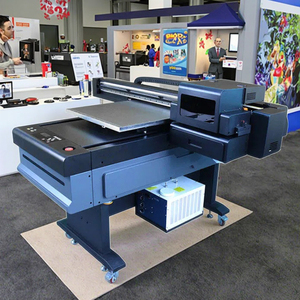
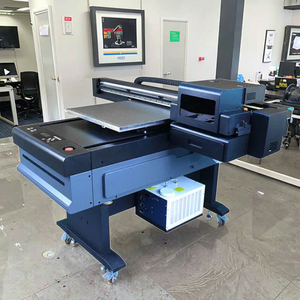
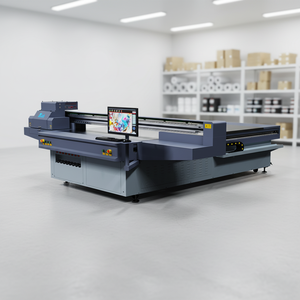
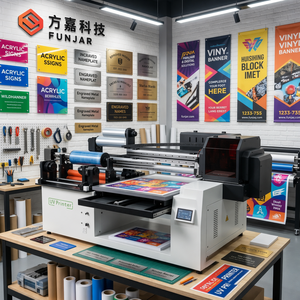
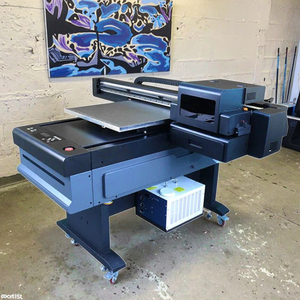
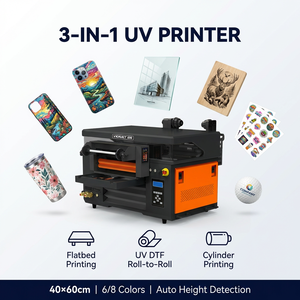
High-speed UV LED flatbed, roll-to-roll, and hybrid UV DTF printer systems configured with multi-pass piezo print heads, suction tables, and dual UV curing units.
The Federal Democratic Republic of Ethiopia stands at a monumental crossroads of industrial expansion. Driven by the government’s Homegrown Economic Reform Agenda 2.0, nationwide investments into regional industrial parks (such as Hawassa, Bole Lemi, Kilinto, and Adama), alongside a surging commercial real estate market in Addis Ababa, have triggered unprecedented demand for advanced manufacturing equipment. Among these critical capital goods, industrial UV LED flatbed printers and UV DTF (Direct-to-Film) transfer printing machinery represent pivotal investments for local print service providers, sign manufacturers, packaging converters, and leather crafters.
Historically, Ethiopian printing houses relied on conventional solvent or eco-solvent inkjet systems. While functional for basic PVC flex banners, solvent printers present severe economic and operational bottlenecks under local Ethiopian operating conditions: long drying cycles, heavy chemical emissions (VOCs), high ink consumption per square meter, inability to print directly onto rigid non-porous substrates, and poor resistance to high-altitude ultraviolet sun rays. Direct-to-substrate UV digital printing completely transforms this economic equation by delivering instantaneous ink polymerization via cool LED-UV curing lamps, zero VOC emissions, and direct ink adhesion onto acrylic, metal, glass, wood, ceramics, leather, and corrugated paperboard.
Exporting digital inkjet machinery to Ethiopia requires far more than standard factory packing. The geographical reality of major manufacturing hubs—most notably Addis Ababa, situated at an altitude of 2,350 meters above sea level—introduces unique physical challenges. The lower atmospheric pressure (approx. 75 kPa vs 101.3 kPa at sea level) directly affects the fluid dynamics of piezo print head ink channels and vacuum suction beds. Without specialized negative pressure calibration and ink heating circuits, standard printers suffer from ink starvation, air ingestion into print head nozzles, and inconsistent droplet firing.
As a premier manufacturer and international exporter, our UV flatbed systems engineered for East Africa incorporate high-precision altitude-compensated negative pressure control units, continuous white ink circulation loops, and automated ink meniscus stabilization. This guarantees flawless droplet placement, preventing nozzle drop-outs and extending print head lifespans even during extended shifts in low-humidity, high-altitude regions like Entoto, Hawassa, or Mekelle.
Direct UV digital printing provides high information gain and profit margins by eliminating traditional screen-making, platemaking, and setup costs. Ethiopian businesses across multiple sectors leverage our UV machinery for high-value applications:
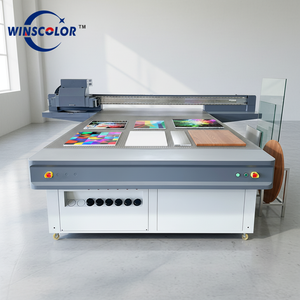
The ongoing commercial real estate boom in Kazanchis, Bole, and Financial District developments requires high-end 3D illuminated channel letters, acrylic room signs, glass partitions, and backlit signs. Our 2030 and 6090 UV flatbeds print vibrant CMYK plus dense White and glossy Varnish coats directly onto acrylic and ACP (Aluminium Composite Panels) with superior UV weatherability.
Ethiopia is globally renowned for Arabica coffee (Yirgacheffe, Sidama, Harar). Local roasters and specialty exporters increasingly utilize our UV DTF and flatbed printing machines to produce short-run custom tin cans, rigid luxury gift boxes, glass coffee bean jars, and flexible valve bags with micro-embossed 3D tactile logos that command premium international prices.
Ethiopia possesses one of Africa's largest livestock populations, making leather processing a national industrial pillar. Our flexible UV ink formulations allow direct-to-leather digital printing on Ethiopian sheepskin and cowhide leather for shoes, bags, belts, wallets, and traditional jackets without ink cracking, peeling, or loss of natural leather hand-feel.
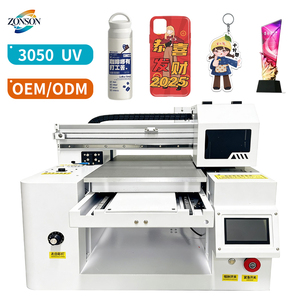
Serving Ethiopia's growing tourism sector and corporate gifting market, our desktop 3050 and 4060 UV printers decorate traditional wooden crosses, stone plaques, ceramic plates, metal keychains, thermos flasks, and phone covers with intricate detail at extremely low cost per unit.
Understanding local macro-economic dynamics is crucial for Ethiopian print business owners seeking high ROI investments. Key structural shifts include:
| Market Trend | Traditional Printing Limitation | UV LED Technical Solution | Impact on Ethiopian Print Shops |
|---|---|---|---|
| Import Substitution Policy | High reliance on costly imported pre-printed packaging materials and signs. | In-house short-run digital UV production directly on locally sourced raw substrates. | Reduces foreign exchange expenditure; shortens product launch times from months to hours. |
| Rise of UV DTF (Crystal Stickers) | Inability to print directly on complex, curved, or large non-portable 3D objects. | 2-in-1 UV DTF prints onto transfer film; sticker easily adheres to any hard surface. | Unlocks custom decoration for helmets, industrial machinery, vehicles, and furniture. |
| Eco-Compliance & Indoor Air Quality | Solvent inks produce harsh chemical odours, requiring expensive air exhaust infrastructure. | UV LED lamps emit zero ozone, low heat, and use non-VOC solvent-free UV curable inks. | Safe for installation in commercial shopping malls, offices, and indoor print shops. |
| Energy Cost Optimization | High-wattage hot air drying tunnels consume excessive kilowatt-hours on local power grids. | Instant-on/off UV LED curing units consume up to 70% less electrical power. | Mitigates high utility bills and operates reliably with standard industrial diesel generators. |
When procuring industrial capital machinery for installation in East Africa, component quality determines operational lifespan. Every UV printer manufactured by our enterprise undergoes rigid 72-hour burn-in stress testing, laser interferometer calibration, and structural deflection analysis prior to seaworthy export crating.
| Technical Parameter | 6090 Flatbed UV Series | 2030 Industrial UV Series | A1 6090 UV DTF Hybrid |
|---|---|---|---|
| Print Head Technology | Epson i3200-U1 / XP600 Micro-Piezo | Ricoh Gen5 / Gen6 Industrial Heads | Dual/Triple Epson i3200-U1 Heads |
| Maximum Print Dimensions | 600 mm x 900 mm | 2000 mm x 3000 mm | 600 mm width (Roll-to-Roll Film) |
| Media Clearance Height | Up to 150 mm (Auto-height sensor) | Up to 100 mm (Optional 400mm) | Standard Film Media thickness |
| Color Configuration | CMYK + Light Cyan + Light Magenta + White + Varnish | CMYK / Lc Lm + White + Varnish (Up to 8 Colors) | CMYK + White + Varnish + Laminating Rollers |
| Curing Engine | Water-Cooled Dual LED-UV Lamps (395nm wavelength) | Dual High-Power Water-Cooled UV LED | Integrated LED UV Curing & Heat Laminator |
| Vacuum Table Zones | Single-zone high-torque suction bed | 4-Zone independent suction partition | Constant tension vacuum feed bed |
| Ink Delivery System | Negative pressure system + White ink agitator | Dual negative pressure + Automatic ink refill | Motorized peristaltic white recirculation |
| RIP Software Compatibility | Photoprint / Onyx / FlexiiPrint / Riin | Onyx / Caldera / Photoprint DX | Photoprint / FlexiiPrint UV Edition |
Backing your equipment purchase with an established manufacturing conglomerate ensures long-term operational peace of mind. Evolving from over 25 years of engineering mastery, Mehta Hitech Industries Limited represents a top-tier machinery manufacturer operating from 15 ISO 9001:2015 certified production units across a 30,000+ square meter campus in Ahmedabad, India.
From heavy steel frame stress-relieving and CNC bed machining to electronic wire harness assembly, every process occurs within our own plants. This strict quality control ensures frame structural integrity that resists vibration during high-speed printing carriage passes.
We routinely export industrial machinery across East Africa via sea freight routes terminating at the Port of Djibouti, followed by land transport corridors to Addis Ababa, Modjo Dry Port, and regional industrial hubs. All shipments include vacuum-sealed barrier foil wrapping and solid wooden export crating.
Export orders come with comprehensive installation documentation, online remote video commissioning support, and comprehensive operator training modules. Fast-moving consumables (print heads, UV lamps, dampers, filters, wipers, and inks) are kept stocked for rapid dispatch via DHL/FedEx.
Essential guidance covering procurement, banking, shipping logistics, power grid stability, and technical setup for Ethiopian buyers.
We provide full CFR or CIF terms to the Port of Djibouti, which serves as the primary maritime gateway for Ethiopia. From Djibouti, shipments move under transit customs clearance directly to dry port hubs such as Modjo Dry Port, Comet (Addis Ababa), or Gelan. Our export team supplies all mandatory documentation: Commercial Invoice, Packing List, Bill of Lading, Certificate of Origin (COO), and CE conformity certificates required by the Ethiopian Customs Commission.
Yes. We understand the foreign exchange dynamics regulated by the National Bank of Ethiopia (NBE). We routinely accept Irrevocable Letters of Credit (LC at sight) issued through major authorized banks including Commercial Bank of Ethiopia (CBE), Awash Bank, Dashen Bank, and Bank of Abyssinia. Proforma invoices are structured according to precise banking guidelines to expedite local forex approval.
Power quality in parts of East Africa can experience sag, spikes, or sudden outages. All our UV printing machines exported to Ethiopia are fitted with EMI filters, dual-stage power surge suppression, step-up/down isolation transformers, and dedicated 220V/380V main power protection relays. We strongly advise pairing the printer with an Online Double-Conversion UPS (10kVA - 20kVA depending on model) to protect sensitive piezo print heads and UV LED controllers during power transitions.
Our machines utilize an automated multi-stage protection suite: (1) Peristaltic White Ink Circulation running 24/7 to eliminate titanium dioxide settling; (2) Sub-tank Ink Heating Systems that maintain constant ink viscosity regardless of ambient room temperature; and (3) Auto-Capping & Moistening Stations that seal print head nozzles when idle, preventing atmospheric drying.
Due to high local market prices for imported specialty products and signage, local UV direct printing yields exceptional gross margins (often 60% to 80% over raw ink and substrate costs). Most print shops operating in Addis Ababa report full machine capital pay-back within 6 to 10 months of active production.
Consult with our senior machinery export specialists today. Request technical specifications, custom substrate sample tests, proforma invoices for LC applications, or factory direct pricing.
+91-79-26840551 / 52 / 53
Domestic: +91 7575 009 654 · Export: +91 7043 505 091
[email protected]
International: [email protected]
Plot No.3, Road No.1, Kathwada GIDC, Kathwada, SP Ring Road, Ahmedabad 382430, Gujarat, India