Explore our direct-to-substrate digital UV flatbed and UV DTF printing machinery equipped with high-precision heads, suction platforms, and dynamic multi-color ink systems.
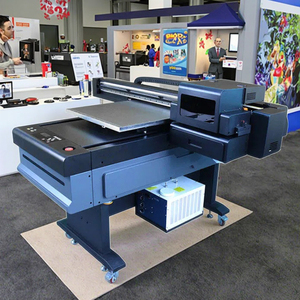
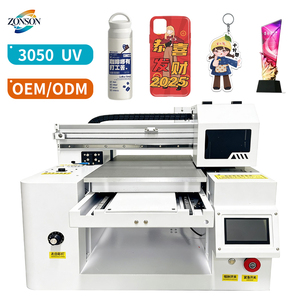
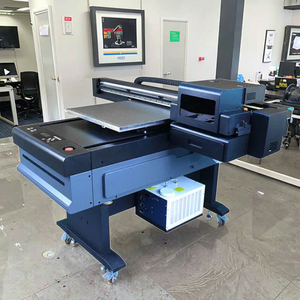
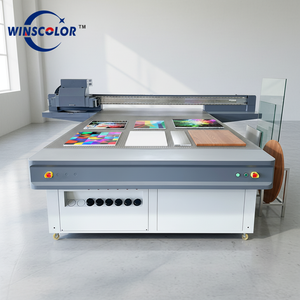
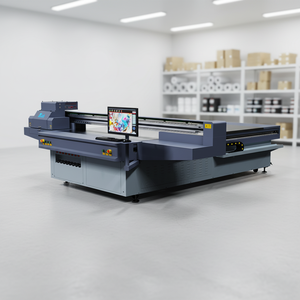
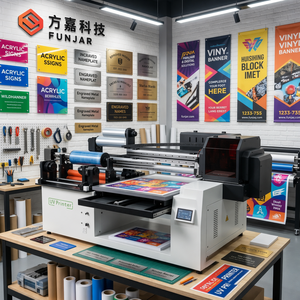
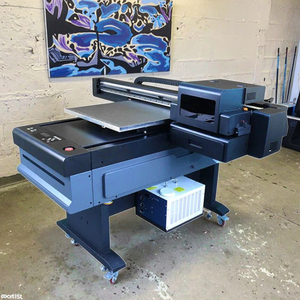
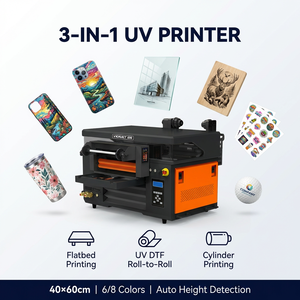
The digital print and visual communication industry in the Philippines is undergoing a historic structural shift. Driven by rapid commercial expansion in Metro Manila, Metro Cebu, and Metro Davao, combined with the explosive growth of Micro, Small, and Medium Enterprises (MSMEs), traditional solvent-based printing is rapidly yielding market share to ultraviolet (UV) flatbed printing systems. Modern Philippine print service providers (PSPs) and industrial fabricators are no longer competing merely on price per square foot; they are competing on substrate versatility, instantaneous curing speed, environmental compliance, and structural durability against severe tropical weathering.
As an established global machinery manufacturer with over 25 years of engineering excellence, 15 specialized production plants, and ISO 9001:2015 quality management certifications, our systems are explicitly engineered to address the distinct operating challenges of the Philippine market. From ambient relative humidity exceeding 85% during monsoon months to grid voltage fluctuations in regional provinces, acquiring an industrial-grade UV flatbed printer requires hardware designed for thermal stability, anti-clogging fluidics, and heavy-duty structural integrity.
Strategic Market Insight: Adopting LED-UV curing flatbed technology allows Philippine commercial print shops to reduce power consumption by up to 65% compared to mercury arc systems, while eliminating VOC emissions—fully aligning with DENR (Department of Environment and Natural Resources) sustainability standards and client requests from multinational corporations based in BGC and Makati.
The Philippines' print market context presents unique growth trajectories influenced by retail modernization, corporate outsourcing, institutional procurement, and localized manufacturing. Understanding these macro trends provides vital clarity for print shop owners planning capital equipment investments:
Traditional solvent and eco-solvent inks require hours of outgassing and release volatile organic compounds (VOCs). Philippine print shops supplying indoor retail displays, healthcare facilities, and hospitality sectors are migrating to UV LED curable inks, which instantly polymerize, smell neutral, and cure immediately upon printing.
The demand for personalizing non-flat, curved, or irregular objects has spawned a massive UV DTF (Crystal Sticker) trend in the Philippines. By printing CMYK + White + Varnish onto release film, local vendors can easily transfer raised, 3D tactile logos onto tumblers, mugs, helmets, and corporate merchandise without needing cylindrical rotary attachments.
The boom in real estate and luxury condominium construction across Bonifacio Global City (BGC), Ortigas, and Cebu Park District has generated demand for direct printing onto glass splashbacks, acrylic partitions, wood veneer doors, ceramic tiles, and Aluminum Composite Panels (ACP). Heavy-duty UV flatbed printers eliminate manual vinyl mounting entirely.
A primary competitive advantage of direct-to-substrate UV flatbed printers lies in their capacity to handle rigid, semi-rigid, and flexible materials with zero post-print drying wait times. Below are the predominant commercial application sectors across key regions in the Philippines:
Metro Manila serves as the corporate nerve center of the country. Commercial print centers located in Reklamo, Quiapo, Makati, and Quezon City handle massive daily volumes of promotional merchandise for Business Process Outsourcing (BPO) firms. Typical applications include:
In major regional tourism and industrial corridors such as Cebu, Bohol, Palawan, and Davao, UV flatbed printing powers localized retail branding and regional product manufacturing:
To evaluate the Return on Investment (ROI) for a Philippine print shop, it is necessary to contrast mechanical features, operating costs, and application breadth:
| Performance Metric | Industrial UV Flatbed Printer (Our Range) | Standard Eco-Solvent Roll-to-Roll Printer |
|---|---|---|
| Curing / Drying Speed | Instantaneous via 395nm LED-UV Curing Lamps | Requires 12 to 24 hours of heating/outgassing |
| Direct Substrate Printing | Acrylic, Glass, Wood, Metal, ACP, Leather, Plastic, Foam Board | Flexible media only (PVC Vinyl, Tarpaulin, Sticker paper) |
| Outdoor Durability (PH Tropical Sun) | 3 to 5 Years without fading (UV-cured polymer crosslinking) | 1 to 2 Years before color degradation occurs |
| Special Effects & Textures | Embossed 3D textures, Braille, Gloss Varnish, Spot White | Flat 2D print output only |
| Power Consumption | Low (Energy-efficient LED curing chips) | High (Continuous heavy heating elements) |
| Environmental Safety | Zero VOCs, odor-free, compliant with workplace safety rules | Releases solvent vapors; requires dedicated exhaust ducting |
Operating precision machinery in the Philippines requires hardware engineered to withstand unique ambient conditions. High heat, seasonal humidity variations, and unstable power lines can severely degrade inferior machines. Our UV flatbed printers incorporate several proprietary industrial upgrades to ensure uninterrupted production:
Titanium dioxide white inks tend to settle rapidly in humid climates, clogging delicate printhead nozzles. Our machines utilize a continuous closed-loop peristaltic white ink circulation system combined with sub-tank stirring to guarantee zero pigment sedimentation during long overnight standbys.
Equipped with dual optical laser height sensors, the print head gantry automatically measures media thickness up to 150mm. Physical safety crash-switches instantly freeze movement if an irregular substrate touches the carriage, protecting expensive Epson i3200 or Ricoh Gen6 printheads from catastrophic damage.
Heavy-duty aviation aluminum honeycombed bed structures feature multi-zone independent vacuum control. Operators can lock down lightweight acrylic sheets, corrugated box samples, or dense stainless steel plates without needing messy tape or mechanical clamps.
When selecting a UV flatbed manufacturer for your business in the Philippines, long-term brand credibility, technical support availability, and spare parts supply chains are far more critical than initial acquisition cost. Our manufacturing foundation offers unshakeable assurance:
Connect directly with our senior application engineers to request custom print samples, calculate machine ROI, or schedule a live virtual demonstration tailored to your target substrates.
Get CatalogClear, direct answers regarding power grid compatibility, customs clearance, climate control, and inter-island shipping logistics for prospective equipment buyers across the Philippines:
Yes, absolutely. All export units bound for Luzon, Visayas, and Mindanao are factory-configured with electrical systems designed specifically for 220V single-phase or three-phase power grids operating at 60Hz. We also supply heavy-duty industrial Servo Voltage Stabilizers (AVR) to protect mainboards against sudden grid voltage dips common in provincial areas.
We ship via full container load (FCL) or less-than-container load (LCL) directly to major Philippine ports, including the Port of Manila (North/South Harbor), Cebu International Port, and Davao Sasa Port. Machines are vacuum-sealed with moisture desiccant packs and reinforced in IPPC-certified fumigated wooden crates built for ocean transit.
Due to elevated tropical heat and humidity in the Philippines, we recommend installing the machine in a air-conditioned clean environment maintained at 20°C to 28°C with relative humidity between 40% and 65%. This prevents static dust accumulation on substrates and stabilizes ink viscosity inside the printheads.
Every export order includes step-by-step video installation packages, remote technical commissioning via video assistance with dedicated engineers, and full software RIP training. We provide a comprehensive 1-year warranty on core mechanical systems and ship replacement parts via fast international express (DHL/FedEx) straight to your workshop.
Direct UV flatbed printing prints directly onto flat rigid materials (up to 150mm thick) placed on the vacuum bed. UV DTF (Direct-to-Film) prints onto an intermediate AB film, creating a self-adhesive "crystal sticker" that can be manually transferred onto curved, irregular objects like tumblers, helmets, or golf balls that cannot lay flat.
Yes. We supply all necessary export documentation, including Commercial Invoices, Packing Lists, Bills of Lading (B/L), and Certificates of Origin. Your local licensed customs broker uses these standard documents to clear your machine smoothly through the Bureau of Customs (BOC) and pay standard 12% Value Added Tax (VAT).
Partner with a globally proven manufacturer backed by 25+ years of engineering experience, 15 specialized plants, and thousands of successful installations worldwide.
Get Catalog+91-79-26840551 / 52 / 53
Domestic: +91 7575 009 654 · Export: +91 7043 505 091
[email protected]
International: [email protected]
Plot No.3, Road No.1, Kathwada GIDC, Kathwada, SP Ring Road, Ahmedabad 382430, Gujarat, India