
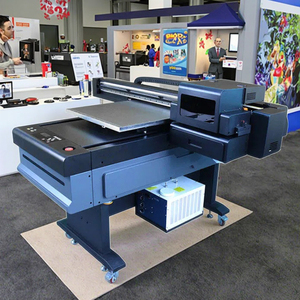
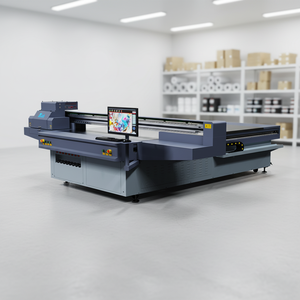
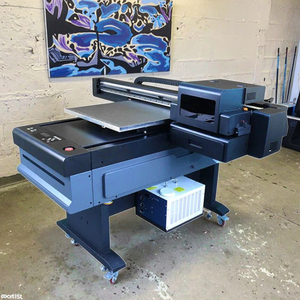
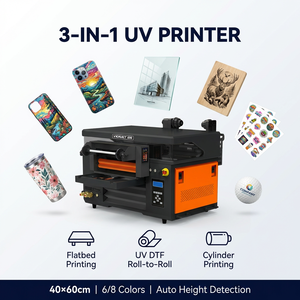
6090 DTF Flatbed UV Printer With Suction Platform & 6 Color System
- Bed Size: 600 x 900 mm
- Configuration: CMYK + WW + VV
- Vacuum Zone Hold-Down
Engineered for continuous 24/7 heavy industrial operation, extreme dimensional repeatability, and low lifecycle operational expenditure.
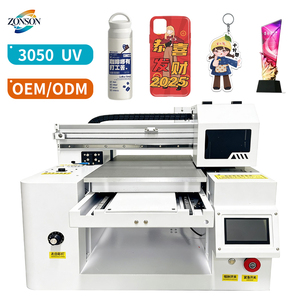
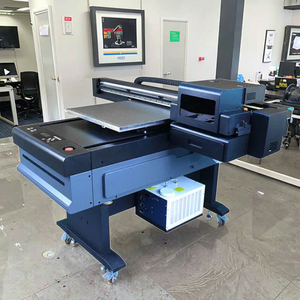
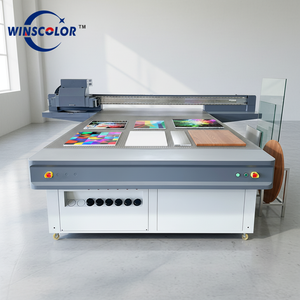
Establishing global standards in laser dynamics, CNC structural stability, and industrial digital printing throughput.
In modern industrial procurement, evaluating laser cutter factories requires analyzing manufacturing depth, component provenance, thermal frame stress-relieving processes, and vertical integration capabilities. Operating out of 15 ISO 9001:2015 certified manufacturing facilities in Ahmedabad, India, covering over 30,000 square meters of production area, Mehta Hitech Industries Limited (formerly Mehta Cad Cam Systems Pvt. Ltd.) represents a world-class manufacturing powerhouse for high-power fiber laser cutters, CO2 laser engravers, 5-axis CNC routers, and UV printing systems.
Machine beds undergo high-temperature electric furnace stress annealing at 600°C for over 24 hours, guaranteeing absolute protection against structural warping, vibration deformation, and precision degradation over 10+ years of high-acceleration laser cutting.
Integrating tier-1 fiber laser resonators (IPG, Raycus, Maxphotonics) paired with German Precitec auto-focusing cutting heads. Features real-time optical thermal lens monitoring and adaptive closed-loop assist gas pressure control.
Every fiber laser cutter, laser welder, CNC machine, and UV flatbed printer undergoes rigorous 72-hour dry runs, dynamic laser interferometer positional calibration ($\pm 0.02\text{ mm}$), and electromagnetic compatibility testing before dispatch.
A rigorous engineering analysis comparing energy conversion efficiencies, assist gas dynamics, and processing thresholds for industrial equipment buyers.
Selecting the optimal equipment from laser cutter factories requires evaluating peak power requirements, substrate reflective characteristics, thermal effect zones (HAZ), and lifetime utility costs. Fiber laser sources operating at $1.06\mu m$ optical wavelengths offer up to 40% wall-plug power efficiency compared to conventional CO2 systems operating at $10.6\mu m$.
| Evaluation Parameter | Fiber Laser Systems (1.5kW - 40kW) | CO2 Laser Systems (80W - 300W) | UV Flatbed Digital Printers |
|---|---|---|---|
| Primary Target Media | Carbon Steel, Stainless, Brass, Aluminum | Acrylic, Wood, Leather, MDF, Die-board | Glass, Rigid Plastics, ACP, Ceramic, Wood |
| Beam Wavelength ($\lambda$) | 1.064 μm (High absorption in metals) | 10.6 μm (High absorption in organics) | 365nm - 395nm UV LED Curing Wavelength |
| Wall-Plug Efficiency | 35% - 45% (Ultra-low power draw) | 10% - 15% (Higher cooling demand) | Energy-efficient LED-UV Instant Curing |
| Typical Cutting Speed | Up to 100 m/min (Depending on power/thickness) | 0.5 - 15 m/min | Up to 120 sq.m/hr (Production Mode) |
| Assist Gas Dynamics | $N_2$ (Clean edge), $O_2$ (Exothermic steel cut), Air | Low pressure Air assist (Prevents burning) | Negative Pressure Ink Circulation System |
| Maintenance Profile | Solid-state optics; 100,000+ hrs MTBF | Glass tube / Metal tube replacement cycle | Automated Printhead Cleaning & Capping |
When evaluating total cost of ownership (TCO), B2B buyers must account for assist gas consumption alongside pure electricity usage. Utilizing high-pressure Nitrogen ($N_2$) provides oxide-free edges ready for powder coating on stainless steel, whereas Compressed Air cutting powered by high-pressure screw compressors reduces per-meter cutting expenses by up to 70% in mild steel gauge sheet processing.
Navigating the transition toward ultra-high-power fiber resonators, AI-driven optical correction, and automated material handling systems.
Industrial procurement is migrating from standard 3kW-6kW resonators toward 20kW+ fiber lasers. High power allows nitrogen air-cutting on thick plate metal (up to 30mm), multiplying sheet throughput speed by 300% compared to legacy oxygen-based processing.
Smart factories are adopting automated camera registration systems (such as CCD AI vision cameras on UV printers and fiber laser scanners). Intelligent software automatically compensates for sheet positioning skews, reduces scrap material waste by 18%, and optimizes toolpath trajectories.
Modern factories are removing manual material loading bottlenecks. Complete automated flexible manufacturing systems (FMS) feature automatic sheet loading units, shuttle exchange beds, and scrap sorting towers that enable unattended lights-out night shifts.
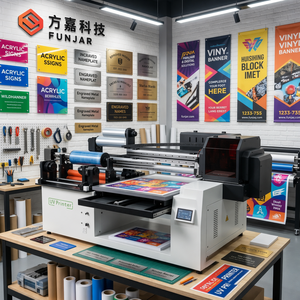
In digital print production, hybrid UV DTF systems equipped with integrated laminators allow transfer sticker production onto irregular, curved 3D objects (mugs, bottles, helmets), eliminating traditional rigid substrate size constraints.
Industry 4.0 cloud telematics actively stream laser source voltage, optical lens temperature, and drive motor torque metrics directly to factory dashboards, warning maintenance supervisors of potential optic degradation prior to component breakdown.
Cutting-edge fiber cutting heads electronically adapt their internal lens focal point and beam spot size in real-time. Small spot size yields high speed on thin sheets, while larger beam spots melt thicker plate carbon steel with ultra-smooth edge quality.
Essential technical and commercial answers directly from our factory application engineering team.
For job shops cutting primarily stainless steel and mild steel up to 6mm, a 1.5kW to 3kW fiber laser system yields maximum operational return. Fabricators cutting 10mm to 20mm plate on a regular basis should deploy 6kW to 12kW units. For heavy structural steel processing above 25mm carbon steel plate or rapid nitrogen cutting of thick stainless steel, 15kW to 30kW systems are recommended.
Ensure the laser cutter factory performs laser interferometer calibration to verify axis positioning accuracy ($\pm 0.02\text{ mm}$ repeatability), high-temperature annealing of the gantry frame to relieve welding stress, dynamic balancing of motor drives, and a continuous 72-hour burn-in stress test before packing.
Tier-1 solid-state fiber laser sources (Raycus, IPG, Maxphotonics) carry a design lifespan of 100,000 operational hours (MTBF), which equates to over 10 years of multi-shift operation. Unlike glass CO2 laser tubes that require periodic gas refilling or tube swapping, fiber laser diodes experience minimal power degradation when kept in temperature-controlled cabinet environments.
Machinery installation requires a level reinforced concrete floor (minimum 150mm thickness, vibration isolated), clean three-phase regulated industrial voltage ($380\text{V}/\text{415V}$, earthing resistance $<1\,\Omega$), dry oil-free compressed air (15-30 bar for air cutting), and a closed-loop dual-temperature industrial water chiller for the optic head and laser generator.
Direct UV flatbed printing applies ink directly onto flat rigid substrates (acrylic, glass, wood). UV DTF (Direct-to-Film) prints onto a special release film (A Film), laminates it with an adhesive film (B Film), creating a self-adhesive transfer decal. This allows application onto irregular, spherical, or curved products where the physical object cannot fit under a flatbed carriage gantry.
All factory direct exports include sea-worthy vacuum-sealed wooden crating, comprehensive installation documentation, and remote digital commissioning support. Standard fast-wearing consumables (cutting nozzles, ceramic rings, protective lens windows, printhead dampers) are stocked in regional hubs and dispatched within 24 hours.
Standardized evaluation checklists for global distributors, OEM brand buyers, and enterprise machine importers.
When selecting top trusted laser cutter factories, buyers must verify structural, optical, and electrical assembly standards. Below is the multi-stage quality control protocol executed at our manufacturing campus in Kathwada GIDC, Ahmedabad:
Steel bed frames undergo high-temperature electric furnace stress annealing to prevent structural flexing. Critical linear guide mounting surfaces are precision milled on heavy-duty 5-axis gantry machining centers in a single setup pass.
Linear motion accuracy is verified using Renishaw laser interferometers. Axis squareness, pitch, and yaw are adjusted to within sub-millimeter tolerances ($\pm 0.02\text{ mm}$ per meter) across the entire travel stroke of the bed.
Every system completes a continuous 72-hour dry-run and material test cut. Optical beam profiling monitors power density stability across full travel distances prior to vacuum-sealed seaworthy packaging.
Connect with our senior application engineers to review project blueprints, request live virtual material sample cutting demonstrations, or discuss distributor territory allocation.
+91-79-26840551 / 52 / 53
Domestic: +91 7575 009 654 · Export: +91 7043 505 091
[email protected]
International: [email protected]
Plot No.3, Road No.1, Kathwada GIDC, Kathwada, SP Ring Road, Ahmedabad 382430, Gujarat, India