Explore our industrial-grade vertical machining centers, gantry mills, and heavy-duty 5-axis metal milling machines built for sub-micron precision and zero-vibration stability.
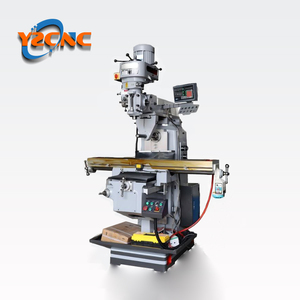
Compact metal turret mill equipped with Taiwan high-speed precision spindle, hardened slide ways, and variable frequency drive for toolroom milling.
Get a Quote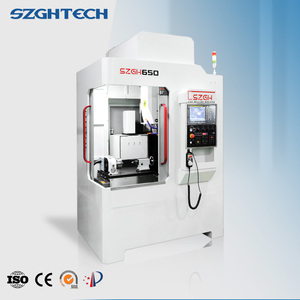
Lightweight yet ultra-rigid gantry metal milling architecture designed for high-dynamic aerospace alloy machining and precision mold making.
Get a Quote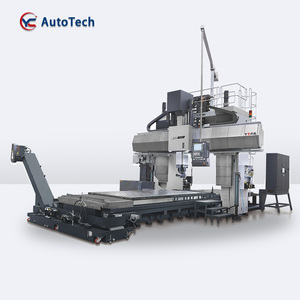
Heavy-duty double-column bridge mill engineered for large-format die casting molds, structural steel frames, and heavy mechanical components.
Get a Quote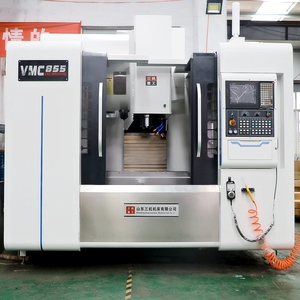
Advanced Fanuc/Mitsubishi controlled 5-axis vertical machining center optimized for simultaneous complex geometry milling and high torque output.
Get a Quote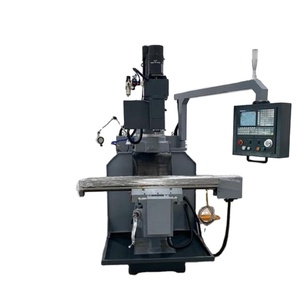
Versatile 3-axis CNC knee/bed mill featuring high load capacity, automatic lubrication systems, and user-friendly digital CNC interfaces.
Get a Quote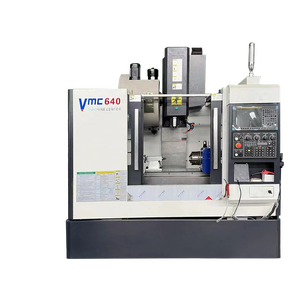
Cost-effective vertical machining center featuring a 16-tool armless ATC magazine, high-speed Taiwan linear guides, and robust cast iron frame.
Get a Quote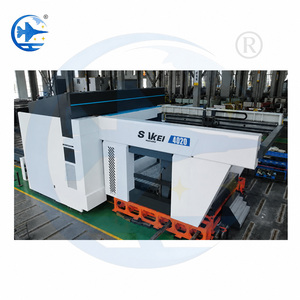
Next-generation linear motor drive technology offering friction-free dynamic responsiveness, zero backlash, and mirror-like metal surface finish.
Get a Quote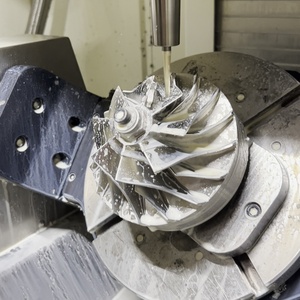
Complete 5-axis machining package equipped with high-speed direct-drive rotary tables, thermal compensation software, and full tooling suite.
Get a QuoteBacked by decades of mechanical engineering innovations, state-of-the-art production facilities, and stringent quality control protocols certified across international markets.
Quality Systems & Compliance Certification: ISO 9001:2015 certified production lines, Lean Six Sigma manufacturing practices, full CE Marking compliance, and rigorous dry-run load testing under ISO 230-2 standards before international shipment.
An engineering guide to dynamic stability, controller architecture, thermal compensation, and total cost of ownership (TCO) in metal removal processes.
When procuring enterprise-grade CNC mills—whether 3-axis toolroom mills, high-speed Vertical Machining Centers (VMC), or complex simultaneous 5-axis gantry mills—manufacturing leadership must evaluate the underlying structural dynamics. The primary limiting factor in high-efficiency metal removal rates (MRR) is structural resonance and dynamic compliance under heavy cutting loads.
Top trusted CNC mill manufacturers utilize high-grade Meehanite cast iron (FC300 or higher) for machine beds, columns, and saddles. Cast iron provides superior mechanical vibration damping—up to ten times greater than welded steel structures. The internal ribbing structure (finite element analysis / FEA optimized triangular or honeycomb arrangement) prevents torsional deflection during rapid acceleration cycles exceeding 1.0G.
| Structural Parameter | Standard Entry-Level Mill | Industrial Heavy-Duty CNC Mill | Impact on Machining Quality |
|---|---|---|---|
| Frame Material | Fabricated Steel Plate / FC250 | Meehanite FC300 Cast Iron | 10x higher vibration absorption, preventing tool chatter and micro-chipping. |
| Guide Way System | Standard Ball Linear Guides | Heavy Roller Linear Guides / Box Ways | High rigidity under heavy depth-of-cut (DOC), extended machine lifespan. |
| Spindle Connection | Belt Drive (8,000 RPM) | Direct-Drive / In-Line Spindle (12,000–24,000 RPM) | Eliminates belt vibration, improves thermal stability and surface finish (Ra < 0.4 µm). |
| Positioning Accuracy | ±0.008 mm (ISO 230-2) | ±0.003 mm with Optical Glass Scales | Guarantees sub-micron repeatability across multi-shift continuous production runs. |
In high-speed precision metal milling, thermal expansion caused by friction in spindles, ball screws, and linear guides accounts for over 75% of dimensional variance during cold-start to peak operational temperature transitions. Leading CNC mill suppliers incorporate multi-zone active thermal compensation.
For advanced 5-axis milling applications, traditional worm-gear rotary tables introduce mechanical backlash and require periodic mechanical adjustment. Top suppliers are shifting toward direct-drive torque motors (DDM) on A/B/C rotary axes and linear motor drives on X/Y/Z linear axes.
Linear motors eliminate mechanical wear items such as ball screws, couplers, and thrust bearings. This results in contactless electromagnetic drive movement capable of high acceleration rates (up to 2.0G), zero backlash, and positioning accuracy within nanometer resolutions. This technology is vital for aerospace turbine impellers, medical implants, and high-gloss optical mold cavities.
How Smart Manufacturing, AI Edge Computing, and Sustainable Machining Technologies are reshaping industrial procurement strategies.
Next-generation CNC mills feature integrated IoT dashboards that stream spindle vibration FFT analytical data, bearing wear indexes, and coolant pH levels directly to enterprise ERP/MES platforms. Facilities transition from reactive repair to predictive maintenance before catastrophic downtime occurs.
Artificial intelligence algorithms continuously monitor motor amperage and cutting force resistance. If material hardness anomalies or casting flash are encountered, the control system automatically modulates tool feed rates to maintain constant chip load, extending cutter life by up to 35%.
Environmental regulations are driving the adoption of Minimum Quantity Lubrication (MQL) and high-pressure cryogenic liquid nitrogen (LN2) cooling. Modern mills are designed with enclosed recovery systems to reduce fluid disposal costs and lower carbon footprints in precision machine shops.
Direct factory engineering expertise, extensive in-house manufacturing footprint, and end-to-end operational lifecycle support.
Selecting a machinery supplier is a long-term capital investment that impacts your production throughput for 10 to 15 years. Unlike machine brokers or trading intermediaries, an established OEM manufacturer brings deep metallurgical, electronic, and software capabilities directly to your shop floor.
Over 30,000 sq. m. of vertically integrated manufacturing space housing double-column boring mills, surface grinders, and laser alignment equipment ensuring absolute machine frame quality control.
Before purchasing, clients can submit CAD files for material sample milling, cycle time calculations, tooling selection, and surface roughness verification conducted in application labs.
Seaworthy export packaging, complete customs documentation support, factory-backed installation technicians, and remote IoT diagnostics for instant troubleshooting.
Comprehensive engineering and procurement answers to streamline your machinery acquisition workflow.
Answer: For aluminum and general component milling requiring high speeds, a BT40 or HSK-A63 direct-drive spindle operating at 12,000–15,000 RPM offers optimal dynamic balance. For heavy steel cutting, titanium alloys, or deep cavity dies, a 50-taper (BT50 or HSK-A100) gear-head spindle operating at high torque (300+ Nm) and 6,000–8,000 RPM is recommended for maximum mechanical rigidity.
Answer: 3+2 axis machining (positional 5-axis) locks the two rotary axes (A/B or B/C) into fixed angular positions while executing standard 3-axis linear cuts. Continuous 5-axis milling moves all five axes simultaneously, allowing complex curved surfaces, sculptured impellers, and blisks to be machined in a single continuous toolpath without micro-step marks.
Answer: All CNC mills undergo Renishaw laser interferometer testing according to ISO 230-2 protocols to verify linear positioning accuracy and pitch/yaw errors. Rotational geometry and dynamic tool center point (RTCP) squareness are validated using Renishaw Ballbar testing systems to ensure true 3D spatial volumetric precision.
Answer: Facilities must prepare an isolated reinforced concrete foundation (minimum 200–300 mm thickness depending on machine mass) with anti-vibration joint isolation, stable 3-phase electrical power (regulated within ±5%), dry compressed air at 6.0–8.0 bar with air dryers, and proper grounding resistance under 1.0 ohm.
Answer: Machines are available with industry-standard Fanuc (0i-MF Plus), Siemens (Sinumerik 828D/840D SL), Mitsubishi (M80 Series), or SZGH high-performance controllers. Factory application engineers provide customized post-processors for major CAM packages including Mastercam, PowerMill, NX CAM, SolidCAM, and Fusion 360.
Answer: Standard VMC and 3-axis mills are typically dispatched within 25–30 calendar days; custom gantry or 5-axis milling machines require 45–60 days for production and compliance testing. Export packages include moisture-barrier vacuum foil wrapping, fumigated wooden ocean crates, complete spare part kits, wiring schematics, operator manuals, and onsite commissioning by factory-trained field engineers.
Connect directly with our senior mechanical application engineers today to discuss your part drawings, cycle time benchmarks, and factory automation requirements.
Get a Quote+91-79-26840551 / 52 / 53
Domestic: +91 7575 009 654 · Export: +91 7043 505 091
[email protected]
International: [email protected]
Plot No.3, Road No.1, Kathwada GIDC, Kathwada, SP Ring Road, Ahmedabad 382430, Gujarat, India