Explore precision-engineered digital inkjet solutions manufactured under ISO 9001:2015 and CE international standards for multi-substrate graphic production.
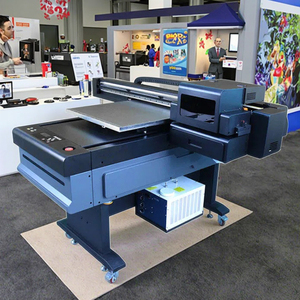
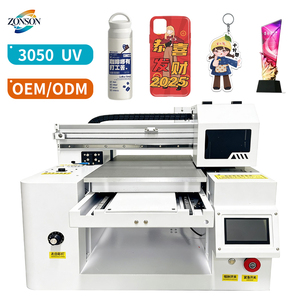
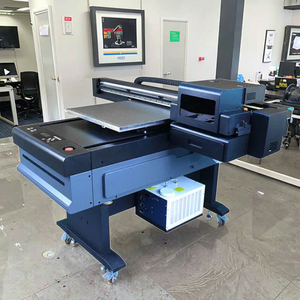
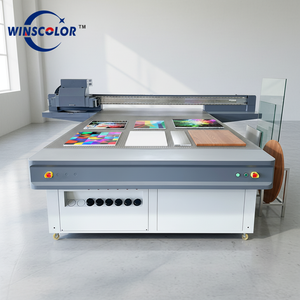
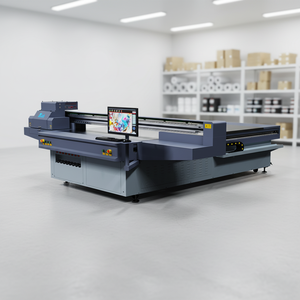
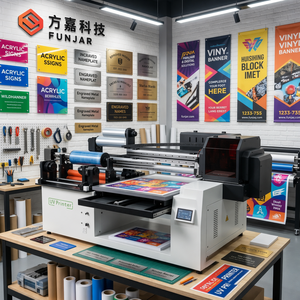
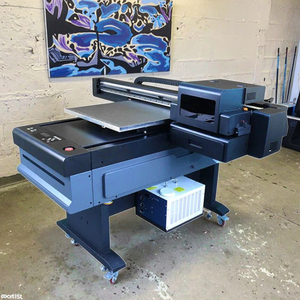
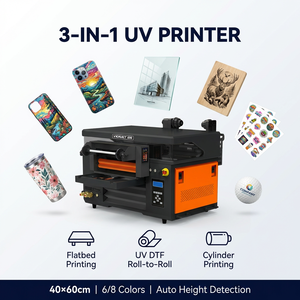
The global digital printing landscape has evolved rapidly over the past decade. For industrial procurement directors, sign franchise networks, and commercial textile converters, selecting the ideal OEM/ODM partner among China roll printer factories requires a rigorous technical evaluation that extends far beyond initial machine list prices. A roll-to-roll (R2R) or hybrid digital printer is not merely a collection of printheads and motors; it is a complex mechatronic assembly operating under continuous mechanical tension, thermal flux, and precise fluidic dynamics.
Strategic Procurement Insight: Modern roll printer manufacturing relies on three non-negotiable core pillars: structural bed annealing to eliminate micro-vibrations, closed-loop PLC tension control to prevent media tracking distortion, and dual negative-pressure fluidic systems to maintain uninterrupted ink menisci at high firing frequencies.
Leading Chinese manufacturing hubs—supported by robust supply chains in Guangdong, Zhejiang, and Shandong—now produce world-class industrial roll printers, UV flatbeds, and Direct-to-Film (DTF) hybrid systems. However, engineering execution varies significantly across factories. Understanding how top-tier manufacturers design and construct their machines provides buyers with substantial information gain, reducing procurement risks and guaranteeing long-term return on investment (ROI).
At high speeds (exceeding 80 to 150 square meters per hour), the movement of a heavy carriage carrying 4 to 8 industrial printheads (such as Ricoh Gen6, Konica Minolta 1024i, or Kyocera KJ4A) generates intense kinetic energy. Lower-tier factories utilize lightweight welded aluminum or un-annealed square steel tubing, which slowly warps over 12–18 months, leading to irreversible mechanical alignment loss, bi-directional pass banding, and drop displacement.
In contrast, top China roll printer factories implement heavy-duty, integrated steel gantries subjected to high-temperature stress-relief annealing (typically at 600°C for 8 hours). The gantry mounting surfaces are then milled using high-precision CNC pentahedron machining centers in a single setup. This process guarantees linear guide rail straightness within ±0.01mm over 3.2 meters, ensuring micron-level ink drop placement accuracy across millions of scan cycles.
While traditional timing belt systems remain common in budget entry-level equipment, top-tier industrial roll-to-roll and UV hybrid printers utilize magnetic levitation linear motors paired with metal grating encoders. Linear motor drive systems eliminate belt stretch, gear backlash, and mechanical friction, allowing smooth carriage acceleration up to 2.0m/s with sub-micron positioning feedback. This results in razor-sharp text rendering down to 2pt font sizes and perfectly smooth color gradients free from mechanical banding artifacts.
A granular look into the critical sub-systems engineered by premier Chinese digital printing factories.
Advanced dual negative-pressure system maintains exact meniscus pressure at printhead nozzles across varying ambient temperatures. Integrated white ink circulation prevents titanium dioxide pigment settling, completely eliminating nozzle clogging.
Computerized multi-zone vacuum suction beds with air-reverse flotation allow effortless positioning of heavy rigid boards, while magnetic powder clutches and air shafts ensure continuous zero-wrinkle tension on flexible media.
Liquid-cooled UV-LED curing lamps with adjustable power output (up to 16W/cm²) allow instantaneous ink polymerisation without thermal deformation on heat-sensitive substrates like thin PVC, TPU, and soft textiles.
Navigating the diverse range of equipment offered by Chinese digital printer manufacturers requires matching specific substrate characteristics and production targets with the appropriate machine architecture:
| Printer Architecture | Supported Substrates | Printhead Configuration | Target Applications | Key Industrial Benefit |
|---|---|---|---|---|
| Roll-to-Roll (R2R) UV / Eco-Solvent | Flex Banner, Vinyl, Mesh, Canvas, PET Film, Wall Covering | Epson i3200-E1/A1, Ricoh Gen5/Gen6, Konica 1024i | High-Volume Outdoor Signage, Vehicle Wraps, Soft Signage | Continuous unattended 24/7 roll printing with automatic take-up |
| UV Flatbed (e.g. 2030 / 2513 / 6090) | Acrylic, Glass, Wood, Metal, Ceramic Tile, PVC Board | Ricoh Gen6, Kyocera KJ4A, Epson i3200-U1 | Architectural Decor, Appliance Panels, Custom Giftware | Direct printing on rigid sheets up to 100mm thick with tactile embossing |
| UV DTF Crystal Sticker Printer | Release A/B Film, Transfer PET Film, Foil Stamping Media | Epson F1080 / i3200-U1 (CMYK + W + Varnish) | Irregular Surface Branding, Mugs, Golf Balls, Helmets | Zero-plate sticker transfer to complex 3D curved surfaces |
| Industrial UV Hybrid Belt Printer | Both Rigid Boards and Flexible Roll Materials | Ricoh Gen6, Kyocera KJ4B (Multi-Head Array) | Commercial Print Shops, Packaging Prototyping | Ultimate versatility with conveyor belt suction system |
A critical consideration during factory negotiations is selecting the optimal printhead technology platform:
As the global digital printing industry demands higher productivity, reduced environmental footprint, and greater customization, leading Chinese factories are pioneering several transformative technological shifts:
Traditional manual physical registration pins are rapidly being replaced by high-resolution camera networks mounted directly on the printer carriage. Intelligent algorithms scan print media edges, warped panel contours, or pre-printed UV DTF film target marks in real-time, automatically calculating optical distortion matrices and adjusting nozzle jetting timing on the fly. This innovation reduces setup scrap rates to near zero, even when printing on highly irregular natural materials such as raw wood slabs or tumbled leather.
Next-generation roll printers and UV flatbeds utilize advanced multi-channel RIP software combined with staggered printhead carriages. This enables simultaneous single-pass printing of white base undercoats, high-density CMYK color layers, variable-height tactile embossing structures, and protective glossy varnish topcoats. Furthermore, inline thermal foil stamping modules integrated into UV DTF roll systems allow digital metallic foil applications without traditional copper die stamping plates.
Environmental regulations across the European Union (REACH/RoHS) and North America are accelerating the adoption of eco-friendly UV-LED curable ink formulations. Top Chinese ink laboratories and printer factories are co-developing photoinitiator systems optimized for 395nm wavelength LED arrays that eliminate ozone emissions, minimize ink odor, and ensure compliance with toys safety standards (EN 71-3) and indoor air quality certifications (GREENGUARD Gold).
When performing factory audits—whether in-person or via third-party inspection firms such as SGS or TÜV Rheinland—buyers should demand verification of the following manufacturing protocols:
Verification of axis straightness, pitch, and yaw using Renishaw laser interferometers across the full travel distance of X and Y axes to ensure sub-micron mechanical repeatability.
Rigorous pre-shipment dry runs under elevated ambient temperature and humidity conditions to detect latent electronic component defects in power supplies, mainboards, and driver ICs.
In-house creation of custom ICC color profiles using X-Rite i1Publish spectrophotometers for standard media types, ensuring accurate brand color reproduction out of the box.
Direct answers from application engineers to help you shortlist the right printer manufacturer.
To distinguish direct manufacturers from trading intermediaries, request a live video tour showing heavy machinery fabrication infrastructure—specifically CNC pentahedron milling centers, steel frame welding bays, frame annealing ovens, and assembly lines. Additionally, examine business licenses for manufacturing scopes (Industrial Machine Production), request ISO 9001 audit certificates, and verify original equipment manufacturer (OEM) factory patents for carriage designs or fluidic boards.
Total Cost of Ownership includes capital expenditure (CapEx), ink consumption, printhead replacement amortization, electricity, and routine maintenance consumables. On average, industrial UV roll printers consume between 8mL to 12mL of ink per square meter at 100% color coverage. Factoring in UV ink prices ($25–$45/liter), electricity ($0.15/kWh), and amortizing Ricoh Gen6 printheads over 3 years, the net operational printing cost typically ranges between $0.40 to $0.85 per square meter, yielding high gross margins for commercial print providers.
For international shipments, we recommend ordering a 1-year spare parts kit alongside the equipment. Essential fast-wearing consumables include ink dampers, wiper blades, capping station tops, peristaltic pump tubes, sub-tank ink filters, UV lamp quartz glass covers, carriage timing belts, and encoder strips. Stocking these components locally eliminates potential production downtime caused by international courier delays.
Gravity-fed systems rely on physical height differentials between sub-tanks and printheads, making them prone to ink dripping or starvation during high-speed printing carriage acceleration. Negative pressure systems use precise electronic air pumps and digital pressure transducers to create a controlled vacuum inside the sub-tank. This keeps the ink meniscus perfectly balanced at the nozzle plate, preventing ink weeping, minimizing ink waste during cleaning cycles, and enabling continuous high-speed firing without drop dropouts.
Buyers must prepare a climate-controlled room maintaining temperatures between 20°C to 28°C and relative humidity levels between 40% to 60% (to prevent static charge buildup and ink drying inside nozzles). Grounding must be established with an independent copper rod ground wire yielding resistance below 4 Ohms to protect sensitive printhead drive boards from static discharge. A dedicated voltage stabilizer (AVR) and dry oil-free air compressor (0.6MPa output for pneumatic systems) are also required.
Consult with our senior application engineers to receive custom configuration proposals, real-time ROI calculations, and material print samples delivered to your facility worldwide.
Inquire Now+91-79-26840551 / 52 / 53
Domestic: +91 7575 009 654 · Export: +91 7043 505 091
[email protected]
International: [email protected]
Plot No.3, Road No.1, Kathwada GIDC, Kathwada, SP Ring Road, Ahmedabad 382430, Gujarat, India