Engineered for high throughput, micron-level accuracy, and continuous 24/7 manufacturing cycles across acrylic, glass, wood, metal, and flexible media.
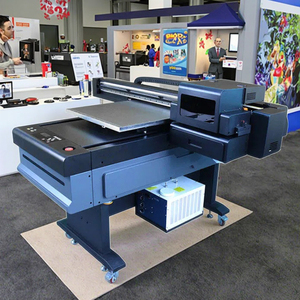
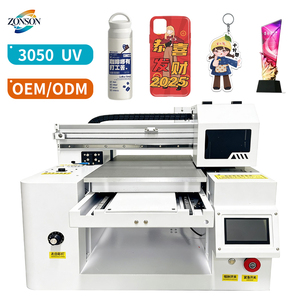
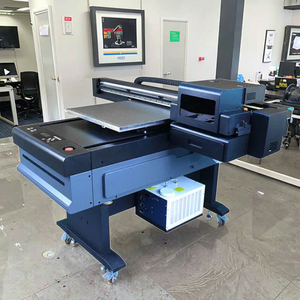
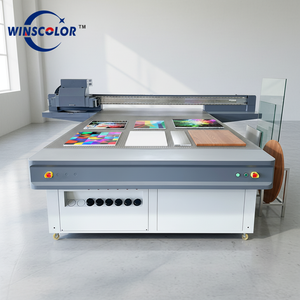
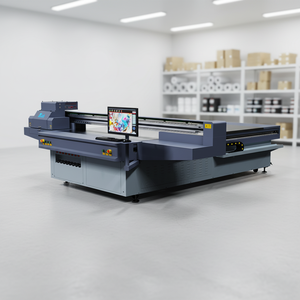
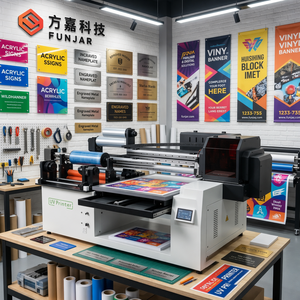
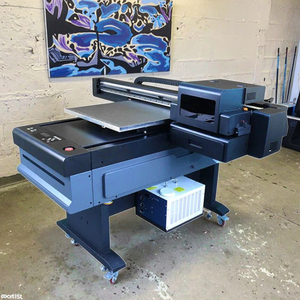
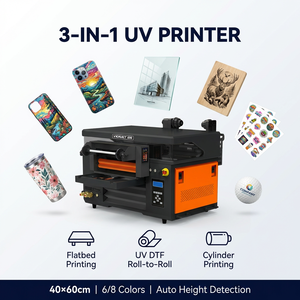
The global digital inkjet and wide-format printing industry is undergoing a structural paradigm shift. Factory buyers and industrial print suppliers are migrating rapidly from traditional eco-solvent and roll-to-roll liquid printing systems toward high-efficiency UV-LED Direct-to-Film (UV DTF) and modular industrial flatbed equipment. According to recent industrial data, the demand for custom rigid substrate decoration (acrylic, glass, architectural laminates, and metal panels) has surged by 34% year-over-year, driven by demand for short-run personalization and instant curing capabilities.
Modern B2B buyers seeking top-tier China large format manufacturers must align their capital expenditure with five core technological shifts currently redefining industrial manufacturing standards:
Next-generation 2026 industrial flatbeds incorporate high-resolution CCD cameras and edge-AI algorithms. This enables instant optical positioning for irregular substrate contours, eliminating manual jig placement and dropping job setup times by over 70%.
The rise of UV DTF "Crystal Sticker" technology allows printing onto release film with inline varnish and AB transfer laminating. Factories can now badge 3D curved surfaces, mugs, and helmets that previously could not fit under flatbed gantries.
Advanced piezo heads (such as Ricoh Gen5/Gen6 and Epson i3200) utilize variable drop technology. Ultra-small 3.5 picoliter micro-droplets deliver photographic vector detail, while larger droplets achieve dense solid color blocks efficiently.
High-capacity suction platforms equipped with localized zone control valves prevent media warping and maximize negative pressure efficiency. This ensures heavy glass panels or thin acrylic sheets remain immovably flat during fast multi-pass printing.
Smart factories require machine IoT integration. Direct ink-level telemetry, automated printhead anti-crash sensors, LED UV thermal monitoring, and remote RIP diagnostic systems minimize unscheduled downtime.
Compliance with global environmental standards (REACH, RoHS) is essential. Modern dual-chilled LED lamps cure high-viscosity inks instantantly with zero ozone emission, low energy draw, and minimal heat output for temperature-sensitive films.
To assist industrial buyers in selecting the exact footprint and mechanism for their facility, our engineering department has compiled a comparative technical matrix analyzing flatbed, hybrid, and compact UV DTF configurations.
| Machine Category | Primary Substrates | Optimum Printhead Config | Max Production Speed | Target ROI Cycle |
|---|---|---|---|---|
| 6090 UV DTF Suction Flatbed | Acrylic, Glass, Metals, Plastics, Crystal Stickers | Epson i3200-U1 / TX800 (6 Color + White + Varnish) | 8 - 14 sq.m / hr | 4 - 6 Months |
| Desktop 3050 Mini UV DTF | Phone cases, Mugs, Cylindrical bottles, Golf balls, Gifts | Epson XP600 / DX7 (CMYK + W + V) | 3 - 6 sq.m / hr | 2 - 4 Months |
| 2030 Industrial Large Format | Building facade glass, Wood panels, Large ACP, Architectural signage | Ricoh Gen5 / Gen6 or Konica Minolta 1024i Array | 35 - 75 sq.m / hr | 8 - 12 Months |
| A1 6090 AI Vision Hybrid | Irregular objects, 3D promotional items, Roll film sticker transfer | Dual/Triple Head i3200 with Auto CCD Camera System | 10 - 18 sq.m / hr | 5 - 7 Months |
With over two decades of dedicated mechanical innovation and localized assembly refinement, our state-of-the-art production campus spanning over 30,000 square meters represents the pinnacle of Chinese industrial machinery manufacturing. We combine precision structural engineering with rigorous quality assurance protocols to deliver zero-defect printing systems globally.
Every industrial flatbed printer and UV DTF unit that leaves our facility undergoes strict ISO 9001:2015 quality management procedures, including laser interferometer gantry leveling, continuous 72-hour stress-test dry runs, and high-voltage electrical safety checks (CE compliant).
Our machine frames are constructed from high-tensile steel, heat-treated and stress-relieved to resist micro-deformations over decades of high-speed reciprocal scanning.
Imported Japanese THK linear rails paired with Leadshine servo drives deliver whisper-quiet gantry motion with alignment tolerances maintained under ±0.01mm.
Automated dual negative pressure control systems maintain constant hydraulic pressure inside the printhead manifold, preventing ink dropouts and nozzle clogging during long production runs.
Detailed technical answers provided by our senior application engineering desk to help you make informed procurement decisions.
Direct UV flatbed printing applies ink directly onto rigid, flat substrates positioned on the vacuum table. UV DTF prints onto an 'A' film layer, applies an inline adhesive varnish, and laminates it with a 'B' film. The resulting crystal sticker can then be manually transferred onto irregular, curved, or ultra-large surfaces (such as helmets, luggage, or store windows) that cannot physically fit under a printer gantry.
Epson i3200 printheads offer exceptional 600 DPI native resolution per color channel, making them ideal for high-precision entry-to-mid level machines like 6090 flatbeds focusing on detailed promotional items and stickers. Ricoh Gen5/Gen6 heads feature steel construction, higher drop firing frequencies, and longer operational lifespans under continuous 24/7 industrial loads, making them the preferred choice for heavy 2030 or 2513 flatbed printers.
Substrates vary in thickness and physical stiffness. A multi-zone vacuum system allows operators to channel suction power specifically to the region covered by the material. This prevents suction pressure loss through exposed vacuum holes, keeping warped corrugated plastics, thin metals, or wood boards entirely flat during high-speed passes.
White UV ink contains Titanium Dioxide (TiO2) particles, which tend to settle at the bottom of ink lines when idle. Our automated white ink system continuously circulates ink between the main tank, sub-tank, and printhead manifold while periodically agitating the main reservoir. This stops particle sedimentation, preventing premature head clogging and drop misdirection.
Buyers should prepare a dust-controlled room maintained between 20°C to 28°C with a relative humidity of 40% to 60%. The electrical infrastructure requires a dedicated single-phase or three-phase line with clean earthing ground potential below 4 Ohms, accompanied by an online UPS to shield printer electronics against local grid voltage spikes.
Every machine is secured with heavy-duty gantry locks, wrapped in anti-static vacuum-sealed moisture-barrier foil, packed with industrial desiccant bags, and enclosed inside a fumigated ISPM-15 compliant sea-worthy wooden crate designed for crane and forklift handling.
We provide full remote factory onboarding via video link, comprehensive English documentation, step-by-step video operation guides, and full software RIP training. Additionally, senior field engineers can be dispatched to customer facilities for on-site commissioning, operator training, and workflow calibration.
Yes, our 2026 AI Vision models come equipped with high-resolution overhead camera arrays integrated with specialized RIP nesting software. The camera automatically detects object boundaries, calculates rotation angles, and aligns print files without requiring rigid manual positioning jigs.
+91-79-26840551 / 52 / 53
Domestic: +91 7575 009 654 · Export: +91 7043 505 091
[email protected]
International: [email protected]
Plot No.3, Road No.1, Kathwada GIDC, Kathwada, SP Ring Road, Ahmedabad 382430, Gujarat, India