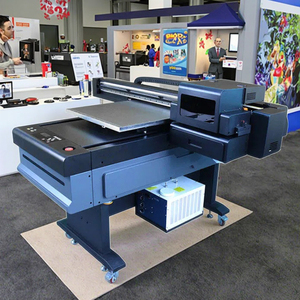
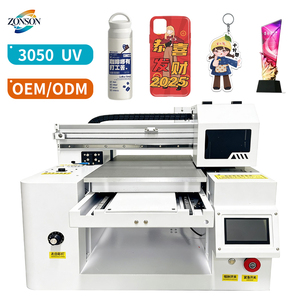
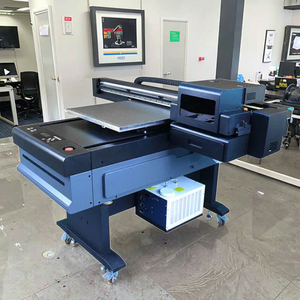
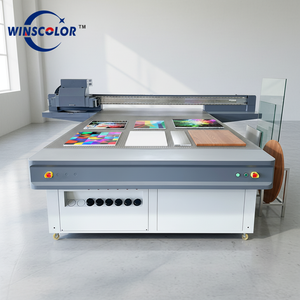
Explore top-tier printing machinery engineered for textile printing, crystal transfer stickers, rigid media, and high-speed industrial manufacturing.
The global textile and specialty printing industry is experiencing an unprecedented technological transition. Traditional rotary and flatbed screen printing methods are rapidly yielding market share to Direct-to-Fabric (DTF), Direct-to-Garment (DTG), and Direct-to-Film UV Hybrid systems. Driven by shifting consumer demand toward micro-batches, customized apparel, rapid turnaround times, and stringent environmental legislation regarding wastewater discharge, procurement officers and factory managers must re-evaluate their equipment sourcing strategy.
Modern digital textile machinery integrates high-frequency industrial piezo printheads (such as Kyocera KJ4B and Epson i3200-A1), precision magnetic linear drives, variable-drop ink technology (VSDT), and automated negative pressure fluid circulation. This whitepaper provides a comprehensive evaluation of the Top 10 Textile Printer Manufacturers & Suppliers worldwide, offering an objective analysis of technological capability, ink compatibility, Total Cost of Ownership (TCO), and OEM engineering support.
An authoritative technical evaluation based on printhead integration, frame rigidity, ink delivery stability, global service infrastructure, and operational reliability.

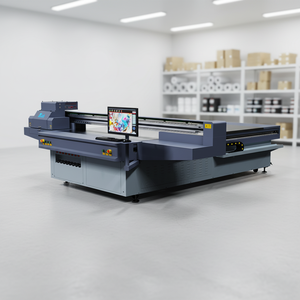
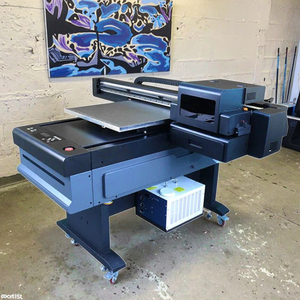
At Mehta Hitech Industries Limited, machinery build quality is controlled entirely in-house across 30,000+ sq. m. of advanced manufacturing space in Kathwada GIDC, Ahmedabad. Unlike assemblers who source third-party frames, Mehta engineers fabricate, machine, assemble, and dry-run test every CNC router, fiber laser, and wide-format digital printer.
Featuring ISO 9001:2015 process certification, Lean Sigma methodology, and strict CE compliance, Mehta printers incorporate Japanese micro-piezo drop-on-demand printheads, German linear guides, and custom anti-crash printhead carriages. This guarantees repeatable print alignment, zero stepping errors, and decade-long frame stability.
Download Engineering WhitepaperProcurement directors evaluating capital equipment must align their investments with future-proof technology vectors. The following four macro-trends are shaping the strategic roadmap for digital textile and UV flatbed equipment acquisition over the next five years:
Real-time optical cameras dynamically track material distortion, stretch, and positioning, automatically compensating printhead firing timing for flawless registration.
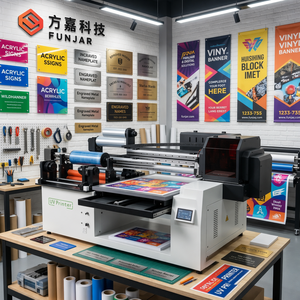
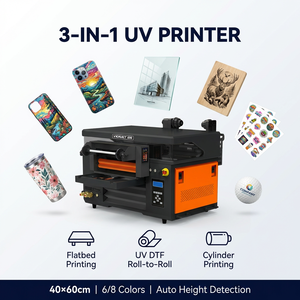
The rise of UV DTF direct transfer crystal stickers allows instant branding on irregular 3D objects, glass, metals, and hard-to-print fabrics without heat press dies.
Global sustainability mandates favor waterless pigment ink setups that eliminate post-print steaming and washing processes, cutting plant water usage by over 90%.
Modern printers feature cloud dashboards monitoring ink consumption, printhead health, maintenance alerts, and job costing metrics directly via REST APIs.
When comparing machinery prices across top manufacturers, initial capital expenditure (CAPEX) accounts for only 25% to 35% of total lifecycle cost. Procurement managers must evaluate operational costs (OPEX) over a standard 5-year operational lifecycle:
Detailed technical guidance addressing common inquiries from factory managers, print shop owners, and procurement specialists.
Direct-to-Fabric (DTF) textile printing applies water-based inks (reactive, pigment, or disperse) directly onto fabric rolls or garments, requiring heating or steaming for ink fixation. UV DTF utilizes UV-curable inks printed onto an 'A' film and laminated with a 'B' film to create crystal transfer stickers that adhere instantly to rigid, curved, or irregular surfaces without heat pressing.
For 100% natural fibers like cotton, silk, and linen, Reactive or Textile Pigment inks deliver superior wash-fastness and soft hand-feel. For 100% synthetic polyester and nylon blends, Disperse or Dye-Sublimation inks bond molecularly with synthetic fibers under heat transfer, producing rich color gamuts.
A precision vacuum suction platform holds lightweight, elastic, or uneven substrates completely flat during printhead passes. This prevents media buckling, head strikes, alignment shifts, and drop misplacement, ensuring sharp 1440+ dpi image clarity across large flatbeds.
All export machinery orders include seaworthy crating, full customs documentation, remote commissioning support, and factory technician dispatch options. Consumables and spare parts kits are stocked in primary hubs for expedited global dispatch.
Get full technical specifications, print sample kits, operational cost breakdowns, and live video demonstrations from our application engineering desk.
Get Catalog+91-79-26840551 / 52 / 53
Domestic: +91 7575 009 654 · Export: +91 7043 505 091
[email protected]
International: [email protected]
Plot No.3, Road No.1, Kathwada GIDC, Kathwada, SP Ring Road, Ahmedabad 382430, Gujarat, India