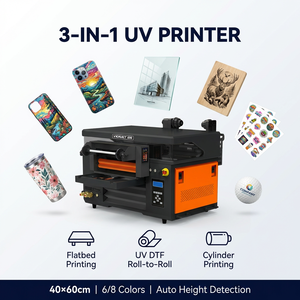
Engineered for multi-substrate versatility, precision color management, and high-throughput production. Sourced directly from our ISO-certified manufacturing facilities.
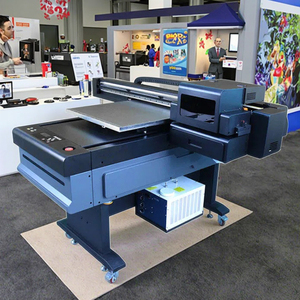
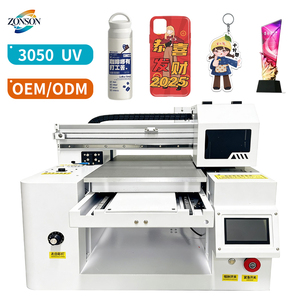
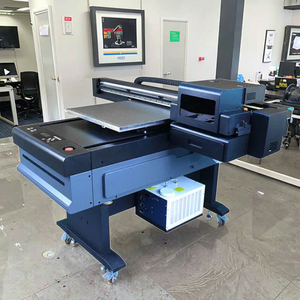
Backed by over 25 years of advanced precision machinery manufacturing, operating from 15 ISO 9001:2015 certified plants covering more than 30,000 m² of modern production space.
From bespoke chassis color schemes and private-label firmware branding to integrated mechanical modifications. We engineer customized bed sizes, multi-zone vacuum suction control systems, and specific printhead configurations (Epson i3200, Ricoh Gen 6, Kyocera) tuned to your exact operational requirements.
Every commercial inkjet machine undergoes rigorous quality assurance procedures under Lean Six Sigma frameworks. Systems feature dual THK linear guides, aviation-grade aluminum beams, dynamic laser alignment verification, and stress-tested anti-collision carriage assemblies to guarantee sub-millimeter precision.
With products exported to over 15 countries and supported by 17 dedicated service offices, our logistical framework ensures seamless container loading, sea-worthy moisture-proof packaging, comprehensive spare parts inventory, and rapid-response international field technician dispatch.
An authoritative engineering breakdown of modern piezoelectric inkjet mechanics, motion control optimization, and multi-channel ink curing dynamics.
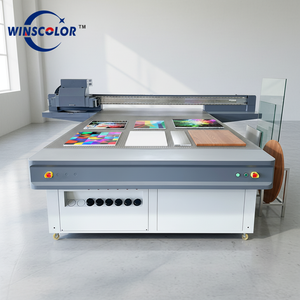
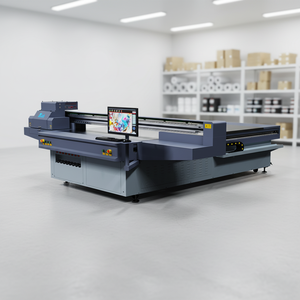
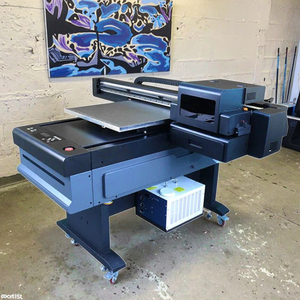
Industrial-grade UV digital printing demands uncompromising structural rigidity to avoid dot gain, micro-banding, and mechanical drift. Our OEM flatbed printers (such as the 6090 and 2030 series) utilize double THK silent linear guide rails paired with high-precision lead screws or rack-and-pinion motion setups. The bed structures are milled using heavy-duty gantry CNC machining centers to ensure surface planarity within ±0.05mm across the entire printing area.
Furthermore, our engineered multi-zone vacuum suction platforms feature adjustable honeycomb airflow channels. This provides uniform negative pressure holding force for lightweight media such as acrylic sheets, plastic films, corrugate, and UV DTF release paper, eliminating substrate warping during high-speed multi-pass printing cycles.
Pigment settling—especially in Titanium Dioxide White UV inks—is a major root cause of nozzle clogging, ink starvation, and costly printhead degradation. Our factory OEM configurations integrate continuous white ink automatic circulation systems alongside peristaltic ink agitators. By continuously cycling ink through main reservoirs, secondary sub-tanks, and printhead dampers, we prevent particulate agglomeration and preserve consistent viscosity.
Automated negative pressure control systems maintain precise ink meniscus tension at nozzle orifices, preventing ink weeping under ambient temperature fluctuations. Coupled with intelligent heat-assisted printhead carriage manifolds, our printers achieve uniform droplet ejection frequencies across CMYK + White + Varnish ink channels.
| Architecture Feature | Standard OEM Specification | Industrial ODM Custom Option | Production Benefit |
|---|---|---|---|
| Printhead Arrays | Dual/Triple Epson i3200-U1 / TX800 | Quad Ricoh Gen6 / Kyocera KJ4A | Scalable speed up to 45 sqm/hr; variable drop sizes (3.5pl - 12pl) |
| Platform Suction | 3-Zone Aluminum Honeycomb Vacuum | 6-Zone Independent Vacuum Control | Prevents substrate movement; handles ultra-thin media to 100mm rigid slabs |
| Curing System | Dual Water-Cooled UV-LED (395nm) | Adjustable Power Segmented UV Curing | Instant cold-cure drying; zero heat-distortion on sensitive plastic/film |
| Vision Alignment | Manual Laser Pointer Alignment | CCD AI Vision Camera Positioning | Automatic contour tracking for non-standard promotional objects & stickers |
| Varnish Finish | Spot & Full Gloss Varnish Module | High-Build 3D Embossing & Matte Varnish | Delivers tactile tactile effects, anti-scratch durability & premium aesthetic value |
Stay ahead of technological displacement by aligning your machine sourcing strategy with key trends reshaping global industrial inkjet production.
Manual jig placement is rapidly becoming obsolete. Next-generation hybrid printers integrate overhead CCD AI vision positioning cameras (such as seen in our 2026 Direct Factory A1 6090 model). These optical sensors automatically scan, identify object contours, calculate rotation angles, and dynamically adjust RIP print paths in real time. This innovation slashes setup times by 80% and eliminates jig fabrication costs for custom objects like phone cases, golf balls, and promotional items.
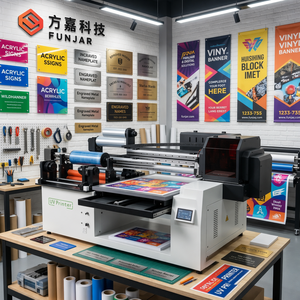
The emergence of UV DTF (Direct-to-Film) technology has unlocked print application on non-flat, irregular, or ultra-large surfaces previously incompatible with standard flatbed beds. By printing CMYK + White + Varnish directly onto specialized Film A, followed by continuous lamination to Film B, operators can create highly durable, waterproof 3D crystal transfer stickers. These apply seamlessly onto glass, stainless steel, ceramics, wood, and curved plastics with zero thermal pressing required.
Commercial buyers increasingly demand high-margin value-added finishes over standard flat graphics. High-build varnish layering allows flatbeds to generate authentic oil-painting textures, tactile braille signage, and leather-like grain structures. Modern dual UV-LED curing systems allow independent control over pin-curing (for localized gloss/matte effects) and final full curing, facilitating crisp varnish edges without inter-color bleed.
When selecting a factory supplier, prioritize manufacturers offering unified board design and modular hardware architecture. Machines built on open RIP platforms (UltraPrint, Photoprint, MainTop) with standardized printhead interface boards ensure lower long-term maintenance overhead, simpler spare parts sourcing, and straightforward upgrading paths as printhead technologies evolve.
Evaluating commercial digital printers requires looking beyond initial hardware purchase prices to factor operational consumables, maintenance downtime, and technical yield rates.
Initial Capital Expenditure (CapEx) accounts for only 30–40% of a commercial digital printer's overall 3-year operating lifecycle cost. Operational Expenditures (OpEx)—including UV ink consumption, power usage, replacement printheads, wipers, dampers, and assist gas—form the majority of expenses.
Partnering directly with a true OEM/ODM manufacturer mitigates component shortages. We maintain stock buffers for key proprietary spare parts: mainboards, head drive boards, servo motors, UV lamps, and ink pumps.
For global distributors and equipment brand owners, our ODM manufacturing framework supports complete brand localization:
Clear, definitive technical answers covering custom factory orders, printhead selection, media handling, and operational support.
For standard catalog configurations, our MOQ is 1 unit. For custom OEM branding (custom sheet metal colors, private-label software logo integration, and custom packaging), the typical MOQ is 3 to 5 units depending on structural modifications required.
Solvent printers use aggressive ink formulations to bite into outdoor PVC flex banners at the lowest cost per square foot. Eco-solvent printers utilize refined low-odor inks ideal for indoor graphics, wraps, and banners. UV printers employ LED lamps to instantly cure UV-curable inks directly on rigid substrates (glass, acrylic, metal, wood) and flexible films, delivering immediate post-processing capability without drying delays.
A standard flatbed UV printer ejections ink directly onto a flat substrate resting on its suction table. A UV DTF hybrid machine prints onto an intermediate release film (Film A), coats it with adhesive and varnish, laminates it with Film B, and creates a crystal transfer sticker. This allows graphics to be transferred onto curved, irregular, or installed objects that cannot fit onto a flatbed printing table.
For ultra-fine text, micro-logos, and 1200+ DPI photorealistic output (e.g., phone cases, golf balls, cosmetics packaging), Epson i3200-U1 or TX800 printheads with 3.5-picoliter minimum drop sizes are ideal. For industrial multi-shift continuous production on rigid sheets, Ricoh Gen6 or Kyocera printheads offer higher mechanical longevity and higher drop velocity.
Yes. All international export orders include sea-worthy wooden crating, complete technical documentation, pre-delivery calibration video logs, and comprehensive warranty coverage (12 to 24 months on non-consumable components). We provide remote video commissioning, online engineer technical support, and on-site dispatch services through our appointed global distributor network.
Buyers should ensure a level, vibration-free RCC concrete floor, dust-controlled environment (temperature 20°C–28°C, relative humidity 40%–60%), stable dedicated 220V/380V grounded power (ground resistance <4 ohms), an oil-free air compressor (for suction and negative pressure systems), and adequate exhaust/fume extraction systems.
Absolutely. We encourage prospective B2B clients to dispatch sample substrates (acrylic, glass, metals, specialty films) to our factory testing labs in Ahmedabad. Our application team will perform trial print runs, record cycle times, measure ink consumption, test scratch adhesion, and return printed samples along with a full technical evaluation report.
Our printers are engineered with automated white ink circulation loops, timed main-tank agitation impellers, sub-tank heating elements, and automated scheduled maintenance routines. Even during idle standby, the machine periodically circulates white ink to stop Titanium Dioxide settling and preserves ready-to-print readiness.
Whether you require a standard flatbed printer, an AI vision-assisted UV DTF hybrid unit, or a complete private-label OEM manufacturing partnership, our application engineering team is ready to evaluate your technical requirements.
+91-79-26840551 / 52 / 53
Domestic: +91 7575 009 654 · Export: +91 7043 505 091
[email protected]
International: [email protected]
Plot No.3, Road No.1, Kathwada GIDC, Kathwada, SP Ring Road, Ahmedabad 382430, Gujarat, India