Engineered for high-volume custom production, industrial durability, and seamless enterprise integration.
In the rapidly evolving landscape of advanced metal fabrication and industrial printing, selecting a competent Custom OEM Metal Laser Manufacturer is no longer merely a purchasing decision—it is a foundational strategic partnership. Global industrial supply chains demand precise thermal management, high photoelectric conversion efficiency, tight mechanical tolerances, and long-term repeatability. Equipment sourcing decisions impact operating margins, scrap rates, thermal distortion management, and overall equipment effectiveness (OEE).
Modern industrial metal fabrication centers on the transition from legacy CO2 and mechanical punch systems to high-power fiber laser cutting, multi-axis automated laser welding cells, and hybrid UV-LED direct-to-substrate digital decoration. OEM equipment manufacturers must integrate specialized mechanical bed annealing, precision optical alignment, and real-time machine telemetry to survive harsh 24/7 operating cycles.
Modern fiber laser sources deliver electrical-to-optical conversion efficiencies exceeding 40%, cutting overall facility power overhead drastically compared to legacy CO2 optics.
Heavy-duty welded steel and monolithic cast-iron beds undergo high-temperature annealing at 600°C to eliminate structural stress and ensure decades of micron-level positioning.
Real-time EtherCAT bus communication guarantees synchronization between servo drives, height sensors, and assist gas pressure regulators for burr-free edge finishing.
Understanding the interplay between laser output power, material sheet thickness, assist gas selection, and throughput speed is critical when evaluating OEM machinery specifications.
| Laser Source Wattage | Carbon Steel (Max Cut / Optimal Speed) | Stainless Steel (Nitrogen Cut) | Aluminium Alloy (Air / N2 Cut) | Assist Gas Strategy | Primary Industrial Sector |
|---|---|---|---|---|---|
| 1.5 kW - 3 kW | 16 mm / 1.2 m/min (6mm CS) | 6 mm (Clean Edge) | 5 mm | O2 for CS / Compressed Air for thin SS | Light HVAC, Enclosures, Signage |
| 6 kW (JX Series) | 25 mm / 2.8 m/min (10mm CS) | 16 mm (High-Pressure N2) | 14 mm | High-Pressure Nitrogen & Mix Gas | Heavy Machinery, Job Shops, OEM Vendors |
| 12 kW (MX Series) | 40 mm / 4.5 m/min (12mm CS) | 30 mm (Burr-Free) | 25 mm | Liquid Nitrogen / High-Pressure Air | Shipbuilding, Structural Steel, Automotive OEM |
| 20 kW - 40 kW (MX Pro) | 60 mm+ / 8.0 m/min (20mm CS) | 50 mm+ (Ultra High-Speed) | 45 mm+ | Custom Gas Mixing Stations & IoT Pressure Control | Defense, Heavy Transport, Aerospace Components |
Industrial procurement teams face disparate operational requirements depending on product portfolio diversity. Below is an engineering-led matching framework designed to assist procurement specialists in shortlisting machinery based on intent and application parameters.
For fabricators processing carbon steel plate, stainless ducting, copper busbars, and structural tubing, OEM Fiber Laser Cutting Machines (such as the HX, JX, and MX Series) offer unbeatable cost-per-meter metrics. Equipped with fully enclosed safety cabins, dual exchange tables, and German-engineered optical cutting heads, these units reduce load/unload cycles to under 15 seconds.
Modern assembly lines require low thermal distortion, clean cosmetic welds, and deep penetration joining. Handheld 4-in-1 Laser Welding Machines and robotic welding cells replace traditional TIG/MIG processes. Operating at speeds up to 4x to 10x faster than manual arc welding, laser welding eliminates post-process grinding and polishing.
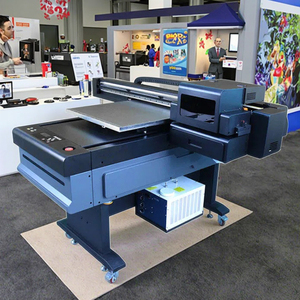
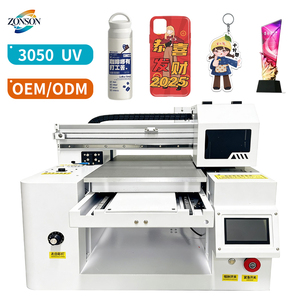
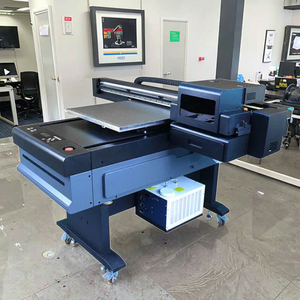
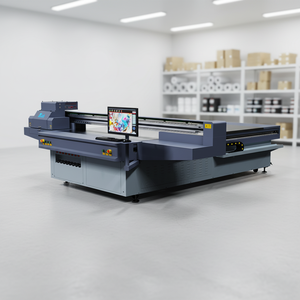
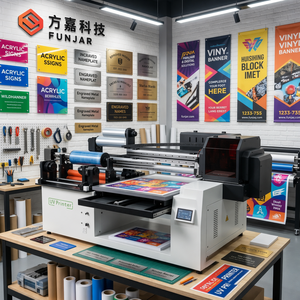
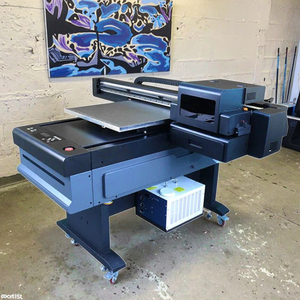
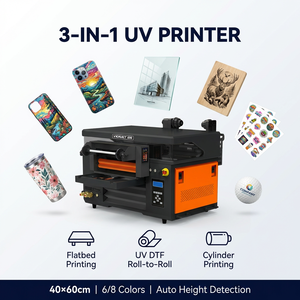
From architectural glass panels and industrial metal labels to promo items and crystal stickers, UV LED printing offers instantaneous curing and scratch-resistant adhesion. Units like the 2026 Industrial A1 6090 UV DTF Printer incorporate AI Vision Positioning Cameras to locate irregular substrates automatically and execute registration-perfect print passes.
For processing non-ferrous alloys, aluminium composite panels (ACP), MDF, and packaging materials, multi-axis CNC Routers and digital flatbed cutting plotters provide clean mechanical routing. Equipped with automatic tool changers (ATC) and high-power vacuum beds, these machines execute complex 3D carving and knife creasing seamlessly.
As smart manufacturing (Industry 4.0) permeates industrial supply chains, global buyers must anticipate structural shifts in equipment design and OEM capability requirements over the next decade.
The boundary between traditional plasma cutting and fiber laser cutting has shifted permanently. Ultra-high-power fiber lasers allow fabricators to cut carbon steel plates up to 50 mm thick using high-pressure compressed air or oxygen at processing speeds previously unachievable. Procurement teams are rapidly replacing plasma beds with enclosed high-wattage fiber systems to cut gas cost per meter while achieving vertical, smooth edge finishes.
Future-ready OEM machinery incorporates embedded camera networks and real-time optical diagnostics inside the laser cutting head. Automated edge-finding algorithms compute sheet alignment within milliseconds, reducing scrap rates. Concurrently, closed-loop thermal monitoring systems dynamically adjust focal position and assist gas flow rate when thermal lens shift or nozzle spatter is detected, avoiding lost production shifts.
Stand-alone laser cutting beds are being replaced by automated manufacturing cells featuring raw material loading towers, automated unloading arms, and robotic sorting systems. OEM machinery builders are increasingly evaluated on their ability to deliver modular automation hardware and seamless integration with client ERP/MES software through standardized OPC-UA protocols.
Environmental, Social, and Governance (ESG) mandates are accelerating the transition from solvent-based printing to energy-efficient UV-LED curing platforms. Instant UV polymerization eliminates volatile organic compound (VOC) emissions, slashes energy consumption by over 60% compared to thermal drying tunnels, and enables direct printing on heat-sensitive synthetic media.
Developing industrial-grade laser and CNC equipment requires rigorous material science, structural engineering, and continuous optical refinement. The evolution of OEM manufacturing relies on four engineering pillars:
Machine gantries and beds are subjected to rigorous FEA simulation under high acceleration dynamics (up to 2.0G). Structural ribs are strategically located inside welded frames to prevent resonant vibration during high-speed direction changes.
High-power laser beam propagation demands dust-free optical paths. OEM laser cutting heads feature positive-pressure dust sealing, double protective glass cartridges, and closed-circuit water chillers to maintain optical stability.
Guide rails and rack-and-pinion drive systems are installed using precision laser interferometers to verify linear positioning accuracy down to ±0.03 mm across the entire 3000mm x 1500mm or 6000mm x 2000mm bed area.
Navigating technical machinery procurement involves answering complex operational, electrical, and maintenance queries. Below are practical answers provided by our senior application engineering team.
Selection depends on your average sheet thickness distribution. If 80% of your work is below 6mm carbon steel or stainless steel, a 1.5kW to 3kW fiber laser provides optimal return on investment (ROI). If you regularly cut plates between 10mm and 20mm, a 6kW system is necessary. For plate work exceeding 25mm or high-volume nitrogen processing, 12kW+ systems are recommended.
Oxygen causes an exothermic reaction, making it ideal for thick carbon steel at lower pressures, but leaves an oxide layer. Nitrogen produces clean, oxide-free edges on stainless steel and aluminium but requires high operating pressures (18-25 bar), increasing gas cost. High-pressure compressed air (with dedicated filtration & drying) offers the lowest cost per meter for thin-to-medium gauge metals.
High-power laser cutting systems require a stable 3-phase electrical supply (380V/415V, 50/60Hz) with dedicated earthing (ground resistance < 1 Ohm). The installation site must feature a reinforced concrete slab (minimum 200mm thickness) capable of supporting dynamic machine loads without deflection.
Solid-state fiber laser sources (IPG, Raycus, Maxphotonics) carry a design mean time between failures (MTBF) exceeding 100,000 operational hours (approximately 10 years of multi-shift operation). Industrial UV-LED curing assemblies typically deliver 20,000 to 30,000 operational hours before irradiance degradation occurs.
Export machinery undergoes seaworthy vacuum packaging and timber crating. OEM suppliers provide comprehensive installation documentation, remote video commissioning, and local service engineer dispatch. Consumable kits (nozzles, protective lenses, ceramic rings, ink filters, dampers) are bundled with shipments to eliminate operational downtime.
Yes. Custom OEM manufacturing includes tailor-made bed sizes (e.g., 2040, 2060, 2580), custom gantry clearances, private-label exterior sheet metal colors, custom logo branding, and tailored HMI software interfaces tailored to distributor network requirements.
With over 25 years of continuous machine tool innovation, Mehta Hitech Industries Limited represents engineered reliability, scale, and deep manufacturing authority. Operating across 15 ISO 9001:2015 certified manufacturing facilities in Kathwada GIDC, Ahmedabad, India, our manufacturing campus spans over 30,000 square meters of state-of-the-art production space.
Every laser cutting bed, CNC router chassis, and UV printer frame is fabricated, stress-relieved, machined on multi-axis floor borers, and painted in our owned manufacturing units, guaranteeing strict quality assurance.
Our manufacturing processes adhere strictly to Lean Six Sigma principles. All machines undergo 72-hour continuous dry-run testing, optical burn-in validation, and CE compliance certification prior to export crating.
Supported by 17 direct service branch offices and an expanding network of international distributors, we provide worldwide commissioning assistance, operator training, and rapid spare-parts fulfillment.
Speak directly with our machine application engineers to receive custom configuration advice, sample cutting trials, and factory-direct quotation packages.
+91-79-26840551 / 52 / 53
Domestic: +91 7575 009 654 · Export: +91 7043 505 091
[email protected]
International: [email protected]
Plot No.3, Road No.1, Kathwada GIDC, Kathwada, SP Ring Road, Ahmedabad 382430, Gujarat, India