Engineered for high throughput, micro-tolerance repeatability, and continuous multi-shift production environments across global export markets.
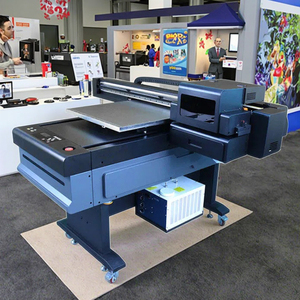
Precision vacuum suction bed engineered for rigid acrylic, metal, glass, and plastic substrates. Features dual UV-LED curing and multi-channel white/varnish capabilities.
Get a Quote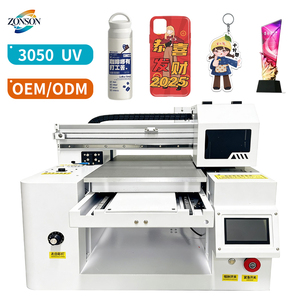
Compact high-resolution digital print head assembly designed for specialized cylindrical, curved, and flat items including mugs, bottles, golf balls, and phone enclosures.
Get a Quote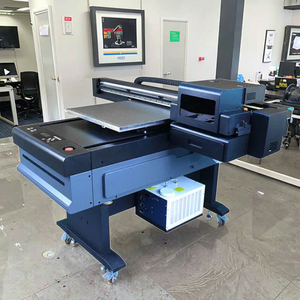
Heavy-duty industrial chassis architecture offering vibration dampening, air-cooled UV LED lamps, and CMYK+W+V formulation for extreme outdoor durability.
Get a Quote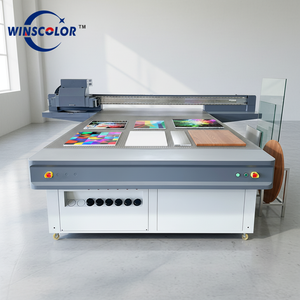
2.0m x 3.0m large-format bed equipped with industrial magnetic linear motor drive systems for high-speed continuous printing on heavy acrylic and architectural sheet metals.
Get a Quote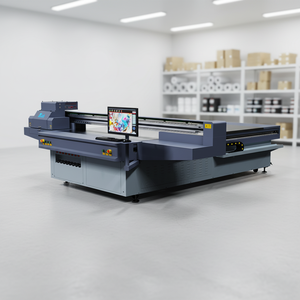
Advanced 3D tactile texture embossing printing system with automated height sensors, negative pressure ink supply controls, and enterprise RIP integration.
Get a Quote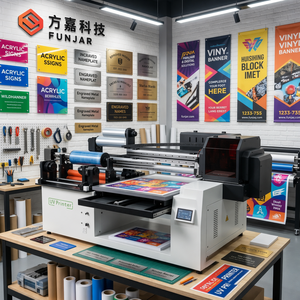
Next-generation hybrid platform integrating real-time AI optical recognition cameras for dynamic edge registration, inline laminating, and crystal transfer sticker output.
Get a Quote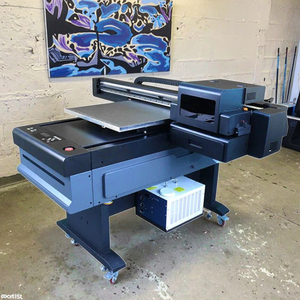
High-precision ball screw motion system paired with dual linear guides, anti-static bar assemblies, and direct print capability for industrial promotional fabrication.
Get a Quote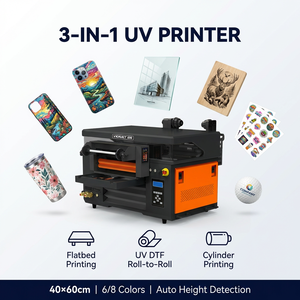
Versatile small-footprint production engine supporting flat and rotary printing modules, fast head alignment, and low per-print operational costs.
Get a QuoteMehta Hitech Industries Limited (formerly known as Mehta Cad Cam Systems Pvt. Ltd., CIN: U72200GJ2000PLC038163) represents one of the world's most vertically integrated manufacturers and exporters of advanced laser processing and digital printing machinery. Operating from 15 ISO 9001:2015 certified manufacturing facilities in Kathwada GIDC, Ahmedabad, India, spanning over 30,000 square meters of specialized production floor, the enterprise combines structural fabrication, optoelectronic alignment, motion control engineering, and rigorous dry-run testing under a unified quality assurance protocol.
With a dedicated workforce of over 1,500 skilled engineers, metallurgists, and application specialists, Mehta Hitech Industries delivers comprehensive OEM/ODM customization for global buyers across 15+ export destinations. Every laser welding system and industrial printer is built to European CE safety standards, utilizing Lean Six Sigma methodology to guarantee micro-level precision, minimum thermal deformation, and operational longevity in continuous 24/7 industrial deployment.
Unlike standard equipment traders or simple assembly shops, a authentic OEM laser welder factory provides full structural, electrical, and optical engineering tailoring. Custom procurement options engineered by Mehta include:
The industrial joining landscape is undergoing a systemic transition from conventional arc welding techniques (TIG/MIG) toward solid-state Fiber Laser Welding Systems. Driving this technological shift is the requirement for higher energy efficiency, minimal heat-affected zones (HAZ), superior tensile joint strength, and complete repeatability through digital process control.
By oscillating the focused laser spot at high frequencies (up to 300 Hz), wobble welding heads agitate the molten weld pool. This eliminates porosity, prevents hot cracking in aluminum alloys, and allows effective welding of poor-fit joints without requiring additional filler wire.
Welding highly reflective non-ferrous metals like pure copper (Cu) and gold (Au) historically presented severe back-reflection challenges with 1064nm infrared lasers. Modern OEM factories now deploy short-wavelength blue (450nm) and green (532nm) hybrid systems that increase absorption efficiency up to 800%.
Integration of real-time CMOS camera vision and optical seam tracking allows the welding laser to dynamically follow complex 3D seam geometries, adjust power parameters on-the-fly, and automatically log melt pool thermal profiles for quality assurance compliance.
Understanding the thermal physical properties of target alloys is paramount when specifying custom OEM laser welder configurations. The table below details operational laser power densities, assist gas selections, and beam profiles required for zero-defect metallurgical bonding:
| Substrate Material | Thickness Range | Recommended Laser Type | Optimal Assist Gas | Key Metallurgical Consideration |
|---|---|---|---|---|
| Austenitic Stainless Steel (304/316L) | 0.5 mm – 8.0 mm | CW Fiber Laser (1.5 kW – 4.0 kW) | 100% Argon / Nitrogen | Prevents chromium carbide precipitation; retains corrosion resistance. |
| Carbon Steel / Mild Steel | 0.8 mm – 12.0 mm | CW Fiber Laser (2.0 kW – 6.0 kW) | Compressed Air / Nitrogen | Requires clean surface preparation; controls weld seam hardness. |
| Aluminum Alloys (5000/6000 Series) | 1.0 mm – 6.0 mm | High-Power Wobble Fiber (3.0 kW – 8.0 kW) | High-Purity Argon (99.999%) | Breaks surface oxide film ($Al_2O_3$); mitigates solidification cracking. |
| Pure Copper (C11000) & Brass | 0.2 mm – 3.0 mm | Blue-IR Hybrid / QCW Fiber Laser | Argon / Helium Mix | Overcomes high initial thermal conductivity and optical reflectivity. |
| Titanium Alloys (Ti-6Al-4V) | 0.5 mm – 4.0 mm | Enclosed Cabin Fiber Laser | Trailing Shielding Argon | Requires total atmospheric isolation to prevent oxygen embrittlement. |
Global procurement managers, factory directors, and OEM buyers are restructuring their machinery sourcing criteria. Beyond evaluating initial capital expenditure (CAPEX), enterprise buyers now prioritize comprehensive Total Cost of Ownership (TCO), supply chain resilience, and modular automation scalability.
Modern solid-state fiber laser welders achieve electrical wall-plug efficiencies exceeding 35%–40%, compared to a mere 8%–10% for legacy CO2 lasers and 15% for traditional arc welders. When purchasing from an OEM exporter, enterprise buyers are insisting on verified electrical draw profiles, low standby consumption modes, and long-life diode modules rated for >100,000 operational hours. This drastically reduces factory electricity tariffs and minimizes carbon footprint penalties under international trade regulations.
A major growth driver in international procurement is the rapid adoption of handheld 4-in-1 laser processing guns. Combining laser welding, laser cleaning, continuous weld-seam cutting, and surface rust ablation into a single lightweight handheld unit (1.0 kW to 3.0 kW), these systems enable job shops and field contractors to replace four separate machine investments with one versatile asset.
The global boom in Electric Vehicles (EV), energy storage systems (ESS), and solar battery technology has created unprecedented demand for specialized OEM laser welding production lines. Procurement specifications increasingly require multi-axis robotic cells tailored for tab-to-busbar joining, cylindrical cell cap sealing, aluminum battery tray perimeter welding, and hair-pin stator motor pin joining where zero spatter and sub-millimeter heat control are strict non-negotiables.
Leading OEM exporters are equipping export-grade laser machinery with IoT telematics platforms. Factory owners can remotely monitor operational parameters including laser power output stability, assist gas consumption rates, cooling water flow rates, protective lens temperature, and operator efficiency via secure cloud dashboards. Automated predictive maintenance alerts prevent costly unscheduled downtime by notifying managers before optical components fail.
In-depth answers from our application engineering team to streamline your OEM equipment evaluation.
Laser power selection depends on material type, thickness, and required penetration mode (conduction vs. keyhole welding). For sheet metals up to 1.5 mm stainless or carbon steel, a 1.0 kW – 1.5 kW fiber laser provides clean, high-speed single-pass welds. For penetration depths of 2.0 mm to 4.0 mm in stainless steel or aluminum, select a 2.0 kW – 3.0 kW system. Heavy plate welding above 5.0 mm requires 4.0 kW to 12.0 kW continuous wave (CW) lasers paired with deep-penetration optics.
Standard fixed laser heads produce a microscopic focused spot size (0.1 mm – 0.3 mm), demanding extremely tight part fitting and zero gap tolerances. A wobble laser head uses internal galvanometer mirrors to rapidly oscillate the laser spot in controlled geometric patterns up to 5.0 mm wide. This bridges wide fit-up gaps, improves thermal uniformity, reduces porosity in aluminum, and produces smoother cosmetic weld seams that require zero post-weld grinding.
Argon (Ar) at 99.99% purity is the standard shielding gas for stainless steel, titanium, and aluminum, preventing oxidation and atmospheric contamination of the melt pool. Nitrogen ($N_2$) is an economical alternative for standard stainless steel joining where slight nitriding is acceptable. Helium (He) offers superior thermal conductivity and ionization resistance for ultra-clean deep-keyhole welding, though at higher cost. Compressed clean dry air can be used for basic carbon steel joining.
All export machinery undergoes ocean-grade vacuum foil packaging and reinforced wooden crating. Mehta provides complete export documentation (CE declarations, Certificate of Origin, ISO compliance certificates). Commissioning is supported via on-site service engineer deployment, remote augmented reality (AR) video commissioning, and local distributor technical teams trained at our Ahmedabad headquarters.
Yes. Custom OEM laser welding workstations are engineered with standardized industrial fieldbus protocols (Profinet, EtherCAT, Modbus TCP, DeviceNet). This enables seamless communication with supervisory PLCs, conveyor systems, safety interlock curtains, and robotic arms for automated loading, seam tracking, clamping, and real-time pass/fail part sorting.
Routine maintenance focuses on keeping optical paths pristine. Protective cover glass slides should be inspected daily for dust or spatter and cleaned using optical-grade lens tissue and pure isopropyl alcohol. Chiller water temperature and conductivity should be checked weekly, replacing deionized water filter cartridges quarterly. Optical fiber connectors must remain sealed to prevent dust ingress into the laser head chamber.
Whether you require a single specialized laser welding cell or a complete factory-wide fleet of industrial UV printers and CNC routers, Mehta Hitech Industries delivers world-class engineering, custom OEM design, and factory-direct exporter pricing.
Get a Quote+91-79-26840551 / 52 / 53
Domestic: +91 7575 009 654 · Export: +91 7043 505 091
[email protected]
International: [email protected]
Plot No.3, Road No.1, Kathwada GIDC, Kathwada, SP Ring Road, Ahmedabad 382430, Gujarat, India