Factory Direct Portfolio
Top Woodworking & Surface Finishing Machinery
Engineered for high-throughput cabinet manufacturing, direct-to-substrate wood decoration, acrylic/MDF routing, and crystal sticker overlays.
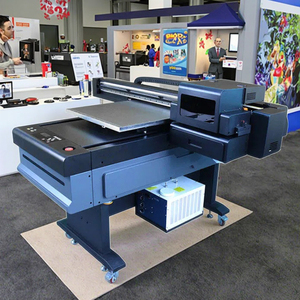
6090 DTF Flatbed UV Printer With Suction Platform & 6 Color System
Features an integrated multi-zone vacuum suction platform and 6-color UV LED ink delivery system (CMYK+W+V). Designed for direct printing on acrylic, treated timber, glass, and metal panels.
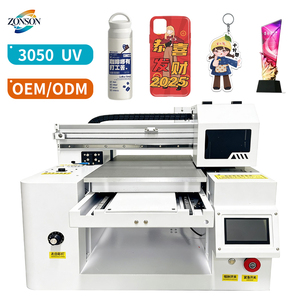
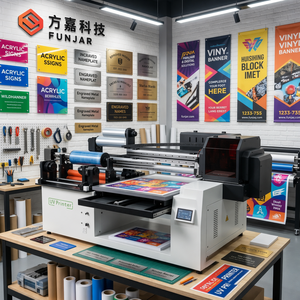
Desktop 3050 UV DTF Printer Flatbed Sticker Inkjet Printing Machine
Compact high-resolution digital printhead platform designed for specialized sticker production, phone cases, ceramic mugs, cylindrical bottles, and custom wood embellishments.
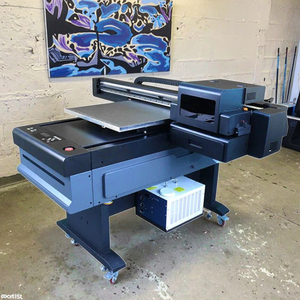
Flatbed Printer DTF UV 6090 With Suction Platform 6 Color UV Ink
Heavy-duty industrial chassis equipped with dual UV LED lamps and precision linear lead-screws. Provides immediate curing on rigid plastics, wood veneers, and sheet metal.
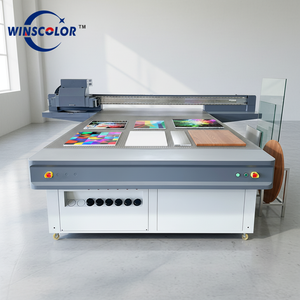
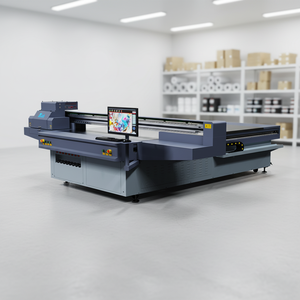
Large Flatbed UV Printer for Acrylic Printing Machine High Speed 2030
Industrial 2.0m x 3.0m large-format flatbed printer. Optimized for high-speed continuous production on architectural glass, solid wood doors, acrylic signage, and furniture panels.
Ntek Digital 3D UV LED Large Format Flatbed UV 2030 Inkjet Printer
Advanced 3D textured tactile printing system with grey-scale printhead technology. Creates realistic wood grain textures, embossed wall murals, and high-margin decorative laminates.
2026 Industrial A1 6090 UV DTF Printer AI Vision Positioning Camera
Next-generation 2-in-1 hybrid transfer system. Integrated CCD AI vision camera automatically recognizes contour offset lines for error-free crystal sticker and label transfer.
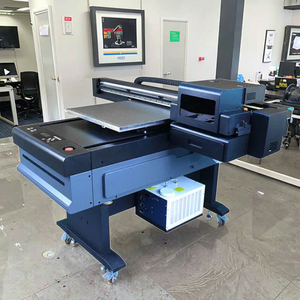
6090 DTF Printer UV Flatbed With Suction Platform 6 Color System
Multi-substrate UV flatbed printing system engineered for high-turnaround job shops. Features anti-static bar, white ink agitation circulation, and automatic height sensor.
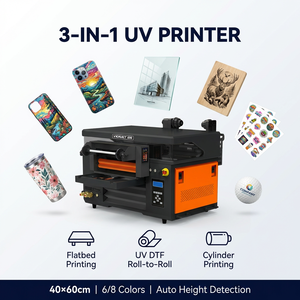
4060 All-in-One UV Printer: Print on Anything (Signs, Wood, Bottles)
Versatile desktop printing system supporting flat sheet substrates and rotary attachments. Ideal for small-batch custom prototyping, personalized wood gifts, and promotional items.
China Top Woodworking Machine Factories: Industry Evaluation & Procurement Analysis
The global woodworking and furniture manufacturing sectors are undergoing a massive technological shift driven by Industry 4.0 automation, IoT telemetry, micro-nesting algorithms, and digital direct-to-substrate surface embellishment. When evaluating top woodworking machine factories in China and leading global hubs, procurement directors must look beyond initial hardware acquisition costs. The true measure of operational profitability lies in total cost of ownership (TCO), structural frame rigidity, spindle dynamic stability, software controller interoperability, and long-term service availability.
Modern woodworking production lines no longer operate as isolated mechanical units. High-volume panel processing factories demand seamless integration between automatic storage and retrieval systems (ASRS), multi-axis CNC nesting routers, edgebanders, and wide-format UV decor printers that replicate natural timber grains onto synthetic laminates, MDF, and particleboard. China's top tier machinery factories have evolved from low-cost assembly shops into world-class R&D centers capable of building machinery that meets stringent European CE, ISO 9001:2015, and Lean Sigma manufacturing standards.
Key Evaluation Criteria for Global Machinery Buyers
Before issuing a Purchase Order (PO) or tendering a contract to an OEM factory, industrial buyers should benchmark potential machinery suppliers against five core engineering metrics:
1. Structural Annealing & Frame Integrity
Heavy-duty gantry routers and laser beds must undergo high-temperature thermal stress relief annealing (600°C) to eliminate internal welding stress. Un-annealed machine frames warp over 18 to 24 months of heavy shift operation, ruining 3D positioning accuracy.
2. Spindle Dynamics & Motion Control
Whether choosing Italian HSD air-cooled spindles or top-tier Chinese high-frequency electric spindles (9.0 kW to 12 kW ATC), dynamic balancing (ISO G0.4 standard) is crucial to avoid chatters on solid wood, plywood, and melamine surfaces.
3. Vacuum Hold-Down Efficiency
Nesting efficiency relies heavily on high-flow vacuum pump systems (regeneration or rotary vane oil-free pumps). Matrix vacuum beds with individual zone control prevent thin or small workpieces from shifting under aggressive milling forces.
Future Procurement Trends in Woodworking & Surface Finishing Machinery
As international labor costs rise and raw material utilization becomes central to factory margin preservation, industrial machinery buyers are recalibrating their capital expenditure strategies. Drawing from global market telemetry and OEM manufacturing insights, five pivotal trends will govern equipment procurement through 2030:
| Procurement Trend |
Legacy Technology (2015-2020) |
Next-Gen Standard (2025-2030) |
Operational Impact & ROI |
| Panel Nesting & Optimization |
Manual panel cutting & standard G-code slicing |
AI-driven dynamic nesting algorithms with auto labeling |
Material yield efficiency increased to 95%+; waste reduced by 18%. |
| Decor & Grain Application |
PVC foil laminating & paper veneer press lines |
Direct-to-board 3D UV flatbed digital printing with tactile relief |
Zero setup cost for short-run custom wood grains; instant LED curing. |
| Tool Change Automation |
Manual tool change / 6-tool linear carousel |
12 to 24 tool Disc ATC with high-speed servo tool positioning |
Tool change time dropped below 2.5 seconds; continuous 24/7 duty cycle. |
| Vision Systems |
Mechanical edge finders & manual laser dots |
CCD AI camera positioning & automatic optical alignment |
Eliminates manual registration error on printed stickers and carved panels. |
| Machine Health Telemetry |
Break-fix maintenance post-failure |
IoT cloud analytics, vibration sensing, predictive spindle alerts |
Unplanned machine downtime reduced by up to 45%. |
Particularly noteworthy is the convergence of traditional CNC router machining with UV inkjet finishing technology. Modern furniture factories no longer rely solely on physical timber laminates. By combining a high-precision CNC router with a 2030 or 6090 UV Flatbed Digital Printer, manufacturers can route complex panel shapes from economical MDF boards, sand the edges, and directly print high-definition oak, walnut, or marble textures with 3D tactile embossing in a single continuous workflow.
Technology Development Trends: Deep Dive into Machinery Architecture
Understanding the internal componentry of woodworking equipment separates novice buyers from master factory engineers. Below are the engineering innovations defining top-tier machinery production:
1. High-Speed Synchronous Spindles & Linear Servo Drive Systems
Modern 3-axis, 4-axis, and 5-axis CNC routers are shedding traditional stepper motors in favor of absolute encoder AC Japanese Yaskawa or Delta brushless servo drives coupled with helical rack-and-pinion transmission systems. On the X and Y axes, planetary gearboxes deliver positioning accuracy within ±0.02 mm even at rapid traverse speeds exceeding 60 m/min.
2. Dual-Chassis Vacuum & Suction Platforms for UV Flatbed Systems
As seen in industrial 6090 and 2030 UV Printers, suction platforms are built using honeycomb aviation-grade aluminum plates powered by high-pressure centrifugal fans. This ensures heavy acrylic sheets, warped plywood panels, or glass plates remain perfectly flat against the print bed, maintaining a precise 1.5mm distance to delicate piezoelectric printheads (such as Epson i3200 or Ricoh Gen5/Gen6 arrays).
3. Hybrid UV DTF Crystal Sticker & AI Vision Cameras
The rise of personalized promotional goods and short-run custom branding has popularized UV DTF (Direct-to-Film) Hybrid Printers. Equipped with automated CCD cameras, these machines scan registration marks printed on A-film, automatically adjusting cutting vectors and ink firing timing to produce durable, water-resistant, scratch-proof transfer stickers for application on curved wood, metallic tumblers, and irregular acrylic plaques.
Factory Benchmark Authority
Why Partner with Our Direct Industrial Manufacturing Base
Combining state-of-the-art metal fabrication, optical laser testing, and global technical service networks under one accountable brand.
Integrated Manufacturing Campus
Over 30,000 m² of dedicated manufacturing space housing gantry milling machines, laser plate cutters, assembly lines, and dynamic balancing test benches. Every machine undergoes a minimum 48-hour dry-run stress test prior to crating.
Rigorous Quality Standards
Operating under strict ISO 9001:2015 quality management systems, Lean Sigma practices, and European CE compliance. Electrical cabinets feature certified Schneider/Siemens contactors, shielded anti-interference wiring, and IP54 dust protection.
Global Service & Spare Parts Support
Supported by 17 technical service hubs worldwide, remote diagnostic engineers, and fast-track spare part shipping (nozzles, ceramic rings, UV lamps, printheads, drivers) to ensure maximum production uptime for overseas buyers.
Factory Buying Guide
Frequently Asked Procurement Questions (FAQ)
Technical solutions and logistical guidance directly from our senior machinery application engineering desk.
What is the difference between a standard CNC wood router and a Nesting CNC Router system?
A standard CNC wood router is typically optimized for manual workpiece clamping, solid wood carving, and 3D reliefs. A Nesting CNC router is specifically designed for panel furniture production (MDF, particleboard, plywood). It utilizes a matrix vacuum table, automatic pop-up positioning pins, integrated dust extraction hoods, and optimization software to cut, drill, and groove entire 4x8 ft sheets with minimal material waste and auto-unloading capability.
How do I choose between UV Flatbed Direct Printing and Traditional Laminate Wood Veneer?
Traditional wood laminates and PVC veneers work well for ultra-high-volume identical runs. However, UV Flatbed Printers (like our 2030 and 6090 series) offer unparalleled flexibility for custom interior design, direct-on-wood art, textured tactile grains, and short-to-medium runs. UV digital printing eliminates inventory holding costs for hundreds of different laminate foils because any digital image or grain pattern can be printed on demand onto plain raw boards.
What electrical and pneumatic preparation is required before installing a high-power CNC router or UV flatbed printer?
Most industrial machinery requires a stable 3-phase AC power source (380V/220V ±5%, 50/60Hz) with dedicated grounding (ground resistance < 4 Ohms). Pneumatic components (such as vacuum zone pop-ups, automatic tool changers, and air-cooled spindles) require dry, oil-free compressed air supplied at 0.6 to 0.8 MPa. UV printers also require a climate-controlled room (20°C–28°C, 40%–60% humidity) to maintain ink viscosity and prevent printhead clogging.
What are the operational differences between UV DTF printing and Direct UV Flatbed printing?
Direct UV Flatbed printing fires ink directly onto flat substrates placed on the machine bed (such as boards, doors, acrylics, glass). UV DTF (Direct-to-Film) prints onto a special release film (Film A), laminates it with B-film, and allows the operator to manually press or apply the resulting crystal sticker onto irregular, curved, or oversized objects that cannot physically fit onto a flatbed printing table.
How does your factory handle export packaging, sea-freight logistics, and international warranty service?
All export machinery is wrapped with anti-rust moisture barrier film, vacuum sealed, and enclosed in heavy-duty IPPC-certified fumigation-free wooden crates. We provide comprehensive sea-worthy crating, customs documentation, and full technical support. Machinery comes with a standard 12-to-24 month warranty covering main components, backed by remote video diagnostics and dispatch of localized replacement parts.
Can I request sample cutting or custom UV color profiling with our proprietary wood substrates prior to placing a full machinery order?
Yes. We strongly encourage prospective international clients to send sample substrates or DXF/DWG vector CAD files. Our factory application engineers will execute live trial runs, perform spectrophotometer color matching, test vacuum grip retention, and provide full cycle-time analysis along with HD video documentation before purchase order finalization.