
China Top Channel Bender Factories & Suppliers: Technical Procurement & Manufacturing Whitepaper
The global commercial architectural signage and illuminated 3D lettering industry is undergoing a structural technological shift. Modern sign makers, industrial fabricators, and B2B procurement directors no longer view CNC channel letter bending machines as standalone units. Instead, they are evaluated as integrated modules within an end-to-end automated manufacturing ecosystem alongside high-speed fiber laser cutting systems, CNC routers, direct-to-substrate UV flatbed printers, and AI vision positioning UV DTF crystal sticker systems.
Sourcing channel letter benders directly from premier Asian manufacturing hubs requires a rigorous evaluation of machine kinematics, structural rigidity, mechanical notching mechanisms, multi-axis servo precision, and software compatibility. This whitepaper synthesizes 25 years of industrial machine design experience to guide corporate buyers through the technical considerations, future procurement trends, and operational metrics required to establish a high-yield signage production line.
1. Kinematic Mechanics & Material Metallurgical Compatibility
Modern commercial channel benders must handle diverse metal coils with varying spring-back properties, yield strengths, and surface finishes. Premium factories build bending platforms capable of processing stainless steel returns (up to 1.5 mm thickness), galvanized iron, extruded aluminum profiles (up to 2.0 mm), folded aluminum trim caps, and copper sheet coils without inducing material stress fracture or surface scuffing.
Dual-Blade Planar Notching
Utilizes high-speed servo-driven mechanical blades or tungsten steel cutters to execute clean V-slots for sharp angle bends up to 135 degrees. Essential for rigid stainless steel and galvanized sheet returns.
Closed-Loop Servo Bending
Replaces pneumatic actuators with high-torque Yaskawa or Panasonic servo drivers. Guarantees continuous angle accuracy of ±0.1° across 1,000 continuous meters of channel return feeding.
Automatic Flanging & Slotted Punching
Integrated hydraulic or heavy-duty servo punchers create precise bottom mounting tabs (flanges) on aluminum and sheet metal, drastically reducing downstream spot welding labor.
Future Procurement Trends: The 2025–2030 Signage Automation Ecosystem
As global labor costs rise and lead times condense, procurement strategies are migrating toward fully integrated digital workflows. The historical barrier between structural metal bending and direct visual printing has collapsed. Top factories are now developing synchronized manufacturing lines where AI Vision Camera positioning UV DTF hybrid printers work in direct alignment with CNC channel benders and Fiber Laser cutters.
| Equipment Category | Core Industrial Application | Key Technological Benchmark | Automation Trend (2025–2030) |
|---|---|---|---|
| CNC Channel Letter Bender | Stainless steel & aluminum profile returns | Multi-axis servo, continuous auto-feeding | CAD-to-Bend AI spring-back compensation algorithms |
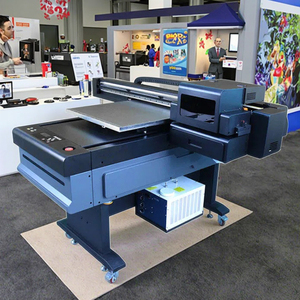
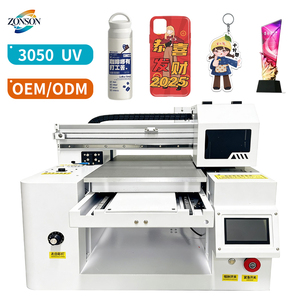
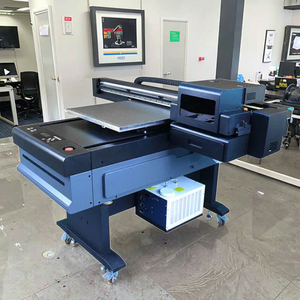
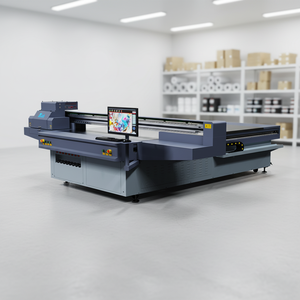
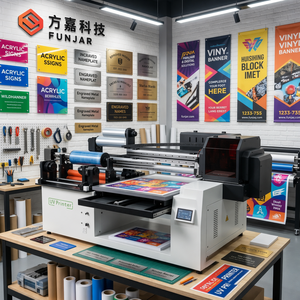
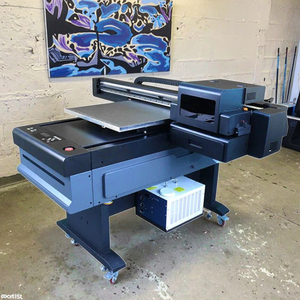
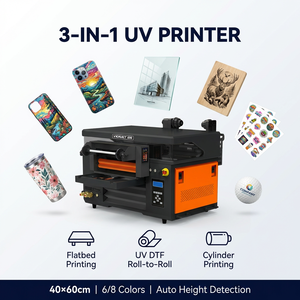
| AI Vision 6090 UV DTF Printer | Crystal stickers, 3D textured transfers | Epson i3200 heads, 6-Color + White + Varnish | Direct camera registration & inline lamination |
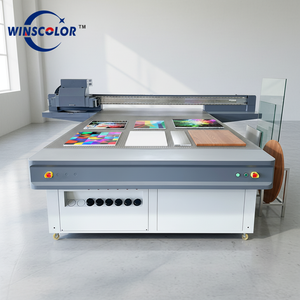
| Large Format 2030 UV Flatbed | Direct acrylic face & metal panel printing | Ricoh Gen5 / Gen6 industrial grayscale heads | LED-UV instant curing with automated suction zoning |
| Fiber Laser Cutting System | Metal faceplate & structural backplate cutting | 1.5 kW – 12 kW fiber sources, enclosed bed | Integrated shuttle tables & IoT productivity tracking |
| CNC Routing Machines | Acrylic acrylic diffusers, ACP, MDF, wood cutouts | Automatic Tool Changer (ATC), high-frequency spindles | Vacuum manifold automation with dust extraction |
2. Information Gain: Evaluating Total Cost of Ownership (TCO) in Bending Machinery
When purchasing channel letter benders from top manufacturers, invoice price accounts for less than 35% of total operating expense over a five-year lifecycle. B2B buyers must evaluate:
- Consumable Tooling Lifespan: High-grade tungsten notchers deliver 80,000+ slots before regrinding, whereas standard alloy steel fails at 15,000 slots.
- Software Vector Interpretation: Proprietary vector processing software must natively clean DXF, PLT, and AI files, automatically detecting overlapping nodes to prevent costly mechanical jams.
- Assist Drive Energy Consumption: Servo-driven bending mechanisms consume up to 60% less electrical power compared to traditional pneumatic compressor-heavy configurations.
Enterprise Advantage: In-House Manufacturing Strength & Quality Assurance
Rooted in over 25 years of continuous engineering evolution (formerly operating with extensive regional manufacturing infrastructure), our manufacturing footprint spans over 30,000 square meters of heavy machining facilities across 15 ISO 9001:2015 certified plants. Unlike assembly workshops that outsource critical components, every machine frame undergoes rigorous structural stress relief, precision milling on large-scale gantry machining centers, and comprehensive 72-hour dry-run testing prior to export shipping.
ISO 9001 & CE Certification
Built strictly to European safety standards with CE-marked low-voltage electronics, standardized safety interlocks, and industrial electromagnetic shielding.
Global Service Infrastructure
Supported by dedicated international technical response centers, factory-trained application engineers, and fast-track spare part air logistics.
Turnkey OEM / ODM Capability
Custom software branding, tailored electrical voltage wiring (110V / 220V / 380V), and specialized bed dimensions for OEM distributor partners worldwide.