A Comprehensive Engineering Guide for Tier-1 Fabricators, Automotive OEMs, Aerospace Maintenance, and Global Equipment Procurement Officers
As industrial manufacturing shifts globally toward sustainable, non-abrasive, chemical-free surface preparation, fiber laser cleaning technology has surfaced as the definitive replacement for sandblasting, chemical pickling, and mechanical grinding. China has developed the world's most comprehensive manufacturing ecosystem for pulsed and continuous-wave (CW) laser cleaning equipment, combining advanced optical beam delivery, high-efficiency fiber laser sources, and multi-axis CNC automation.
Representing over 25+ years of engineering experience, ISO 9001:2015 quality management processes, and CE-compliant manufacturing across 15 specialized production plants, our factory group exports high-precision laser equipment and digital processing solutions to over 15 countries worldwide. With more than 1,500 qualified engineers and technical staff, we provide end-to-end supply chain integration, from raw laser optical assembly to automated turn-key robotic cleaning cells.
Precision Engineered Flatbed Printing, Digital Processing, and High-Throughput Manufacturing Equipment
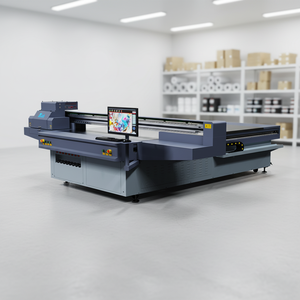
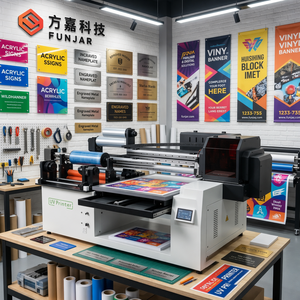
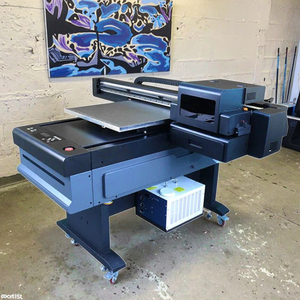
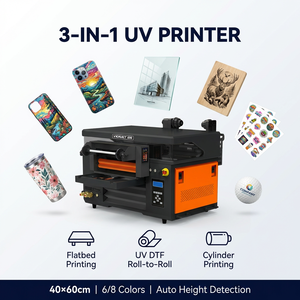
Laser cleaning operates on the fundamental principle of selective optical absorption and thermo-optical ablation. When short-pulse high-peak-power laser light interacts with surface contaminants—such as oxide scale, rust, paint, oil coatings, or rubber residue—the contaminant layer absorbs the laser energy rapidly while the underlying metal substrate reflects the vast majority of the optical wavelength (typically 1064 nm for ytterbium-doped fiber lasers).
This rapid energy absorption generates localized micro-plasma expansion, thermal stress, and acoustic shockwaves that break the adhesion bond between the contaminant layer and the base material. Because the laser pulse duration is maintained in the nanosecond (or picosecond) regime, the thermal dissipation into the substrate material is virtually non-existent, preventing thermal distortion, grain structural changes, or substrate mass loss.
Delivers high peak pulse power with pulse durations from 10 to 500 ns. Ideal for high-precision injection mold cleaning, historical artifact restoration, and delicate aerospace component preparation where zero substrate damage is strictly mandatory.
Provides high-average optical power ranging from 1000W to 3000W. Designed for heavy-duty rust stripping, large ship hull maintenance, pipeline weld seam preparation, and structural carbon steel mill scale removal at high area rates.
Utilizes dual galvanometer mirrors driven by linear optical encoders to generate customizable beam scan patterns (linear, circular, spiral, square, and raster fill), eliminating hot spots and ensuring uniform cleaning quality across complex geometries.
To assist industrial buyers in conducting thorough feasibility and ROI studies, the technical matrix below contrasts industrial fiber laser cleaning against traditional surface preparation technologies across operational metrics:
| Performance Parameter | Pulsed Fiber Laser (200W-500W) | High-Power CW Laser (1kW-3kW) | Sandblasting / Media Blast | Chemical Solvent Stripping |
|---|---|---|---|---|
| Substrate Impact / Wear | Zero Damage (NDT Pass) | Negligible Micro-Thermal Zone | High Surface Abrasion & Pit Wear | Substrate Corrosion Risk |
| Consumable Requirements | Electricity & Protective Optics | Electricity & Assist Gas | Abrasive Media (Garnet/Steel Shot) | Toxic Acids / Solvents |
| Secondary Waste Generation | Zero (Captured via HEPA Filter) | Zero (Captured via Fume Extractor) | Extremely High Dust / Slag Volume | Hazardous Liquid Chemical Waste |
| Automation Integration | Excellent (Robot/CNC Native) | Excellent (Integrated Gantry Cells) | Poor (Dust Impairs Mechanics) | Moderate (Bath Enclosures Required) |
| Operating Cost per m² | $0.05 – $0.15 USD | $0.10 – $0.30 USD | $1.50 – $3.50 USD | $2.00 – $5.00 USD |
| Occupational Safety Level | High (Closed Laser Class 1/4) | High (Interlocked Safety Enclosure) | Low (Silicosis & Noise Hazard) | Low (Toxic Fumes & Chemical Burns) |
As international supply chains evolve, global buyers sourcing laser processing systems and digital printing platforms from Chinese factories face shifting technology baselines and new regulatory compliance requirements. Strategic procurement leaders should evaluate five critical industry trends over the coming three to five years:
Handheld laser cleaning systems are increasingly transitioning toward fully automated cells. Leading Chinese factories are equipping laser cleaning machines with standardized industrial communication protocols (EtherCAT, PROFINET, Modbus) and mounting lightweight laser cleaning heads directly onto 6-axis articulated robot arms or Cartesian gantries. This setup guarantees sub-millimeter positional repeatability, uniform energy density delivery, and continuous 24/7 operation in automotive weld-prep lines and aerospace skin depainting.
The integration of high-resolution CCD cameras and artificial intelligence algorithms enables laser cleaning heads to automatically detect contaminant boundaries, calculate layer thickness, and modulate laser power dynamically in real-time. Furthermore, integrated laser-induced breakdown spectroscopy (LIBS) sensors allow high-end units to analyze the chemical composition of the surface layer continuously during operation, automatically stopping the laser beam the millisecond substrate metal is exposed.
Under strict international regulations—such as the EU Carbon Border Adjustment Mechanism (CBAM) and OSHA workplace safety codes—manufacturers are under intense pressure to eliminate VOC emissions, toxic chemical sludge, and high-decibel noise hazards. Fiber laser cleaning consumes only clean electrical energy, reducing carbon emissions by up to 85% compared to chemical stripping and grit blasting operations. Factory compliance with ISO 14001 environmental management has become a non-negotiable buyer standard.
While initial capital expenditure (CAPEX) for high-end laser cleaning systems is higher than primitive sandblasting equipment, the operational expenditure (OPEX) is dramatically lower due to the absence of recurring abrasive media purchases, disposal fees, and labor-intensive masking procedures. Most industrial facilities achieve full CAPEX amortization within 8 to 14 months of deployment based solely on consumable and hazardous waste disposal savings.
Addressing Common Technical, Operational, and Export Import Inquiries from International Buyers
Sourcing directly from an established manufacturing leader ensures your facility receives field-tested hardware backed by rigorous quality engineering. Our production footprint combines raw machining capability, optical clean-room assembly, and automated software calibration under one centralized quality framework:
Every laser source undergoes 72-hour continuous burn-in testing, laser beam profiling, and optical power meter calibration before machine mounting.
Machine frames, vacuum flatbeds, and gantry structures are stress-relieved via high-temperature annealing furnaces to prevent structural warping over decades of heavy production.
We maintain comprehensive spare component inventory—including print heads, laser optics, RF drivers, power supplies, and chillers—ready for immediate international express dispatch.
Contact our application engineering team for free substrate sample testing, customized technical proposals, ROI analysis, and factory direct export quotations.
Contact Us+91-79-26840551 / 52 / 53
Domestic: +91 7575 009 654 · Export: +91 7043 505 091
[email protected]
International: [email protected]
Plot No.3, Road No.1, Kathwada GIDC, Kathwada, SP Ring Road, Ahmedabad 382430, Gujarat, India