High-throughput surface treatment, non-abrasive oxide removal, and direct-to-substrate digital finishing platforms engineered for zero-defect manufacturing.
An authoritative analysis of laser micro-ablation, dry surface decontamination, and zero-VOC cleaning technologies for modern high-precision manufacturing.
In high-tier manufacturing sectors—ranging from aerospace component fabrication and automotive stamping to semiconductor packaging and advanced signage—surface contamination is the primary cause of adhesive failure, coating delamination, and weld porosity. As global environmental mandates enforce the phasing out of volatile organic compound (VOC) solvents, chemical bath pickling, and media abrasive blasting, industrial cleaning machine suppliers in China have spearheaded a technological revolution. By combining high-frequency fiber laser ablation, ultrasonic cavitation, and AI-assisted surface energy profiling, China's leading OEM/ODM manufacturers are establishing new benchmarks for industrial cleanliness (ISO 16232 and VDA 19 compliance).
Modern laser cleaning systems do not merely strip surface rust, oxide layers, grease, and paint; they fundamentally alter the substrate’s surface energy. High-peak-power pulsed laser beam interaction generates nanosecond micro-ablations that clean contaminants down to the sub-micron scale while raising surface tension above 72 dynes/cm—ensuring ultra-high bonding strength for subsequent coating, UV printing, or precision laser welding.
Industrial laser cleaning machines operate via selective photothermal and photomechanical ablation. When a high-energy short-pulse laser beam strikes a contaminated metal or composite surface, the absorbed photon energy rapidly heats the surface layer. Because contaminants (such as oil, rust, carbon deposits, and mill scale) possess significantly lower vaporisation thresholds and higher absorption coefficients than the underlying metallic substrate (such as steel, aluminum, or titanium), the contaminant layer instantaneously sublimates or thermo-expands.
Furthermore, micro-shockwaves generated by plasma expansion dislodge stubborn particle oxides without thermally distorting the base material. The target metal substrate acts as a heat sink with high thermal conductivity and high damage threshold, remaining entirely undamaged during the nanosecond pulse interaction.
To help procurement teams and manufacturing engineers evaluate operational costs, carbon footprints, and quality outcomes, our R&D lab has benchmarked the four primary industrial surface preparation technologies:
| Cleaning Technology | Substrate Integrity | Operating Cost / Sq.M | Environmental VOC Impact | Automation & IoT Integration | Consumables Required |
|---|---|---|---|---|---|
| Pulsed Fiber Laser Cleaning | Zero Damage (Sub-Micron Precision) | $0.02 – $0.05 | Zero Emission / Dry Process | Fully Automated / Robotic Ready | Electricity & Optics Lens Only |
| Continuous Wave (CW) Laser | Minor Heat Absorption (Ideal for heavy steel) | $0.01 – $0.03 | Zero Emission / Dry Process | High Compatibility | Electricity & Assist Gas |
| Chemical Solvent Pickling | Chemical Etching / Hydrogen Embrittlement Risk | $0.35 – $0.80 | High VOC & Toxic Sludge Waste | Manual Batch Dipping | Acid Bath / Neutralizers / Disposal Fees |
| Abrasive Media Blasting | Surface Roughness & Deformation Risk | $0.25 – $0.50 | Dust Pollution & Micro-Grit Entrapment | Semi-Automated Cabinets | Sand / Garnet / Steel Shot & Nozzles |
China's industrial cleaning machine manufacturers supply equipment tailored for multi-industry workflows:
Combining 25+ years of mechanical engineering expertise, 15 ISO-certified manufacturing plants, and vertically integrated optical component production.
Every machine body, heavy-duty gantry, laser cavity casing, and vacuum platform undergoes strict stress-relieving heat treatment and CNC machining under one roof in our state-of-the-art facilities.
Our ISO 9001:2015 certified production lines incorporate 72-hour continuous laser power burn-in testing, beam quality inspection (M² factors), and CE safety conformity validation prior to global shipment.
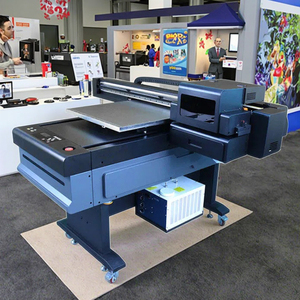
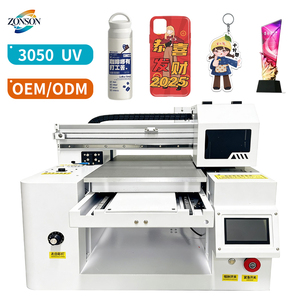
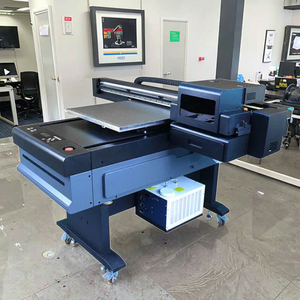
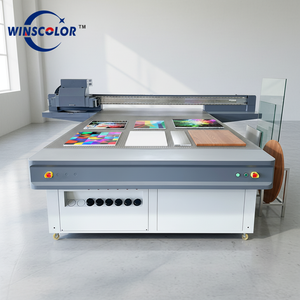
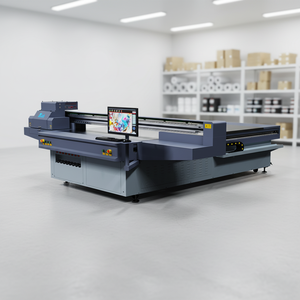
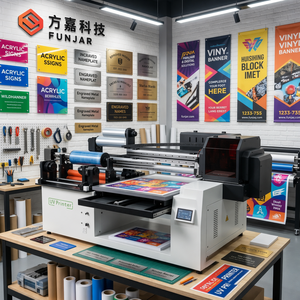
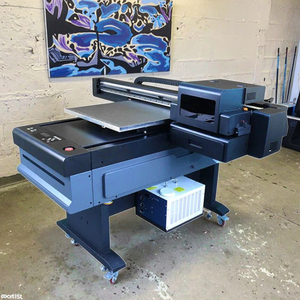
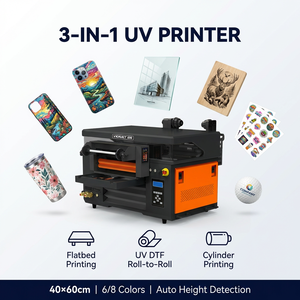
From handheld lightweight laser guns to 6-axis robotic industrial cleaning cells and integrated UV surface prep printing units, our R&D team delivers bespoke hardware and software integration.
Key technical advancements buyers must evaluate when investing in industrial cleaning machinery for 2025–2030 production cycles.
Next-generation cleaning machines are integrating 3D camera sensors and real-time AI optical recognition. The machine dynamically scans complex 3D curved surfaces, automatically adjusting focal length, pulse frequency, and laser scan width. This eliminates operator error and ensures uniform rust and paint removal across intricate automotive or aerospace geometries.
Manufacturing workflows are streamlining step counts. Modern platforms combine high-energy surface decontamination and anti-static corona prep directly with UV DTF inkjet printing modules. By cleaning substrate oil films milliseconds before ink jetting, ink adhesion rates increase by over 300% on untreated metals and engineering plastics.
Global environmental regulations (EPA / EU REACH) require strict particle containment. Modern Chinese cleaning machinery incorporates multi-stage HEPA filtration, activated carbon absorption, and negative-pressure fume extraction directly into the laser head—capturing 99.97% of sublimated micro-particulates at the source.
While 100W–300W pulsed laser cleaners were historically limited to light rust removal, China's laser source technology now delivers 1000W to 3000W high-frequency pulse systems. These systems achieve cleaning speeds exceeding 35 m²/hour, making chemical pickling tanks obsolete across steel mills and shipyard operations.
Expert technical responses to common questions raised by global procurement officers and plant engineers.
Power selection depends on substrate sensitivity, contaminant type, and target output speed:
Pulsed fiber laser cleaning machines utilize nanosecond pulse widths (typically 10ns to 500ns). The laser pulse energy is released in micro-bursts, vaporizing surface contaminants faster than heat can diffuse into the metal substrate. Consequently, substrate heat accumulation is negligible, maintaining original material hardness, grain structure, and dimensional tolerances without warping thin sheet metals.
Laser cleaning machines feature exceptionally low total cost of ownership (TCO). Fiber laser sources possess an operating lifespan of up to 100,000 hours (over 10 years of continuous multi-shift operation) with zero routine gas or crystal replacements. Running costs consist almost entirely of electrical power consumption (typically 2 kW–8 kW depending on power rating) and protective focus lenses (a minor consumable cost under $10 per unit).
All export machinery is shipped in reinforced, sea-worthy moisture-proof wooden crating. We provide comprehensive technical onboarding including complete English operation manuals, step-by-step video training, remote video commissioning, and 24/7 direct access to our senior field service engineers. Fast-moving spare parts (protective lenses, optical couplers, nozzles) and replacement optics are stocked in key international logistics hubs for rapid dispatch within 48 hours.
Yes. As a direct factory manufacturer in China, we specialize in OEM/ODM partnerships. We offer custom chassis colorways, localized software UI branding, integration with proprietary factory PLC networks (Profinet, Ethernet/IP), specialized mounting brackets for 6-axis robots (FANUC, ABB, KUKA), and tailored vacuum bed sizing for digital printing/prep machinery.
Buyers need to prepare a clean, level concrete floor, a stable electrical supply (220V single-phase or 380V three-phase depending on machine wattage) with proper grounding (< 4 Ohms resistance), and standard compressed air for laser lens purge. If operating in enclosed spaces, a dedicated exhaust outlet for our included particle extraction unit is recommended.
+91-79-26840551 / 52 / 53
Domestic: +91 7575 009 654 · Export: +91 7043 505 091
[email protected]
International: [email protected]
Plot No.3, Road No.1, Kathwada GIDC, Kathwada, SP Ring Road, Ahmedabad 382430, Gujarat, India