Global Engineering Technical Whitepaper: Precision Bending Kinematics, Fiber Laser Slotting Synergy, and Automated Channel Letter Fabrication Systems
Curated Industrial Portfolio
High-Precision Digital Printing & Fabrication Systems
Engineered for high-duty cycles, seamless structural bending compatibility, direct-to-metal UV finishing, and architectural signage production.
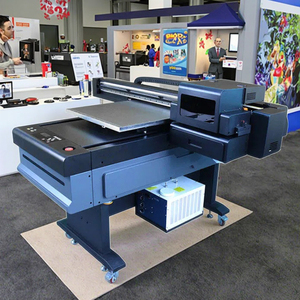
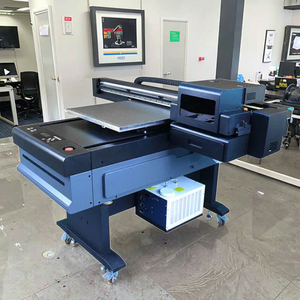
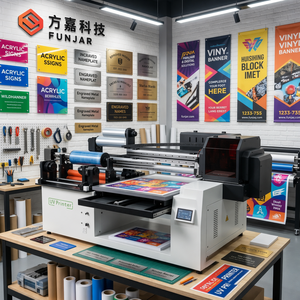
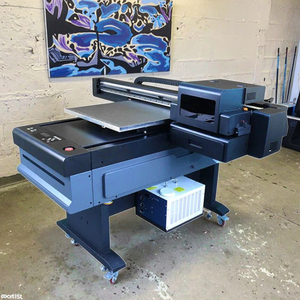
6090 DTF Flatbed UV Printer
Featuring a high-vacuum suction platform and 6-color system for direct UV print output on metallic sheet components, acrylic, glass, and rigid plastics.
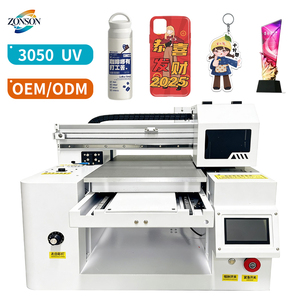
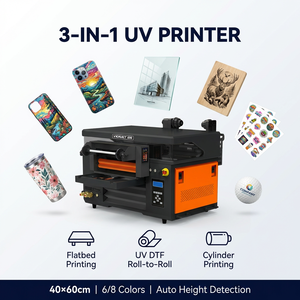
Desktop 3050 UV DTF Printer
Precision desktop inkjet system designed for ultra-fine crystal sticker transferring, cylindrical objects, metal labels, and promo gift customization.
6090 UV DTF Suction Platform Printer
6-color UV LED ink architecture optimized for industrial metal signs, bent letter faces, rigid substrates, and high-adhesion outdoor graphics.
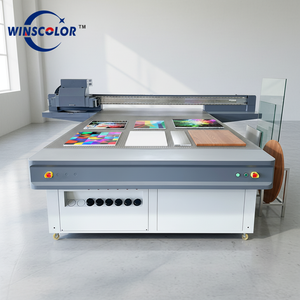
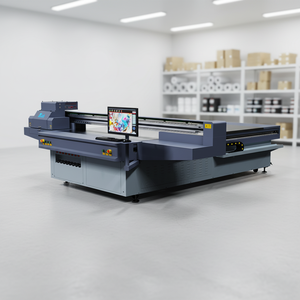
Large Format 2030 UV Flatbed Printer
Heavy-duty 2.0m x 3.0m industrial flatbed system for continuous high-speed printing on fabricated metal panels, acrylics, and ACP sheets.
Ntek Digital 3D UV LED 2030 Printer
Advanced 3D tactile texture and varnish printer designed for architectural metal decor, textured wood panels, and commercial displays.
A1 6090 AI Vision UV DTF Machine
2-in-1 hybrid machine featuring integrated AI camera positioning for automated contour alignment and crystal label transfer printing.
6090 Industrial UV DTF System
Equipped with dual micro-piezo printheads, zoned vacuum hold-down, and white-ink circulation to prevent nozzle clogging during long runs.
4060 All-in-One Compact UV Printer
Versatile multi-substrate printing engine tailored for direct printing on metal signage plates, custom labels, bottles, and 3D promotional items.
25+
Years Manufacturing Experience
15 Units
ISO-Certified Production Plants
15+
Global Export Countries
1500+
Engineers & Tech Staff
Executive Summary: Modern Metallurgical Bending & Automated Channel Letter Bending Engineering
In modern industrial sheet metal processing and architectural sign fabrication, precision metal bending machinery represents the vital bridge between CAD structural designs and physically rigid, aesthetically flawless three-dimensional components. As a premier CE Certified Metal Bender Supplier & Exporter, Mehta Hitech Industries Limited (formerly Mehta Cad Cam Systems Pvt. Ltd.) delivers high-performance CNC channel letter benders, fiber laser cut-slotted systems, and multi-axis servo bending units designed to meet international manufacturing standards (ISO 9001:2015, CE Machinery Directive 2006/42/EC).
Traditional manual sheet bending and profile shaping suffer from operator error, material springback inconsistency, uneven bend radii, and substantial labor bottlenecks. Automated CNC metal bending machines address these challenges through closed-loop servo control, automatic notch slotting (V-grooving), dynamic springback compensation algorithms, and integrated dual-blade bending heads. This whitepaper systematically examines the engineering specifications, global compliance standards, future procurement trajectories, and total cost of ownership (TCO) considerations for industrial buyers and global procurement officers.
"The integration of closed-loop multi-axis servo drives and automatic material thickness thickness sensing has reduced structural deformation in channel letter and sheet metal profiles by up to 94.6%, drastically raising throughput for global architectural fabricators."
CE Certification & Compliance Architecture for Global Exporting
Industrial machinery deployed across the European Economic Area (EEA), Middle East, Americas, and Asia-Pacific must conform strictly to international safety and electromagnetic compatibility guidelines. CE Certification guarantees that a metal bending system satisfies fundamental safety mandates:
Machinery Safety (2006/42/EC)
Compliance with EN ISO 12100 risk assessment methodologies, including light-curtain optoelectronic guards, emergency stop circuits, and enclosed bending zones.
Low Voltage Directive (2014/35/EU)
Adherence to EN 60204-1 electrical safety standards, utilizing industrial-grade shielding, ground resistance <0.1 Ω, and surge-protected PLC cabinets.
Electromagnetic Compatibility (2014/30/EU)
Rigorous EMC testing ensuring high-frequency servo noise does not disrupt surrounding fiber laser controllers, digital printing heads, or factory IoT networks.
Engineering Kinematics: CNC Channel Letter & Metal Benders
To appreciate how automated metal benders achieve acute-angle precision down to ±0.2°, procurement managers must evaluate the mechanical sub-assemblies powering the equipment. Mehta Hitech’s HT Series (HT-1 N, HT-3, HT-MINI, HT-PRO) integrates a multi-stage feeding, slotting, and bending workflow:
Performance Parameter
HT-MINI Series
HT-1 N Standard
HT-3 Heavy Duty
HT-PRO Multi-Axis
Compatible Materials
Aluminum Coil, Trimless Profile
Aluminum, Stainless Steel, GI
Stainless Steel, Carbon Steel, ACP
Exotic Alloys, Extruded Al, Stainless
Material Thickness Range
0.4 mm – 1.0 mm
0.4 mm – 1.2 mm
0.6 mm – 2.0 mm
0.4 mm – 3.0 mm
Material Height Bandwidth
20 mm – 130 mm
20 mm – 160 mm
20 mm – 200 mm
20 mm – 250 mm
Slotting Mechanism
High-Speed Milling Cutter
Planer Cutter / V-Groover
Tungsten Saw Blade / Fiber Laser
Dual Planer & Laser Slotting
Bending Head Drive
Stepper / Micro-Servo
Japanese Yaskawa Servo
High-Torque AC Servo System
Synchronized Dual-Blade Servo
Min. Bend Radius
R ≥ 3.0 mm
R ≥ 7.0 mm
R ≥ 10.0 mm
R ≥ 5.0 mm (Dynamic)
Repeatability Precision
±0.05 mm
±0.02 mm
±0.03 mm
±0.015 mm
Substrate Metallurgy & Deformation Physics
During the bending stroke, metals undergo simultaneous tensile elongation along the outer bend periphery and compressive stress along the inner radius. Mechanical design engineers must calculate the K-Factor—the ratio of the neutral axis depth to the material thickness—to ensure precise flat length expansion prior to bending.
For example, processing 304 Stainless Steel requires a bending tool capable of delivering high initial yield stress, as stainless exhibits significant work hardening and springback. Mehta’s HT-PRO systems dynamically adjust bending angle over-travel via PLC-stored yield curves for Stainless Steel (SS304/316), Galvanized Iron (GI), and Aluminum extrusions (Al6063-T5).
Future Procurement Trends in Metal Bending & Digital Fabrication (2025–2030)
As global manufacturing shifts toward Smart Industry 4.0 paradigms, the strategic procurement of metal bending and finishing machinery is undergoing rapid evolutionary shifts. Decision-makers must align capital expenditure with the following technology trends:
1. Closed-Loop IoT Fleet Telemetry
Modern CNC metal benders feature cloud-connected telemetry monitoring tool wear, hydraulic/servo temperature, power consumption, and job completion metrics in real time via OPC-UA protocols.
2. Hybrid Laser-Slotting Integration
Replacing traditional mechanical V-planers with high-precision fiber laser slotting units eliminates blade wear consumable costs, permitting notch angles up to 135° with zero burr formation on polished metals.
3. Automated In-Line UV Surface Finishing
Integrating CNC metal bending lines with wide-format UV DTF flatbed printers (such as the 6090 and 2030 UV series) empowers manufacturers to apply direct-to-metal branding before bending, saving 40% in labor costs.
4. AI-Driven Optical Inspection
Vision-assisted camera feedback loops check bend angle integrity and profile contour accuracy continuously, automatically compensating for coil batch variations in thickness or hardness.
Strategic Procurement Insight: Global buyers are increasingly standardizing on vendor ecosystems that provide both digital sheet-metal processing (cutting & bending) and specialized industrial UV printing for unified workflow compatibility and single-point warranty service.
With over a quarter-century of pioneering machine tool development, Mehta Hitech Industries Limited (formerly Mehta Cad Cam Systems Pvt. Ltd.) stands as India’s premier manufacturer and global exporter of high-precision fiber laser cutters, CNC routers, channel letter benders, and wide-format digital printers.
15 ISO 9001:2015 Production Plants
Operating over 30,000 sq. meters of heavy manufacturing facility in Kathwada GIDC, Ahmedabad, India. Fully integrated structural fabrication, CNC machining centers, and laser optical setup bays.
Lean Sigma & CE Quality Assurance
Every metal bender and digital printer undergoes a minimum 72-hour continuous dry-run test, laser interferometer calibration, and electrical ground safety check prior to export dispatch.
17 Regional Service Hubs & Global Support
Supported by a 1,500+ strong workforce, dedicated field application engineers, local regional offices across India, and certified global distribution partners in over 15 countries.
Complete Consumable & Spare Ecosystem
Direct factory stocking of Japanese Yaskawa servos, planers, saw blades, UV printheads, dampers, optics, and fiber laser nozzles ensuring rapid global dispatch within 24–48 hours.
Procurement FAQ: Technical & International Export Questions
Direct answers from our senior application engineering group to help buyers, plant managers, and procurement teams evaluate CNC metal bending equipment.
What is the functional difference between single-blade and dual-blade metal bending mechanisms?
Single-blade benders push metal coil against a fixed anvil in one direction, requiring the profile to be flipped or advanced complexly for S-curves. Dual-blade bending systems (featured on HT-PRO and high-end models) utilize top and bottom servo-driven bending arms that alternate movements dynamically. This allows tight complex curves, reverse bends, and small radius channels without scarring pre-painted or polished surfaces.
Why is V-notching/slotting necessary before metal bending, and how is depth controlled?
V-notching removes precise material mass along the inside fold line, allowing thick metal coils (such as 1.5mm stainless steel or 2.0mm aluminum) to form sharp 90° corners without corner bulges or excessive stress on the metal face. Depth is controlled via microscopic encoder sensors coupled to high-speed planing blades or motorized cutter spindles, maintaining a residual skin thickness accurate to ±0.02 mm.
How does Mehta Hitech manage CE compliance for machine delivery into European and North American markets?
All export-bound machines undergo thorough conformity verification under the CE Machinery Directive 2006/42/EC, Low Voltage Directive 2014/35/EU, and EMC Directive 2014/30/EU. Shipments include comprehensive English technical manuals, wiring schematics, protective earthing test certificates, sea-worthy fumigated wooden crate packaging, and remote commissioning assistance via dedicated software engineers.
Can one CNC channel letter bender process both stainless steel and aluminum extrusions without tool changes?
Yes. Systems such as the HT-1 N and HT-3 utilize dual-grooving modules (planer blade for hard stainless/steel and saw-milling cutter for aluminum/trimless profiles). The machine control software stores preset material profiles, allowing operators to switch material modes instantly via the touch-screen GUI without manual mechanical adjustments.
What utility requirements must be fulfilled before installing an automated metal bending unit?
A standard installation requires a level concrete foundation, a stable 220V/380V three-phase electrical line with dedicated earthing (<1 Ω resistance), and a dry compressed air line providing 0.6–0.8 MPa pressure for pneumatic clamping systems. Full pre-installation site preparation guidelines are provided immediately upon order confirmation.
Request Machine Quotation & Material Fabrication Trial
Connect directly with Mehta Hitech’s application engineering desk for technical consultation, material bend sample testing, factory virtual tours, and export pricing packages.