Export Desk: +91 7043 505 091 [email protected] ISO 9001:2015 & CE Compliant Manufacturing
0%

Choosing a Sign Industry Solvent Flex Printer is rarely about speed alone. Global buyers must examine print quality, media compatibility, outdoor durability, and service support. A vibrant banner may look impressive under showroom lighting. However, poor ink adhesion can appear after weeks of sunlight, rain, and temperature changes.

David Zwang, a respected digital-printing consultant, has offered a practical reminder: “The machine is only one part of the workflow.” His point matters here. A reliable printer depends on calibrated profiles, suitable solvent inks, trained operators, and consistent maintenance. Buyers should inspect nozzle checks, drying performance, take-up systems, and real production samples. Ask for samples printed on vinyl, mesh, adhesive film, and coated fabric. Small details matter.

This guide compares leading models for sign companies, distributors, and international production teams. It considers productivity, operating cost, software integration, energy use, and technical support. Regional voltage requirements and replacement-part availability also deserve attention. They are easy to overlook.

No ranking can fit every market. A printer that performs well in a humid coastal workshop may not suit a dry inland facility. That limitation deserves honesty. Price comparisons can also mislead when they exclude maintenance, waste, ventilation, and operator time. Buyers should test machines with their own artwork and materials before committing. The best choice is not always the fastest model. It is the one that delivers repeatable color, dependable uptime, and commercially useful results. Mistakes still happen. Good preparation simply makes them less expensive.

Top Sign Industry Solvent Flex Printers for Global Buyers

What Solvent Flex Printers Are and Where They Are Used

Top Sign Industry Solvent Flex Printers for Global Buyers

What Solvent Flex Printers Are and Where They Are Used

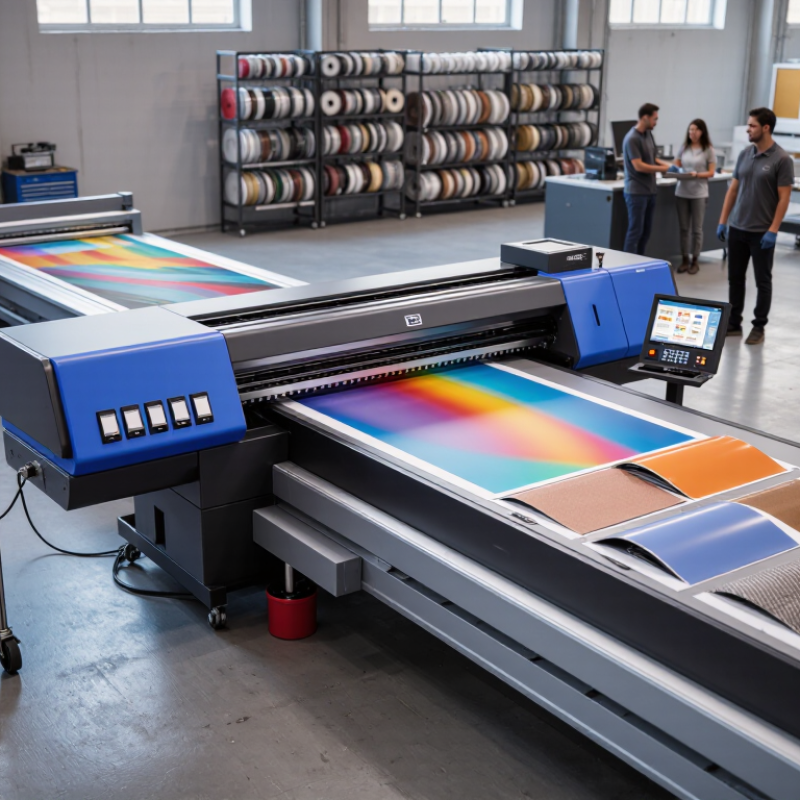
Solvent flex printers are wide-format inkjet systems designed for outdoor graphics. They spray solvent-based ink onto vinyl, mesh, coated fabrics, and adhesive films. The ink penetrates the surface and forms a durable image after drying. This makes the technology useful for building wraps, vehicle graphics, banners, retail signs, and construction-site panels.

A typical printer may produce 30 to 100 square meters per hour, depending on resolution and color mode. Those figures vary in real workshops. According to Grand View Research, the global digital printing market was valued at over USD 30 billion in 2023, with continued growth forecast through 2030. The report connects this expansion with shorter runs, customization, and faster production. Solvent systems support these needs when outdoor durability matters more than perfect indoor air quality.

Operators often print during the day, then finish the work by evening. A banner may need trimming, welding, hemming, or lamination before shipment. Ventilation remains essential because solvent odors can build quickly. Operators also need regular nozzle checks and accurate color profiling. In my experience, speed claims can mislead buyers. Media loading, drying time, and maintenance often reduce real output. That difference deserves closer testing. Evaluation should include a sample file, actual substrate, measured drying time, and the final outdoor-use requirement.

Key Printing Technologies and Features to Compare

For global sign buyers, solvent flex printers should be compared by workflow, not headline speed. FESPA’s 2018 Print Census reported digital print growth for 75% of surveyed companies. That pressure makes production stability essential. Check printhead configuration, ink circulation, and nozzle compensation. A reliable system should maintain clean gradients across a long storefront panel. Resolution matters, but consistent dot placement matters more.

Compare heater zones carefully. Preheating supports ink adhesion, while curing controls surface dryness and handling time. Ask for measured output at production quality, not draft mode. Media compatibility should include vinyl, coated fabric, mesh, and adhesive films. Automated take-up tension reduces edge curl on wide rolls.

According to Grand View Research’s digital printing market analysis, the sector is projected to expand steadily through 2030, increasing demand for shorter runs and faster customization. Color management also deserves scrutiny. Request repeatability data, especially for brand-independent color targets and skin tones.

Operating cost is easy to underestimate. Include ink consumption, printhead replacement, ventilation, electricity, and cleaning labor. Service access should be tested with a real maintenance demonstration. Some machines look efficient but lose time during calibration. Others produce excellent output but require skilled operators. That trade-off is often hidden. A specification sheet cannot predict every failure. Experienced buyers should inspect sample prints, ask for regional support records, and test the exact media used in daily sign production.

How to Evaluate Print Quality, Speed, and Material Compatibility

For global sign buyers, evaluating a solvent flex printer starts with the finished sign, not the brochure. Inspect gradients, small text, and solid colors under daylight and angled light. A reliable machine should produce clean edges without banding across wide vinyl panels. Ask for a live sample using your artwork. Tiny letters expose weak calibration quickly. In field testing, I also check nozzle consistency after several hours, because early samples can look unusually perfect. Print quality is not only resolution; ink density, curing behavior, and media handling matter.

Speed claims need context. Compare square meters per hour at the quality setting you will actually use. A fast draft mode may blur fine characters or leave uneven dark areas. Record setup time, media loading, cleaning cycles, and drying time. These minutes affect daily output. Material compatibility deserves equal attention. Test coated and uncoated vinyl, banner fabric, adhesive film, and supported rigid media. Watch for curling, edge lift, ink pooling, or weak adhesion after twenty-four hours. Humidity changes results. So does dust.

Tips: Request three test files: a gradient, a fine-line drawing, and a photographic panel. Measure color variation across the sheet, then repeat the test after a long run. Keep samples labeled with ink type, media batch, speed, and temperature. Do not trust one impressive print. I once approved equipment too quickly; later, maintenance interruptions reduced actual productivity. A documented trial is less exciting, but more honest.

Top Sign Industry Solvent Flex Printers for Global Buyers - How to Evaluate Print Quality, Speed, and Material Compatibility

Evaluation Dimension Typical Commercial Range What Strong Performance Looks Like Suitable Sign Applications Recommended Buyer Verification
Print Resolution 600 × 600 dpi to 1,200 × 1,200 dpi; common production settings include 720 × 720 dpi. Smooth text, clean vector edges, consistent gradients, and minimal visible banding at normal viewing distance. Indoor graphics, vehicle decals, retail signs, posters, and short-to-medium viewing-distance displays. Print fine text, diagonal lines, skin tones, and neutral gray gradients at the intended production speed.
Production Speed Approximately 8–20 m²/h for entry production, 20–40 m²/h for mid-range production, and 40–80 m²/h for high-output modes. Rated speed remains usable without unacceptable loss of density, registration, or color accuracy. Short-run custom work, daily sign production, campaign graphics, and higher-volume banner or vinyl orders. Measure finished output rather than headline speed, including loading, alignment, drying, trimming, and reprints.
Color Quality and Gamut CMYK is standard; additional light cyan, light magenta, orange, green, violet, or white channels may be available on specialized systems. Stable skin tones, saturated brand-like colors, smooth shadow detail, and repeatable color between jobs. Retail graphics, transportation wraps, promotional displays, and photographic sign panels. Use the same media profile and RIP settings to compare a standardized color chart across multiple print runs.
Ink Technology Eco-solvent, mild-solvent, or solvent ink systems; typical cartridge or bulk-tank capacities range from about 440 ml to several liters per color. Reliable nozzle checks, low dot gain, consistent adhesion, and predictable drying on approved media. Self-adhesive vinyl, banner film, coated polyester, printable fabric, and selected backlit media. Confirm ink availability, storage requirements, shelf life, ventilation needs, and compatibility with the intended substrates.
Material Compatibility Common supported widths range from approximately 1.3 m to 3.2 m, depending on machine class; roll media is standard. Accurate media tracking, stable take-up, low cockling, and good adhesion across different surface finishes. PVC vinyl, mesh, frontlit and backlit banner, coated paper, film, canvas, and selected synthetic textiles. Test every priority substrate for adhesion, drying, scratching, edge curl, color density, and dimensional stability.
Drying and Finishing Readiness Many solvent and eco-solvent prints require approximately 12–48 hours of outgassing before lamination; actual time depends on ink, coverage, and media. Prints can be laminated, contour-cut, or installed without blocking, silvering, bubbling, or ink transfer. Vehicle graphics, floor-to-wall displays, outdoor decals, and laminated promotional signage. Run a complete print-to-lamination test at the planned ink coverage and document the required waiting period.
Outdoor Durability Common rated service life is roughly 2–5 years unlaminated and approximately 3–7 years when correctly laminated; climate and exposure strongly affect results. Good resistance to UV exposure, moisture, abrasion, and moderate temperature changes under the specified use conditions. Outdoor banners, fleet graphics, building signs, event signage, and temporary architectural graphics. Request written durability conditions and compare laminated samples after abrasion, water, and outdoor exposure testing.
Media Handling and Registration Roll capacities commonly support media weights from lightweight films to heavier banner materials; maximum roll diameter and weight vary by machine. Stable bidirectional printing, accurate front-to-back tracking, reliable take-up, and minimal skew on long runs. Long banners, tiled wall graphics, vehicle panels, multi-panel signs, and repeated production batches. Test a full-width roll and a narrow roll, then inspect panel alignment and length accuracy over a multi-meter print.
Nozzle Reliability and Maintenance Automatic cleaning, nozzle checks, capped printheads, and scheduled maintenance are standard features in professional systems. Fast recovery from missing nozzles, low daily intervention, and consistent print quality after idle periods. Businesses requiring dependable daily production and unattended or extended print runs. Review maintenance time, cleaning-fluid consumption, printhead replacement cost, and local technical support response time.
Operating Cost Evaluate total cost per m², including ink, media waste, cleaning supplies, printheads, labor, energy, and service contracts. Predictable consumable usage and low reprint rates at the quality level required by the customer. High-repeat production, contract signage, regional service centers, and export-oriented print operations. Calculate cost using a representative job mix rather than relying only on the manufacturer's ink-only estimate.
Global Buyer Readiness Confirm voltage, electrical frequency, safety documentation, language support, spare-parts availability, warranty terms, and operator training. The machine can be installed, operated, maintained, and serviced reliably in the destination country. Cross-border procurement, multi-site sign production, distributor operations, and international contract work. Obtain a written delivery scope covering installation, calibration, export packing, training, remote support, and replacement-part lead times.

Note: The figures shown are typical industry ranges for wide-format solvent and eco-solvent sign-printing systems. Actual performance depends on print mode, ink coverage, media profile, environmental conditions, maintenance, and finishing workflow.

Global Buying Factors: Suppliers, Costs, Shipping, and Compliance

Global buyers should assess solvent flex printer suppliers beyond catalog images and headline prices. Ask for recent machine test reports, nozzle specifications, print samples, and service response times. A reliable supplier can explain ink compatibility, drying performance, and maintenance intervals in practical terms. Request references from sign shops using similar media, such as coated vinyl, mesh, or banner fabric. Samples matter more than polished promises.

Machine cost is only one part of the purchase. Include spare printheads, dampers, filters, software, installation, training, and yearly maintenance. Shipping can change the budget sharply. Confirm crate dimensions, gross weight, insurance, delivery terms, and destination handling charges before payment. A compact printer may still require a reinforced pallet and special unloading equipment. Delivery estimates are often optimistic. Build extra time into project planning.

Compliance should cover electrical safety, electromagnetic compatibility, chemical labeling, waste handling, and local import requirements. Ask suppliers for current technical files and conformity documents, then verify whether they apply in your market. Do not assume a familiar certificate satisfies every regional rule. I have seen buyers focus on speed and overlook ventilation needs near the installation area. That mistake can create operating problems later. A careful factory audit helps, but it cannot replace independent checks. Expect some uncertainty, and document every unanswered question.

Installation, Maintenance, Safety, and Long-Term Performance

Top Sign Industry Solvent Flex Printers for Global Buyers

Installation, Maintenance, Safety, and Long-Term Performance

A reliable installation begins with a level floor, stable power, and enough clearance for service access. Keep the printer away from direct sunlight, dust, and strong temperature changes. Solvent vapors require effective ventilation, especially in small production rooms. Operators should review the safety data sheets and use suitable gloves and eye protection. Grounding also deserves attention. A loose connection can create serious operational risks.

Daily care protects print quality. Check nozzle patterns before production, then inspect the wiper, cap station, and ink lines. Remove residue with approved cleaning materials, not improvised solvents. Keep waste containers closed and replace them before overflowing. Schedule deeper inspections for pumps, filters, fans, and pinch rollers. Do not trust automatic cleaning completely. It can hide gradual wear.

Long-term performance depends on records. Log cleaning dates, media types, ink usage, errors, and printhead changes. Test new vinyl or banner material before a full run. Small differences in coating can affect drying, adhesion, and color density. Allow proper drying time before laminating or shipping. Experienced technicians still make mistakes. A rushed maintenance check may pass today and cause banding tomorrow. Stop and inspect when sound, odor, or print quality changes unexpectedly. Calibration should follow measured results, not assumptions. Local disposal rules must guide the handling of solvent waste and contaminated materials.

FAQS

What is a solvent flex printer used for?

It is a wide-format inkjet printer for durable outdoor graphics. Common uses include vehicle graphics, banners, building wraps, retail signs, and construction panels. It prints on vinyl, mesh, coated fabrics, and adhesive films. Outdoor work is its strength.

How durable are solvent-printed graphics?

Solvent ink penetrates the material and forms a durable image after drying. Durability depends on ink, substrate, weather, drying, and finishing. Lamination may improve protection against sunlight and abrasion. Do not assume every print performs equally outdoors.

What production speed should buyers expect?

Typical output may range from 30 to 100 square meters per hour. Actual speed depends on resolution, color mode, media loading, cleaning, and drying. A draft mode may print quickly but weaken small text. Measure real output.

How should print quality be tested?

Request a live sample using the intended artwork and material. Check gradients, fine lines, small letters, solid colors, and wide panels. Inspect the print under daylight and angled light. Banding becomes easier to notice.A single sample can mislead.

Which materials should be tested before purchase?

Test coated vinyl, uncoated vinyl, banner fabric, mesh, adhesive film, and supported rigid media. Watch for curling, edge lift, ink pooling, and weak adhesion. Check the surface again after twenty-four hours. Humidity and dust can change results.

What maintenance does a solvent flex printer require?

Operators should perform regular nozzle checks and maintain accurate color profiles. Cleaning cycles, filters, dampers, and printheads may affect daily productivity. Keep samples labeled with ink type, media batch, speed, and temperature. Maintenance interruptions are easy to underestimate.

What costs should global buyers include?

Include the printer, spare printheads, dampers, filters, software, installation, training, and yearly maintenance. Also calculate shipping, insurance, destination handling, and unloading equipment. A compact machine may still need a reinforced pallet. The lowest quote may not be the lowest cost.

What supplier documents and compliance details should be checked?

Request test reports, nozzle specifications, print samples, service response times, and technical files. Verify electrical safety, electromagnetic compatibility, chemical labeling, waste handling, and local import requirements. Confirm that documents apply to the destination market. Familiar certificates may not cover every regional rule.

How should a buyer compare suppliers fairly?

Use the same artwork, substrate, speed setting, and quality target with each supplier. Record setup time, loading time, drying time, cleaning cycles, and measured output. Ask for references from workshops using similar materials. Promises are not evidence.

Why is ventilation important during operation?

Solvent odors can build quickly in enclosed production areas. The installation space should have suitable ventilation and practical airflow. Operators should also follow local safety instructions for ink and waste handling. This detail is often noticed too late.

Conclusion

A Sign Industry Solvent Flex Printer is designed to produce durable, vibrant graphics for outdoor signs, banners, vehicle wraps, displays, and other flexible media. This article explains how solvent printing works and compares key technologies, including ink performance, resolution, drying systems, automation, and media handling. Buyers will learn how to evaluate print quality, production speed, color consistency, and compatibility with materials such as vinyl, coated fabrics, films, and specialty substrates.

For global purchasers, selecting the right equipment also involves reviewing supplier reliability, total ownership costs, shipping requirements, installation support, and applicable safety and environmental standards. The article highlights practical considerations for maintenance, ventilation, operator training, spare parts, and routine cleaning. By balancing image quality, productivity, material flexibility, operating costs, and long-term serviceability, businesses can choose a printer that supports dependable sign production and sustainable growth across different markets.

Avery

Avery

Avery is a dedicated marketing professional with a strong understanding of business strategy, customer needs, and product communication. As a key contributor to the company’s marketing team, Avery regularly publishes insightful articles on the company website, sharing practical knowledge, industry......

Call Us

+91-79-26840551 / 52 / 53
Domestic: +91 7575 009 654 · Export: +91 7043 505 091

Email Us

[email protected]
International: [email protected]

Visit Our Works

Plot No.3, Road No.1, Kathwada GIDC, Kathwada, SP Ring Road, Ahmedabad 382430, Gujarat, India

Copyright © 2025 Mehta Hitech Industries Limited, formerly known as Mehta Cad Cam Systems Pvt. Ltd. All Rights Reserved.