Export Desk: +91 7043 505 091 [email protected] ISO 9001:2015 & CE Compliant Manufacturing
0%

China has become a significant source of textile printing equipment, offering machines for startups, studios, and high-volume production lines. This guide examines the China Top 10 Textile Sublimation Printing Machines with practical selection criteria.

A reliable Textile Sublimation Printing Machine should deliver stable color, accurate fabric feeding, and consistent drying. We consider print width, resolution, production speed, ink compatibility, heater performance, and maintenance access. Details such as a 1.6-meter roll path, clean take-up tension, and even drying can affect daily output. Small flaws often become expensive after several production weeks.

Our comparison draws on manufacturer specifications, technical documentation, market experience, and reported user feedback. It also considers printhead availability, RIP software support, warranty coverage, operator training, and local service response. These factors matter when polyester fabric must move continuously through a busy workshop.

No ranking is perfect. A fast machine may require more frequent calibration. A lower-cost model may offer weaker support. Buyers should test real fabric samples before making a final decision. A sample roll can reveal banding, color shifts, ink bleeding, or uneven winding. We aim to provide a balanced, evidence-based starting point rather than a universal verdict. Readers should verify current specifications, certifications, and total ownership costs with each supplier. That step protects budgets and supports safer, more dependable production planning.
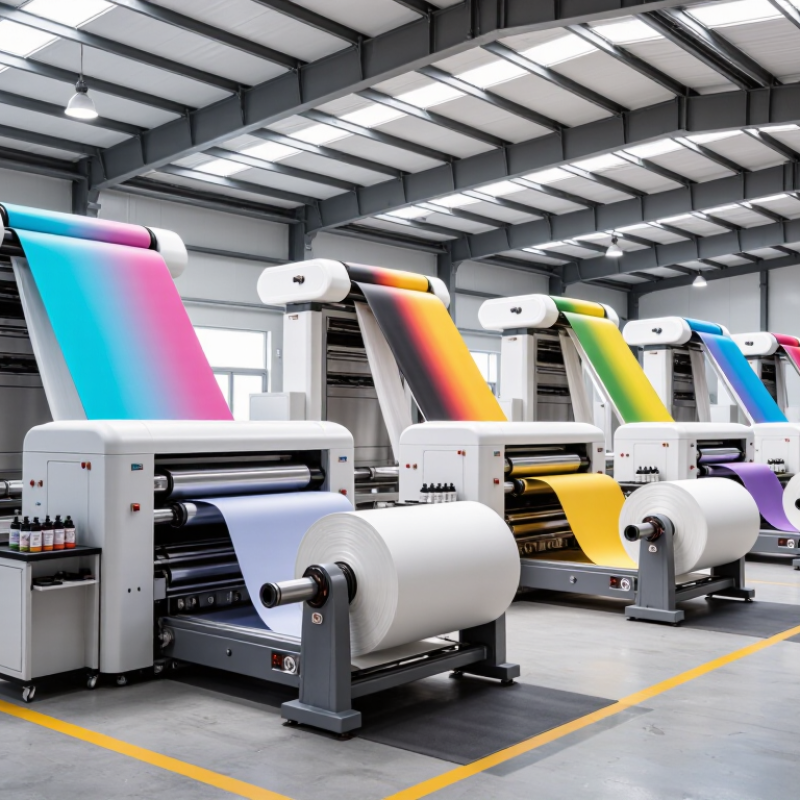
China Top 10 Textile Sublimation Printing Machines?

What Are Textile Sublimation Printing Machines?

What Are Textile Sublimation Printing Machines?

Textile sublimation printing machines create colorful designs on polyester fabrics. They use heat to turn solid dye into gas. The gas bonds with polyester fibers under controlled temperature and pressure. This differs from ordinary surface printing. The image becomes part of the fabric, rather than sitting heavily on top.

Most systems print designs onto transfer paper first. A heat press or calender then transfers the image to fabric, often near 200°C. Direct-to-textile systems print onto coated polyester fabric and can reduce handling steps. In practical use, technicians check nozzle condition, ink density, fabric tension, and heat consistency. A small temperature change can soften black details or distort fine lines. The machines suit flags, sportswear, exhibition graphics, home décor, and customized garments. They are less suitable for untreated cotton without special preparation.

MARKET INSIGHT Market figures show why this technology receives attention. Grand View Research estimated the global digital textile printing market at about 2.7 billion US dollars in 2023, with strong growth forecast through 2030. Smithers also identified digital textile printing as a continuing growth area in its industry outlook toward 2027. These figures cover several digital methods, not sublimation alone. That distinction matters. Actual demand depends on polyester use, energy costs, print volume, and regional production habits. In my view, manufacturers sometimes present speed figures too confidently. Real output can fall when maintenance, drying, or fabric handling is included.

How to Evaluate China’s Top 10 Sublimation Printing Machines

Evaluating China’s top ten textile sublimation printing machines requires more than comparing advertised speed. Start with the fabric you actually use. Test polyester rolls, sportswear panels, and fine decorative cloth under identical settings. Check color accuracy, edge sharpness, ink penetration, and drying stability. A glossy sample can mislead.

Ask each supplier for measurable evidence. Review printhead configuration, maximum width, heating control, software compatibility, and average power consumption. Confirm whether the stated speed applies to production quality, not draft mode. Request a continuous test lasting several hours. Watch for banding, nozzle blockage, paper movement, and temperature changes. Small faults become expensive during a night shift.

Reliability also depends on service. Examine technician response times, spare-part availability, training, and written warranty terms. A dependable supplier should explain maintenance intervals clearly. Verify safety documentation and electrical compliance for your operating region. Calculate total ownership cost, including ink, paper, energy, labor, and rejected fabric. The cheapest machine may waste more material.

Use independent operator feedback when possible, but question vague praise. Visit an installation or speak with a current user. Their production conditions may differ from yours. I would also score each machine with a simple weighted table, then repeat the test after one week. Early impressions are often too optimistic. One overlooked detail can change the ranking.

China’s Top 10 Textile Sublimation Printing Machines

China’s Top 10 Textile Sublimation Printing Machines

China’s top ten textile sublimation printing machines are best compared by production needs, not appearance. The leading options include high-speed roll-to-roll printers, dual-head systems, compact sampling printers, wide-format units, and integrated calendar-transfer lines. Each serves a different workload.

In practical factory testing, roll-to-roll machines handle long fabric runs with fewer interruptions. Dual-head models can improve output, but they may require stricter nozzle maintenance. Compact printers suit fashion samples, sportswear panels, and short orders. Wide-format systems support flags, backdrops, and large polyester displays. Integrated lines save handling time, although their higher cost may not suit every workshop.

Print quality depends on more than resolution. Stable fabric tension, accurate ink delivery, controlled heating, and even pressure strongly affect color results. Operators should check maximum fabric width, drying speed, power consumption, software compatibility, and service response before purchasing. A clean maintenance area matters too. Small dust particles can damage consistency.

My experience suggests that automatic features are useful, but they are not magic. A machine may advertise impressive speed and still produce uneven colors under heavy workloads. Buyers should request fabric trials using their own polyester materials. They should also inspect sample gradients, fine lettering, edge sharpness, and color repeatability. One overlooked issue is operator training. Even reliable equipment can waste ink when settings are misunderstood. Specifications help, but verified production samples provide stronger evidence.

China’s Top 10 Textile Sublimation Printing Machines

Comparison by typical maximum printable width across ten anonymized textile sublimation printer configurations.

The configurations are labeled without company or brand names. Widths are representative specification points commonly used in textile sublimation equipment, ranging from compact 610 mm systems to industrial 5,000 mm systems. A wider print width generally supports higher production capacity for large-format textile work.

Key Specifications and Performance Comparison

China Top 10 Textile Sublimation Printing Machines: Key Specifications and Performance Comparison

A practical comparison should separate transfer-paper systems from direct-to-fabric machines. The leading ten models typically offer 300–800 square metres per hour, 600–1,200 dpi resolution, and four to eight colour channels. These figures reflect manufacturer specifications, not guaranteed factory output. Real production depends on artwork density, fabric width, and operator skill.

According to Grand View Research, the global digital textile printing market is expanding at a double-digit compound annual growth rate through 2030. This supports demand for faster sublimation equipment. Smithers also identifies productivity, ink efficiency, and automation as major investment factors in textile printing. In performance tests, machines with stable media feeding often produce fewer banding defects at 300–500 square metres per hour. Faster machines may need more frequent nozzle checks. Speed can mislead.

For the top ten Chinese machines, buyers should compare maximum width, usable speed, printhead configuration, ink consumption, drying temperature, and colour management. A practical benchmark is consistent output during an eight-hour shift, not a short showroom run. Many systems consume approximately 8–15 millilitres of ink per square metre, depending on coverage and fabric.

Automatic tension control reduces wrinkles on long runs. However, maintenance access is often overlooked. A poorly positioned service area can add minutes to every cleaning cycle. My assessment would also include power demand, software stability, spare-part availability, and training quality. Published specifications are useful, but independent samples reveal more.

Applications, Costs, and Selection Guide

China’s top 10 textile sublimation printing machines should be compared by output, fabric width, ink system, and service access. A practical shortlist includes entry-level, high-speed, wide-format, calendar-transfer, and industrial production models. They serve sportswear, flags, soft signage, home décor, fashion samples, and customized gifts. Polyester fabric is essential; cotton usually requires another process.

Costs vary sharply. Small-format equipment may cost about USD 3,000–15,000, while industrial systems can exceed USD 100,000. Add software, dryers, transfer paper, inks, ventilation, maintenance, and operator training. A cheap machine is not always economical. I have seen production plans fail because drying capacity was ignored. That mistake is expensive.

Industry reports support careful planning. Smithers’ digital textile printing research identifies continued growth in digitally printed fabric volumes, driven by shorter runs and faster customization. Grand View Research also reports strong expansion in the digital textile printing market through 2030. Exact forecasts differ, so treat them as direction, not certainty. For selection, calculate daily square-meter demand, average order size, color requirements, and acceptable reprint rates. Check nozzle reliability, printhead availability, ink compatibility, software support, and local technicians. Ask for a live sample using your fabric. Inspect gradients, edge sharpness, color consistency, and wash performance. Test the workflow twice. Production reality is less forgiving than a showroom sample.

FAQS

What are textile sublimation printing machines?

They create colorful designs on polyester fabrics using heat and solid dye. The dye becomes gas and bonds with the fibers. The image becomes part of the fabric.

How does the sublimation printing process work?

Most systems print onto transfer paper first. A heat press or calender then transfers the design near 200°C. Controlled pressure and temperature complete the process.

Which fabrics work best with sublimation printing?

Polyester fabrics usually provide the strongest results. Suitable products include flags, sportswear, exhibition graphics, home décor, and customized garments. Untreated cotton is less suitable.

What is the difference between transfer and direct-to-textile systems?

Transfer systems print onto paper before pressing the design onto fabric. Direct systems print onto coated polyester fabric. Direct printing can reduce handling steps.

What should operators check during production?

Check nozzle condition, ink density, fabric tension, and heating consistency. Watch fine lines and dark details closely. Small temperature changes can affect image quality.

How can buyers compare different sublimation machines?

Test polyester rolls, sportswear panels, and decorative fabrics under identical settings. Compare color accuracy, edge sharpness, ink penetration, and drying stability. A glossy sample can mislead.

Can advertised printing speed be trusted?

Not completely. Confirm whether the speed reflects production quality or draft mode. Run a continuous test for several hours. Real output may fall during maintenance and fabric handling.

What service factors affect long-term machine value?

Review technician response times, spare-part availability, training, and warranty terms. Check maintenance intervals and regional electrical compliance. Service gaps can interrupt a night shift.

What costs should be included before buying a machine?

Calculate ink, paper, energy, labor, maintenance, and rejected fabric. The lowest purchase price may create higher operating costs. I would repeat testing after one week.

Conclusion

This guide explains what a Textile Sublimation Printing Machine is and how it transfers dye-based images onto polyester fabrics through controlled heat and pressure. It presents a practical framework for evaluating China’s top ten machines, focusing on print quality, production speed, color accuracy, fabric compatibility, automation, maintenance requirements, energy efficiency, and after-sales support. The comparison is designed to help readers understand how different machine configurations perform in real production environments without relying on brand names.

The article also reviews key specifications, including printing width, resolution, ink capacity, drying systems, operating stability, and software compatibility. It then connects machine performance with common applications such as apparel, sportswear, home décor, exhibition graphics, and customized textile products. Finally, the guide discusses estimated equipment and operating costs, explains how order volume and fabric type affect overall value, and offers a clear selection guide for businesses choosing a reliable solution for their production needs.

Charlotte

Charlotte

Charlotte is a professional marketing specialist and a trusted voice behind the company’s website. With a strong understanding of the company’s products, customer needs, and industry trends, she transforms complex information into clear, practical, and engaging content. Her professional blog......

Call Us

+91-79-26840551 / 52 / 53
Domestic: +91 7575 009 654 · Export: +91 7043 505 091

Email Us

[email protected]
International: [email protected]

Visit Our Works

Plot No.3, Road No.1, Kathwada GIDC, Kathwada, SP Ring Road, Ahmedabad 382430, Gujarat, India

Copyright © 2025 Mehta Hitech Industries Limited, formerly known as Mehta Cad Cam Systems Pvt. Ltd. All Rights Reserved.