China has a broad market for handheld laser welding equipment, but supplier names alone do not tell the whole story. A Handheld Fiber Laser Welding Machine can join stainless steel, aluminum, and other metals with a focused beam and a compact torch. In a workshop, the results are visible: seam appearance, spatter, rework, and how comfortably an operator can reach a corner. Small details matter.
This guide introduces ten Chinese suppliers and offers a practical starting point for comparing them. Look beyond headline power ratings. Check the laser source, cooling method, wire-feeding options, safety features, training, spare-parts access, and response time for technical support. Ask for sample welds on materials and thicknesses close to your own, and clarify what the warranty covers. A polished demonstration is useful, but it cannot replace a careful review of operating conditions.
Supplier rankings can be imperfect. Product configurations change, and a machine that suits a small fabrication shop may not fit a high-volume production line. That is worth remembering. Use the profiles to narrow your options, then confirm current specifications and service arrangements directly with each company. Reliable decisions come from evidence, not promises.
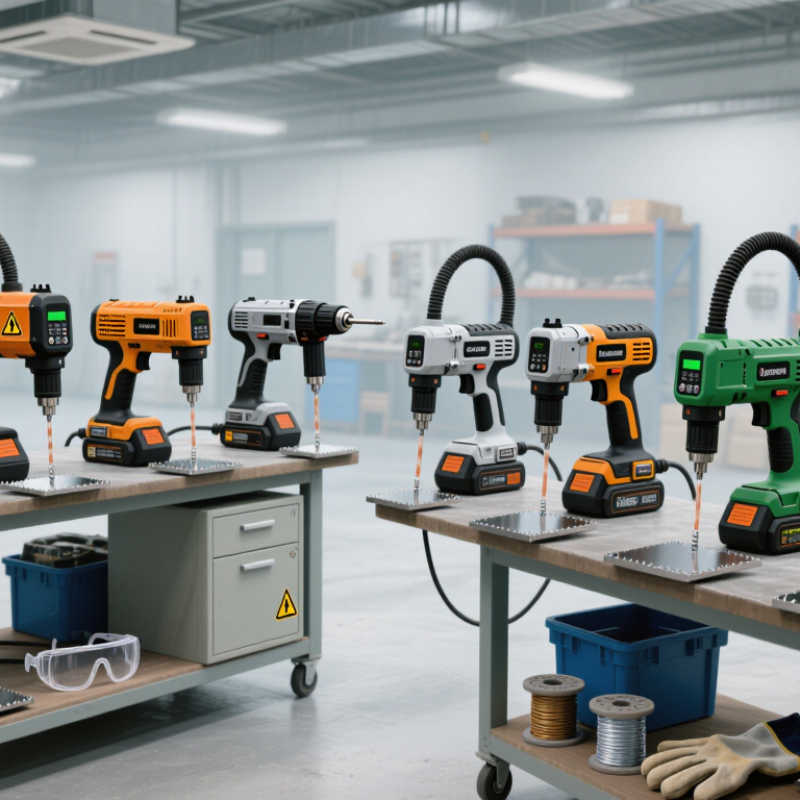
Handheld fiber laser welding typically uses a near-infrared beam around 1,070 nm. The wavelength concentrates energy into a small, controlled spot. In practical systems, rated laser power often ranges from 1 to 3 kW. That range suits many workshop jobs, though the right setting depends on material thickness, joint design, and travel speed.
A 1 kW unit may handle thinner sheet and lighter fabrication, while higher power can support faster work or thicker sections. More power is not automatically better. Poor fit-up, an incorrect focal position, or excessive speed can still produce weak or uneven welds. Watch the seam closely. A steady hand helps, but repeatable results also depend on nozzle condition and consistent wire feeding when filler wire is used.
When comparing suppliers, ask for clear specifications: wavelength, rated and adjustable power, cooling method, and test results on the materials you use. Request a sample weld with your actual joint thickness. Small details matter.
The beam is invisible, so appropriate guarding, interlocks, extraction, and wavelength-rated eye protection are essential. One caution: published power figures alone do not prove weld quality, and claims can be hard to compare without the same test conditions.
China’s handheld fiber laser welding suppliers differ most clearly in power range, cooling design, and wire-feeding options. A 1,000-watt unit may suit thin stainless panels, while thicker sections often need higher output and carefully controlled travel speed. More power is not automatically better. Excess heat can distort a narrow workpiece.
Cooling specifications deserve close attention. Air-cooled systems reduce hoses and setup time, but their performance can depend on ambient temperature and duty cycle. Water-cooled machines usually manage sustained workloads better, though they add a chiller, plumbing, and maintenance checks. Ask suppliers for rated operating conditions, not just a headline power figure. Small details matter.
Wire feeding also separates otherwise similar machines. Check the supported wire diameter, feed-speed adjustment, and whether the feeder keeps a steady pace around corners. A stable feed can help fill wider gaps, but it cannot compensate for poor joint preparation. Request sample welds using your material thickness and joint type. Compare bead width, penetration, spatter, and post-weld cleanup under the same settings. Supplier specification tables are useful, but they can be incomplete; I would verify them with a practical test before choosing.
When comparing handheld fiber laser welding machine suppliers, treat weld speed as a test result, not a headline number. A quoted speed means little without the alloy, thickness, joint type, and weld position. Ask suppliers to run the same sample: for example, a 2 mm stainless-steel lap joint with a consistent gap. Record travel speed, bead width, penetration, and visible spatter. Numbers need context. A fast bead that needs rework is not a faster production process.
Check material thickness claims against the joints you actually make. Maximum thickness may depend on fit-up, surface condition, operator skill, and pass count. Request sample welds at both your common thickness and your upper limit, then inspect cross-sections if quality is critical. Test the real joint. A polished demonstration plate can hide poor gap tolerance.
Duty-cycle data deserves equal attention. Confirm the stated cycle, test conditions, and cooling requirements; percentages without a time period are hard to compare. If the machine is rated for continuous work, ask how output changes after a long shift in a warm workshop. Compare several suppliers using one test sheet and the same operator where possible. I would still question a neat specification table: it may omit setup time, consumables, or pauses between welds. That is an imperfect comparison, but better than choosing on speed alone.
When comparing handheld fiber laser welding machine suppliers, ask for the laser’s classification report and IEC 60825-1 compliance documents—not just a Class 4 warning label. IEC classification is based on accessible emission, including wavelength and exposure conditions. The U.S. FDA’s laser safety guidance describes Class IV continuous-wave visible and near-infrared lasers as exceeding 500 mW. That threshold is a useful reference, not a substitute for checking the machine’s actual report and operating configuration.
Class 4 beams can injure eyes or skin directly and through reflections. Polished stainless steel, a shiny clamp, or a small gap in a curtain can redirect energy unexpectedly. Check that the supplier specifies suitable wavelength-rated eyewear, an interlocked enclosure or controlled welding area, beam stops, and clear emergency procedures. Ask who verifies these controls after installation, and how often. A label is not enough. During a site review, inspect doors, viewing windows, and cable openings; even a narrow gap deserves attention. IEC 60825-1 provides the classification framework, while FDA guidance and workplace laser-safety standards offer practical control references. Paperwork can look complete. The uncomfortable question is whether the safeguards still work during a rushed repair or a change in the workpiece.
Supplier evaluation checklist: use the evidence column to assess each supplier. A checklist item is not proof of compliance; verify documents and equipment for the exact machine configuration and the applicable IEC 60825-1 edition and local requirements.
| No. | Evaluation Dimension | What to Verify | Evidence to Request | Status |
|---|---|---|---|---|
| 1 | Laser classification | Confirm the product’s laser class and the conditions under which that classification applies. Unenclosed high-power welding systems can present Class 4 hazards. | Product classification information and a test or assessment report identifying the exact model and configuration. | Verify |
| 2 | IEC 60825-1 documentation | Check whether the supplier has assessed the laser product against the applicable edition of IEC 60825-1 and any relevant national adoption. | Complete, traceable test report or conformity documentation; confirm scope, edition, model, and issuing organization. | Verify |
| 3 | Laser labels and warnings | Inspect the equipment for applicable laser warning labels and classification information, placed where operators can see them. | Clear photographs of labels on the supplied machine and the corresponding manual pages. | Verify |
| 4 | Protective eyewear | Confirm that eyewear is suitable for the laser’s wavelength and provides the required optical density for the assessed exposure conditions. No single eyewear specification suits every system. | Eyewear markings and specifications, including wavelength range and optical density, plus the supplier’s selection rationale. | Verify |
| 5 | Controlled work area | Check that instructions address access control, warning signs, beam-path control, and protection of people outside the immediate welding task. | Operating manual, site-safety guidance, and a documented risk assessment for the intended installation and use. | Verify |
| 6 | Beam termination and reflections | Review how the setup controls the direct beam and foreseeable reflections, and whether a suitable beam stop or other control is specified. | Setup instructions and risk assessment covering workpiece reflectivity, beam direction, and the surrounding area. | Verify |
| 7 | Interlocks and protective features | Identify provided interlocks or other protective features and verify their function. Check access-panel interlocks where such panels or protective housings are part of the product. | Safety-function description, wiring or system documentation where applicable, and functional-test procedure or record. | Verify |
| 8 | Handheld gun and enable controls | Check the trigger or enable arrangement, operating sequence, and measures intended to prevent unintended laser emission during handling. | Demonstration on the supplied configuration and manual instructions for enabling, disabling, and safely handling the gun. | Verify |
| 9 | Emergency response and shutdown | Confirm that operators can stop emission and follow documented procedures for faults, emergencies, and maintenance. | Shutdown instructions, identification of relevant controls, and maintenance or fault-response procedures. | Verify |
| 10 | Training and after-sales support | Check that the supplier provides safety training materials and clear guidance for installation, operation, inspection, and service. | Training syllabus, user and service manuals, inspection schedule, and a documented process for obtaining technical support. | Verify |
For a meaningful comparison of handheld fiber laser welding machine suppliers, ask for weld samples made with your material, thickness, joint design, and shielding gas. ISO 13919-1 provides quality levels for imperfections in laser-beam-welded joints; it is not a blanket machine certification. Specify the applicable quality level before judging results. Inspect bead consistency, undercut, pores, and signs of incomplete fusion. Small details matter. A shiny surface alone proves little. Where the application warrants it, request macro sections or other documented test results, and confirm who performed the assessment. Keep the travel speed and joint preparation consistent during supplier trials. Otherwise, the comparison can mislead.
After-sales support matters when settings drift or a new operator takes over. Ask whether commissioning includes parameter setup, hands-on training, and a written operating guide. Check response times, remote troubleshooting availability, replacement-part lead times, and warranty exclusions in writing. Request a sample service record or a clear escalation process. Then test support before purchase: send a practical technical question and note how clearly the supplier responds. A quick reply is useful, but accurate advice is better. I would also ask how they handle a failed weld trial; some answers may reveal gaps in training or documentation. No checklist removes every risk.
A 1,000-watt unit may suit thin stainless panels. Thicker sections often need more output and controlled travel speed. More power is not always better; excess heat can distort narrow parts.
Air cooling reduces hoses and setup time. Its performance can depend on room temperature and duty cycle. Water cooling may suit sustained work, but requires a chiller, plumbing, and maintenance.
Check supported wire diameter, feed-speed adjustment, and feed stability around corners. A steady feed can fill wider gaps. It cannot fix poor joint preparation.
Use the same material, thickness, joint design, shielding gas, and settings. Compare bead width, penetration, spatter, and cleanup. A shiny surface proves little.
It provides quality levels for imperfections in laser-beam-welded joints. It is not a blanket machine certification. Specify the applicable level before judging samples.
For demanding applications, request macro sections or documented test results. Confirm who performed the assessment. I might still miss a detail, so clarify the test method.
Ask about commissioning, parameter setup, hands-on training, and written operating guides. Check response times, remote troubleshooting, replacement-part lead times, and warranty exclusions.
Send a practical technical question and assess the clarity of the reply. Ask how failed weld trials are handled. Fast is helpful; accurate is better. No checklist removes every risk.
This guide introduces the Handheld Fiber Laser Welding Machine, typically operating at a wavelength near 1,070 nm and available in power ranges such as 1–3 kW. It outlines how to compare suppliers using practical specifications, including laser output, cooling method, and wire-feeding options. Buyers can also assess stated welding speeds, suitable material thicknesses, and duty-cycle data to determine whether a system matches their production needs.
The comparison emphasizes verifying equipment documentation rather than relying on headline figures alone. It explains the importance of appropriate Class 4 laser safety measures and checking for relevant IEC 60825-1 compliance information. Weld quality can be assessed against ISO 13919-1 criteria, while after-sales support, training, spare parts availability, and service response should be considered alongside machine performance.

+91-79-26840551 / 52 / 53
Domestic: +91 7575 009 654 · Export: +91 7043 505 091
mktg@www.toughmachinery.com
International: export@www.toughmachinery.com
Plot No.3, Road No.1, Kathwada GIDC, Kathwada, SP Ring Road, Ahmedabad 382430, Gujarat, India