
Tip 1: Check the fiber range.
Reactive printing works best on cellulose fabrics, including cotton, linen, viscose, and rayon. Ask for test results on your exact fabric, not a similar sample.
Choosing the right Digital Reactive Fabric Printer can shape your entire textile production process. It affects color accuracy, fabric feel, output speed, maintenance costs, and customer satisfaction. A printer may look impressive in a showroom, yet perform differently with cotton, linen, silk, or blended materials.
Real production experience matters here. Before making a decision, examine how the printer handles detailed patterns, deep colors, fine lines, and repeated orders. Ask for printed samples using your actual fabric. A bright sample on coated material may not represent everyday results. Small differences matter.
The best machine should support reliable pretreatment, precise ink control, stable drying, and consistent color management. It should also offer practical software, accessible technical support, and clear maintenance instructions. These details often decide whether a machine saves time or creates daily frustration.
Do not judge performance by speed alone. Fast printing means little if colors shift between batches or nozzles clog frequently. A dependable supplier should explain ink compatibility, printhead life, warranty coverage, training, and service response times. Request evidence, not promises.
This guide explores seven useful tips for choosing a Digital Reactive Fabric Printer. The recommendations focus on real operating conditions, not attractive specifications alone. Still, no checklist is perfect. Your fabric range, order volume, workspace, and team skills may change the final choice. A careful comparison can reduce risk, although unexpected problems may still appear after installation. That is why testing, documentation, and honest supplier communication remain essential.
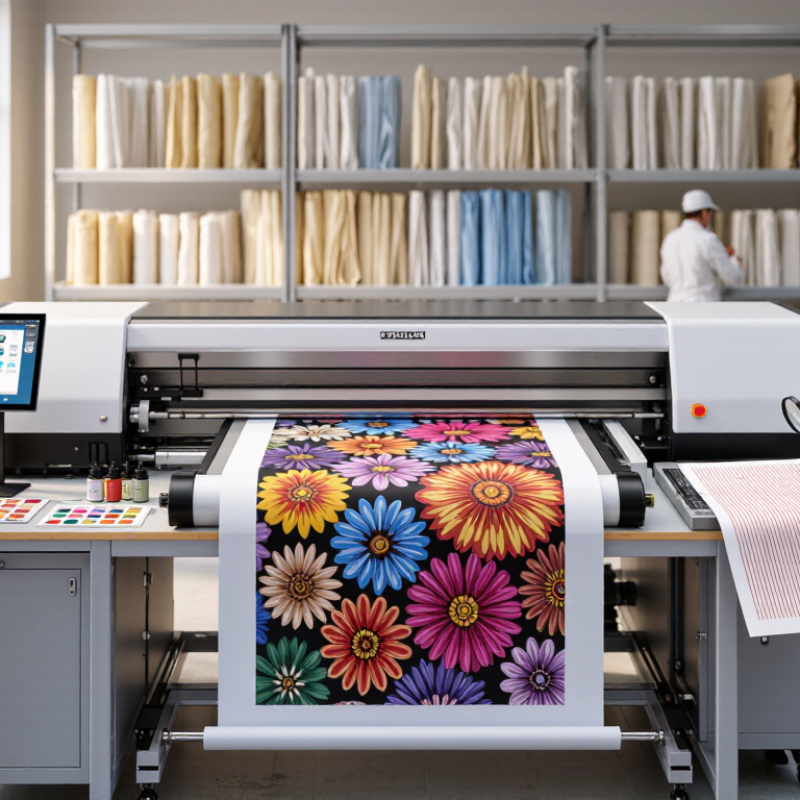
Reactive printing works best on cellulose fabrics, including cotton, linen, viscose, and rayon. Ask for test results on your exact fabric, not a similar sample.
Fabric needs even chemical pretreatment before printing. Uneven treatment can create pale stripes, blurred edges, or weak color.
Reactive dyes bond with fibers during steaming. A stable temperature and timing system strongly affect color depth and durability.
Tip 4: Inspect washing performance. After steaming, printed fabric must be washed carefully. This removes unfixed dye and improves softness. Request wash-fastness data from an independent laboratory when possible.
The printer should support reactive inks designed for your fabric construction. Heavy twill and lightweight voile may require different settings. Small details matter.
Reliable equipment should reproduce approved color targets across repeated runs. Request a physical strike-off before production. Screens can mislead.
Check fabric width, print speed, resolution, drying needs, and maintenance access.
I once focused too heavily on resolution and overlooked pretreatment consistency. That mistake changed the final color. A skilled supplier should explain limitations clearly, provide operating records, and recommend testing before purchase.
Choosing a digital reactive fabric printer starts with specifications that match your production floor. Check print width, native resolution, carriage speed, and daily duty rating. A fast machine is not always efficient. Ask for sustained speed using your actual fabric, not a showroom sample. Confirm drying requirements, media handling, nozzle monitoring, and operator access. Measure twice.
The ink system deserves equal attention because reactive inks need controlled penetration and fixation. Review ink capacity, filtration, degassing, circulation, and pretreatment compatibility. Examine the steaming and washing workflow before purchase. Ask how often printheads require cleaning. In production trials, stable ink circulation reduced banding during long runs. However, poor humidity control still caused nozzle loss. That result was easy to overlook.
Color performance should be tested with a spectrophotometer, not judged only by sight. Measure Delta E, gray balance, gradients, dark solids, and fine lettering. Compare the first and last meter from one roll. Test colors before and after steaming and washing. Request documented color profiles for each fabric type. Do not trust one color chart. I would record temperature, humidity, fabric weight, and ink batch during every trial. This makes defects easier to trace and prevents attractive samples from hiding inconsistent production.
Reference checkpoints for evaluating printer specifications, ink systems, and color performance
The index converts commonly used technical checkpoints to a 0–100 comparison scale. It considers 1,200 dpi print resolution, six or more ink channels, a target color difference of ΔE00 ≤ 2.0, wash fastness of at least Grade 4 on the ISO 105-C06 scale, and light fastness of at least Grade 4 on the ISO 105-B02 scale. These are practical evaluation references rather than manufacturer or brand benchmarks.
Choosing a digital reactive fabric printer starts with real production speed, not the number shown on a brochure. Grand View Research valued the global digital textile printing market at about USD 5.94 billion in 2023, with a projected 12.1% CAGR through 2030. That growth raises pressure on delivery times. Ask for usable meters per hour after pretreatment, printing, drying, steaming, and washing. The result matters.
Resolution should match the fabric and viewing distance. Fine artwork may need 600 dpi or higher, but excessive resolution can reduce throughput and increase ink use. Check dot placement, color consistency, and small-text clarity on the actual reactive fabric. Request a washed sample. A beautiful test swatch can mislead.
Workflow compatibility is equally important. The printer should connect smoothly with your RIP software, color profiles, nesting tools, and production records. Smithers’ digital textile printing outlook identifies shorter runs and faster sampling as major market drivers through 2028. Therefore, test file preparation time, calibration steps, maintenance access, and operator training. A printer may run quickly, yet delay jobs elsewhere. I have learned this the hard way. Also examine fabric width, ink capacity, printhead cleaning, and steaming requirements. Small workflow gaps become expensive during a busy shift.
Choose a printer that matches your fabric preparation, not only its resolution.
Tip one: confirm whether cotton pretreatment includes desizing, scouring, and controlled alkali application. Uneven absorbency creates pale edges and muddy details.
Tip two: request pretreatment add-on data, measured in grams per square meter.
Tip three: test several cotton constructions, including lightweight poplin and dense twill. Textile Exchange reports that global fiber production reached about 124 million tonnes in 2023. Cotton remains a major substrate, but fabric structure changes ink penetration dramatically.
Tip four: compare fixation systems carefully. Reactive inks usually need saturated steam, commonly near 102–105°C, followed by washing. Ask for verified dwell time, humidity control, and temperature mapping across the chamber.
Tip five: reject machines that only show ideal laboratory samples. Production rooms contain cold spots, wrinkles, and unstable steam pressure. Real factories are messier. A small fixation error can reduce wash fastness and color strength. ISO 105-C06 or AATCC TM61 testing should support supplier claims.
Tip six: inspect the wash-off sequence. Effective soaping removes unfixed dye without roughening the fabric. Measure water use, bath temperature, conductivity, and residual color. The European Environment Agency identifies textile production as a significant pressure on water and chemical resources, so efficient rinsing deserves technical attention.
Tip seven: compare finishing options, such as softening, calendaring, and sanforizing. Check handle, width stability, shrinkage, and crocking after finishing. Grand View Research estimates strong growth in digital textile printing, yet speed alone can hide weak post-treatment control. I would leave room for retesting; one successful roll proves very little.
Tip: Inspect the maintenance routine before comparing print speed. Ask how often operators clean printheads, flush ink lines, and replace dampers. A practical machine should provide easy access to the capping station. I once underestimated cleaning time, and production lost nearly an hour each shift.
Tip: Calculate operating costs using real fabric volumes. Include reactive ink, water, treatment chemicals, electricity, labor, and waste. Request sample calculations for both short runs and continuous production. The cheapest purchase price may hide expensive maintenance. Also check drying and steaming requirements.
Tip: Evaluate technical support carefully. Confirm response times, spare-parts availability, remote diagnostics, and technician training. Speak with current users if possible. Promises sound good. Written service terms are safer.
Tip: Review the printer’s scalability. Can it support additional printheads, wider fabric, or higher daily output? Check whether upgrades require major factory changes. Measure floor space, ventilation, water access, and workflow connections before signing any agreement.
Tip: Test color consistency across a full production day. Short demonstrations can hide heat buildup, nozzle loss, or repeated alignment problems. Ask for detailed test results, not only attractive samples.
Tip: Study software and operator training. Clear alerts can prevent small faults from becoming costly stoppages. Training should cover color management, maintenance logs, and safe chemical handling.
Tip: Leave room for uncertainty. Your fabric mix may change, and early sales forecasts may be wrong. Choose a system that remains manageable during slow months, but can grow without replacing its core equipment.
Check print width, native resolution, carriage speed, and daily duty rating. A fast machine is not always efficient. Ask for sustained speed on your actual fabric, not a showroom sample.
Measure usable meters per hour after pretreatment, printing, drying, steaming, and washing. Brochure speed can mislead. A printer may run quickly but create delays elsewhere.
Match resolution with fabric structure and viewing distance. Fine artwork may need 600 dpi or higher. Excessive resolution can reduce throughput and increase ink consumption.
Review ink capacity, filtration, degassing, circulation, and pretreatment compatibility. Ask how often printheads need cleaning. Stable circulation can reduce banding during long runs, but humidity problems may still cause nozzle loss.
Use a spectrophotometer instead of judging color by sight alone. Measure Delta E, gray balance, gradients, dark solids, and fine lettering. Compare the first and last meter from one roll.
Pretreatment should match the fabric construction and absorbency. Test lightweight poplin and dense twill separately. Uneven absorbency can create pale edges and muddy details.
Reactive inks commonly require saturated steam near 102–105°C, followed by washing. Check dwell time, humidity control, and chamber temperature mapping. Inspect water use, bath temperature, conductivity, and residual color.
Check fabric handle, width stability, shrinkage, and crocking after finishing. Softening, calendaring, and sanforizing may change the final feel. One successful roll proves very little. Leave room for retesting.
Test RIP connections, color profiles, nesting tools, and production records. Also measure file preparation, calibration, maintenance access, and training time. Small workflow gaps become expensive during a busy shift.
Choosing the right Digital Reactive Fabric Printer requires more than comparing basic price and output claims. Start by understanding reactive printing and confirming that the printer supports the fabric types, fiber blends, and color requirements of your production. Carefully evaluate ink compatibility, color management, printhead performance, resolution, and production speed to ensure the equipment can deliver consistent results while meeting workflow demands. It is also important to consider how the printer integrates with design software, pretreatment, drying, steaming, washing, and finishing stages.
Long-term value depends on more than initial performance. Review ink consumption, energy use, maintenance routines, replacement parts, technical support, and operator training before making a decision. A reliable machine should be easy to maintain, adaptable to changing order volumes, and capable of scaling with your business. By assessing print quality, process coordination, operating costs, and future expansion together, buyers can select a Digital Reactive Fabric Printer that supports stable production and efficient fabric manufacturing.

+91-79-26840551 / 52 / 53
Domestic: +91 7575 009 654 · Export: +91 7043 505 091
[email protected]
International: [email protected]
Plot No.3, Road No.1, Kathwada GIDC, Kathwada, SP Ring Road, Ahmedabad 382430, Gujarat, India