An Industrial Fiber Laser Cleaning System uses a focused beam to remove rust, paint, oxide, or other unwanted layers from a surface. Unlike abrasive blasting, it does not rely on grit striking the workpiece. Instead, laser energy interacts with the surface coating, loosening or vaporizing material when the settings and application are suitable. A typical setup includes a fiber laser source, scanning head, control unit, and protective enclosure or work area. Some systems also use fume extraction, which is important when coatings produce smoke or fine particles. The process looks simple from the outside. The setup is not.
Understanding how the system works means looking beyond its power rating. Wavelength, pulse characteristics, scan speed, focus, and the material beneath the coating all affect the result. A steel part with light surface rust may respond differently from painted aluminum or a heat-sensitive component. Operators usually begin with a small test area, inspect the finish, and adjust parameters before treating the full surface. That step can reveal surprises. Laser cleaning is often described as precise and non-contact, but it is not automatically harmless to every substrate, nor does it remove every contaminant equally well. A sound introduction should also explain system types, practical uses, limitations, maintenance, and workplace safeguards. Those details help readers judge whether an Industrial Fiber Laser Cleaning System fits a specific job, rather than relying on a headline specification alone.
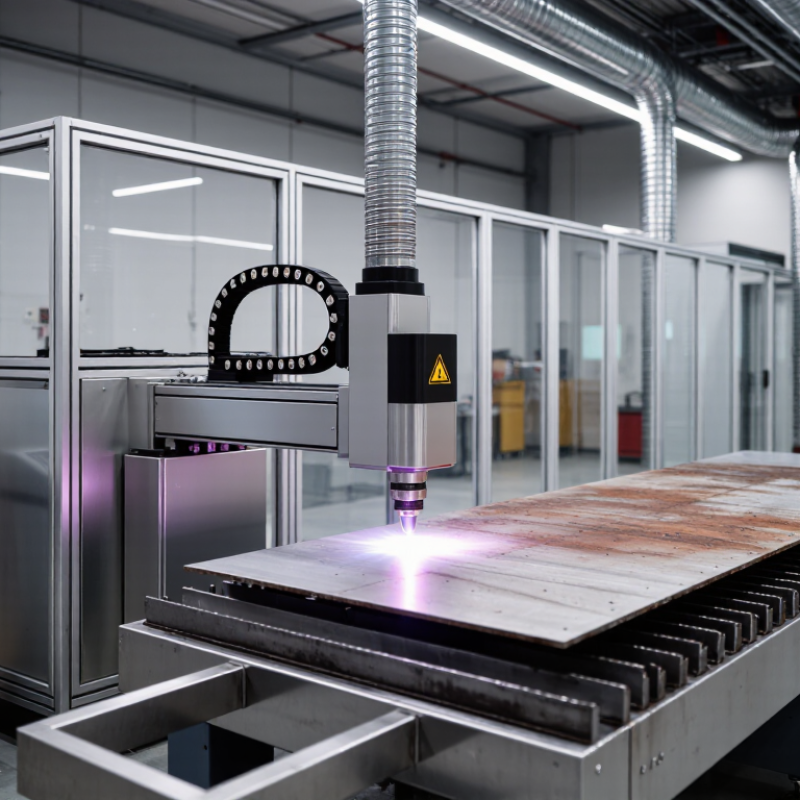
An industrial fiber laser cleaning system uses a focused beam of light to remove unwanted material from a solid surface. A laser source generates the beam, while scanning optics guide it across the workpiece. The energy heats or breaks down contaminants such as rust, oxide, paint, or oil, so they can be detached or vaporized. The base material may remain largely unaffected when the process is properly set.
Its purpose is controlled surface preparation. In a workshop, it can clean a weld area, remove corrosion from a steel fixture, or prepare a component for coating. The operator adjusts parameters such as power, pulse rate, and scan speed to suit the material and contaminant. Small changes matter. Too much energy can discolor or damage a surface; too little may leave residue behind.
Compared with abrasive methods, laser cleaning can reduce media use and limit direct contact with the part. It still needs safeguards. Enclosures, appropriate eye protection, and fume extraction help manage beam and airborne hazards. Results also depend on the condition of the surface, and not every coating responds predictably. A test patch is often worthwhile, even when the part looks uniform.
It uses focused light to loosen or remove rust, oxide, paint, and oil from solid surfaces. The base material can remain largely unaffected when settings are suitable.
A laser source sends pulses through a delivery fiber to a scanning head. Mirrors sweep the beam across the workpiece. Small changes matter.
Common parts include a laser source, delivery fiber, scanning head, controller, and extraction unit. Protective housing and interlocks help reduce exposure risks.
It can remove corrosion from a steel fixture, clean a weld area, or prepare a component for coating. Results vary with the surface and contaminant.
Operators adjust power, pulse rate, and scan speed for the material and unwanted layer. Too much energy may discolor or damage the surface; too little may leave residue.
No. Some coatings respond unpredictably, even when a surface looks uniform. Test a small patch first. It is a useful check, not a guarantee.
Use suitable eyewear, protective housing, interlocks, and fume extraction. Reflective metal can redirect light, and a clean-looking surface does not prove the air is clear.
It can reduce media use and limit direct contact with the part. Still, results may be uneven, so inspect the cleaned area under suitable lighting.
An Industrial Fiber Laser Cleaning System uses a focused beam of light to remove rust, paint, oil, oxide layers, and other unwanted material from a surface. Its main components typically include a fiber laser source, a scanning head that directs the beam, a control unit for adjusting operating settings, and a cooling system that helps maintain stable performance. Together, these parts allow the system to clean targeted areas without relying on chemical solvents or abrasive contact.
During operation, the laser energy interacts with the unwanted layer, causing it to loosen or separate from the underlying material, which can then be collected or removed. The process can be used on metals and selected other materials in applications such as equipment maintenance, surface preparation, and restoration. Advantages include precise, adjustable cleaning and reduced consumable use, while limitations may include slower treatment of large areas, material sensitivity, and upfront equipment cost. Safe use requires trained operators, suitable protective equipment, controlled access to the work area, and attention to fumes and reflected laser light.

+91-79-26840551 / 52 / 53
Domestic: +91 7575 009 654 · Export: +91 7043 505 091
mktg@www.toughmachinery.com
International: export@www.toughmachinery.com
Plot No.3, Road No.1, Kathwada GIDC, Kathwada, SP Ring Road, Ahmedabad 382430, Gujarat, India