Export Desk: +91 7043 505 091 export@www.toughmachinery.com ISO 9001:2015 & CE Compliant Manufacturing
0%

China’s EV battery supply chain is expanding, and laser welding equipment is part of its production backbone. Yet a machine’s brochure does not tell the whole story. Buyers need to examine weld consistency, process control, automation, traceability, and after-sales support. Small gaps matter. A weak joint can disrupt a production line or require costly inspection.

EV manufacturing leader Elon Musk has said, “The machine that builds the machine is vastly more important than the machine itself.” His observation applies to battery welding: equipment design and factory integration shape output, not just laser power. For battery cells, modules, and packs, manufacturers must manage heat input and joint quality across materials such as copper and aluminum. Reflective surfaces add difficulty. So do changing part geometries and tight takt times.

This guide to China Top 10 EV Battery Laser Welding Machine Manufacturers offers a practical starting point for comparing suppliers. It looks beyond headline specifications to consider application experience, system flexibility, quality assurance, and technical service. These factors deserve verification through sample welds, process data, and direct discussions with engineering teams. A top-ten list cannot settle every purchasing decision. Company capabilities vary, and published information may leave gaps. That is worth keeping in mind. The strongest choice is the supplier whose equipment can prove reliable on your actual battery components and production requirements.
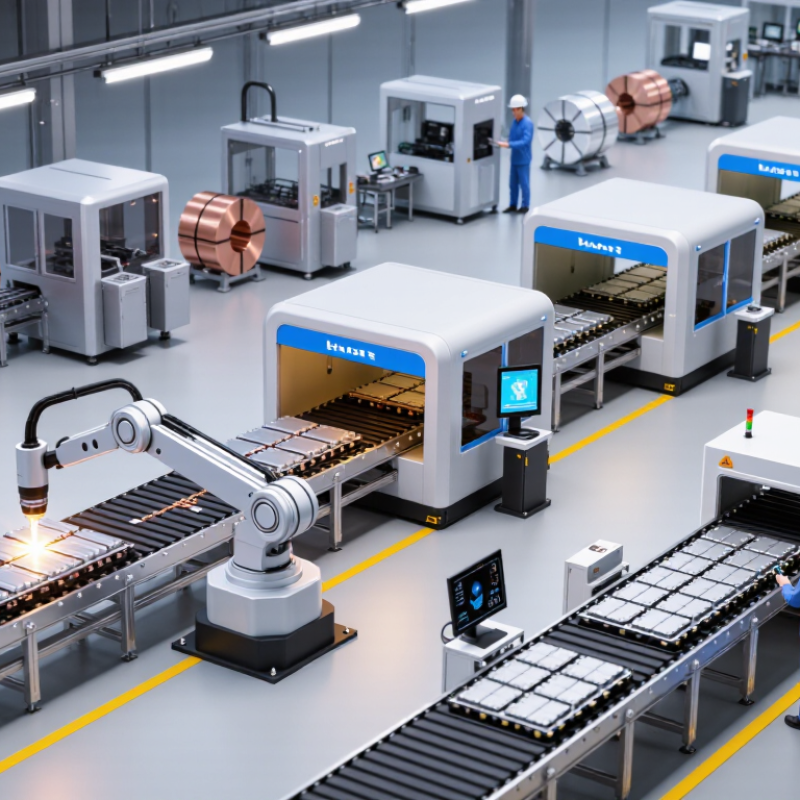
China Top 10 EV Battery Laser Welding Machine Manufacturers

What Is an EV Battery Laser Welding Machine?

China Top 10 EV Battery Laser Welding Machine Manufacturers

What Is an EV Battery Laser Welding Machine?

An EV battery laser welding machine joins conductive parts or enclosures using a focused laser beam. Typical joints include cell terminals, tabs, busbars, and selected pack seams. The exact application depends on battery design and material. The machine usually combines a laser source, beam delivery system, motion controls, a fixture, and process monitoring. Small welds matter.

Compared with many contact-based methods, laser welding can concentrate heat in a small area and create narrow, repeatable joints. It can also cause defects. Reflective metals, poor fit-up, surface contamination, or incorrect focus may lead to weak bonds, spatter, or excessive heat. A sound process needs trials, measured settings, and suitable inspection—not just a high-powered laser. Real production details can be messy.

How Are China’s Leading Manufacturers Evaluated?

China’s leading EV battery laser welding machine manufacturers should be evaluated on repeatable production results, not brochure claims. The IEA’s Global EV Outlook 2024 reported that energy-sector battery demand reached about 750 GWh in 2023, roughly 40% higher than in 2022. That scale makes stable welding and fast fault detection essential. Buyers should ask for trials using their own cell or busbar samples, then inspect weld depth, spatter, distortion, and electrical resistance. Small defects matter.

A credible evaluation also covers process control and service. Check whether the system records laser power, speed, focus position, and inspection results for each weld. Ask to see how it handles material variation and line stoppages. The IEA’s figure describes battery demand; it does not rank welding equipment suppliers. So treat market visibility as context, not proof of quality. No single score tells the whole story. Factory acceptance tests should include repeat runs, changeovers, and review of reject samples. I would also verify spare-part lead times and technician response in writing; this detail is easy to overlook. A polished demo can still hide weak performance over a full production shift.

Profiles of 10 Chinese EV Battery Laser Welding Machine Manufacturers

China Top 10 EV Battery Laser Welding Machine Manufacturers

These ten profiles describe different Chinese supplier strengths, rather than a verified ranking. One manufacturer may focus on battery-cell tabs and compact workstations. Another may build laser systems for module busbars. A third may combine welding with vision inspection. A fourth may specialize in automated fixtures for prismatic cells. A fifth may offer flexible production lines for several pack formats. Fit matters.

A sixth profile centers on cylindrical-cell assembly and repeatable seam control. A seventh supports pilot lines, where recipes often change between trials. An eighth integrates welding with leak checks or traceability tools. A ninth emphasizes custom fixtures for unusual module layouts. A tenth may provide broader line integration, including loading and material handling. These profiles are starting points, not proof of performance. A catalog can look convincing; sample welds may disagree. Buyers should compare material combinations, joint design, takt time, and service response. Factory references and trial records add useful context.

Tips: Request weld samples using your actual materials and joint geometry. Check spatter, penetration, and seam consistency under magnification. Ask how operators manage parameter changes between batches. A small gap in documentation matters. Verify it before installation.

Key Technologies and EV Battery Welding Applications

EV battery welding depends on stable energy delivery and careful joint preparation. Fiber lasers provide focused heat for narrow seams, while beam wobble can widen the melt zone and help bridge small fit-up gaps. Neither method fixes poor alignment. Copper and aluminum reflect laser energy differently, so power, speed, focus, and shielding gas need testing for each joint design.

Applications include joining cell tabs, connecting busbars, and sealing battery module components. A typical production cell may combine a laser source, motion system, vision alignment, and sensors that monitor the weld plume or reflected light. These signals can flag changes, but they do not prove every joint is sound. Engineers still need validated process windows and regular sample inspections. Small details matter: a burr on a tab or a slight change in clamping pressure can alter the seam. Even a tuned recipe may drift as materials and tooling wear. That part is easy to underestimate. Reliable results come from matching the laser process to the joint, then checking performance under realistic production conditions.

How to Compare Manufacturers and Select a Supplier

Choosing among China’s EV battery laser welding machine manufacturers requires more than comparing laser power and quoted cycle time. The IEA reported that global electric-vehicle battery demand exceeded 750 GWh in 2023, about 40% above 2022. That growth raises the value of stable, repeatable production. Ask suppliers to weld your actual cell tabs, busbars, and materials—not just polished demonstration samples. Test real parts.

Compare weld strength, penetration, spatter, heat-affected areas, and consistency across repeated runs. Request logged process data, inspection methods, and sample results under your production conditions. A fast demo is not proof: fixtures, surface condition, and operator setup can change outcomes. One comparison may still be imperfect if test conditions differ, so document them carefully.

Check whether the system supports your required cell format, production volume, and factory integration. Review changeover time, maintenance access, training, spare-part availability, and local technical support. Ask for a clear service response plan and a total-cost estimate covering installation and upkeep. The lowest quote can become expensive if downtime or rework rises. Before ordering, run a witnessed acceptance test using agreed quality limits and a representative production schedule.

FAQS

What does an EV battery laser welding machine do?

It joins conductive parts or selected enclosures with a focused laser beam. Small welds matter.

Which battery parts can it weld?

Common applications include cell terminals, tabs, busbars, and selected pack seams. Suitability depends on the battery design and materials.

What equipment does a typical system include?

It usually combines a laser source, beam delivery, motion controls, a fixture, and process monitoring. The exact setup varies.

What can affect weld quality?

Reflective metals, poor part fit, dirty surfaces, or incorrect focus may cause weak bonds, spatter, or excess heat. A powerful laser alone is not enough.

How should a production process be tested?

Run trials with actual parts and record power, speed, and focus position. Check sample penetration and consistency before increasing production.

What should buyers compare between suppliers?

Compare strength, penetration, spatter, heat-affected areas, and repeatability across runs. Use the same materials and test conditions where possible.

Can a camera or sensor confirm a reliable weld?

It can flag process changes, but it cannot replace validation. Inspection still needs to match the product’s quality requirements.

What should buyers check beyond the machine price?

Review changeover time, maintenance access, training, spare parts, and technical support. A low quote may cost more if downtime or rework grows. Test conditions can still be imperfect.

Conclusion

This article introduces the EV Battery Laser Welding Machine and explains how it supports precise, consistent joining in battery manufacturing. It outlines the main criteria for evaluating leading Chinese manufacturers, including equipment performance, process stability, automation capabilities, technical support, customization, and production experience. The article then presents an overview of ten manufacturers, focusing on their general strengths and areas of specialization without relying on brand names.

It also explores key welding technologies and their applications across battery cells, modules, and packs, highlighting the importance of accuracy, repeatability, and quality control. To help readers choose a suitable supplier, the article compares practical considerations such as compatibility with production needs, system integration, service availability, and long-term operating costs. The goal is to provide a clear framework for assessing options and making an informed equipment decision.

Charlotte

Charlotte

Charlotte is a professional marketing specialist and a trusted voice behind the company’s website. With a strong understanding of the company’s products, customer needs, and industry trends, she transforms complex information into clear, practical, and engaging content. Her professional blog......

Call Us

+91-79-26840551 / 52 / 53
Domestic: +91 7575 009 654 · Export: +91 7043 505 091

Visit Our Works

Plot No.3, Road No.1, Kathwada GIDC, Kathwada, SP Ring Road, Ahmedabad 382430, Gujarat, India
Copyright © 2025 Mehta Hitech Industries Limited, formerly known as Mehta Cad Cam Systems Pvt. Ltd. All Rights Reserved.