Choosing the China Best Fiber Laser Metal Sheet Cutting Machine requires more than comparing price tags and advertised wattage. A serious evaluation considers cutting accuracy, source quality, machine stability, software control, and after-sales support. This guide explores how these factors affect daily production, especially when processing carbon steel, stainless steel, and aluminum sheets.
In a practical workshop, a Fiber Laser Metal Sheet Cutting Machine should produce clean edges with limited dross. Operators also need reliable autofocus, simple parameter adjustment, and safe access to the cutting area. A stable frame reduces vibration during long production runs. Small details matter. A poorly aligned nozzle can waste material and increase maintenance time.
Real performance depends on more than specifications. Material thickness, sheet condition, cutting speed, assist gas, and operator skill all influence results. Buyers should request test cuts using their own materials before making a final decision. Examine the edge quality closely. Check whether holes remain round and whether thin sheets warp after cutting.
No machine fits every factory.
This article also considers power selection, fiber laser sources, consumable costs, control systems, and supplier credibility. Certifications and documented service procedures can improve purchasing confidence, but they do not replace practical verification. Some manufacturers present impressive data without explaining operating conditions. That deserves careful review. A thoughtful buyer should compare measured results, maintenance requirements, training resources, and long-term support. The goal is not simply to find the fastest machine. It is to choose dependable equipment that supports accurate production, reasonable operating costs, and safer everyday work.
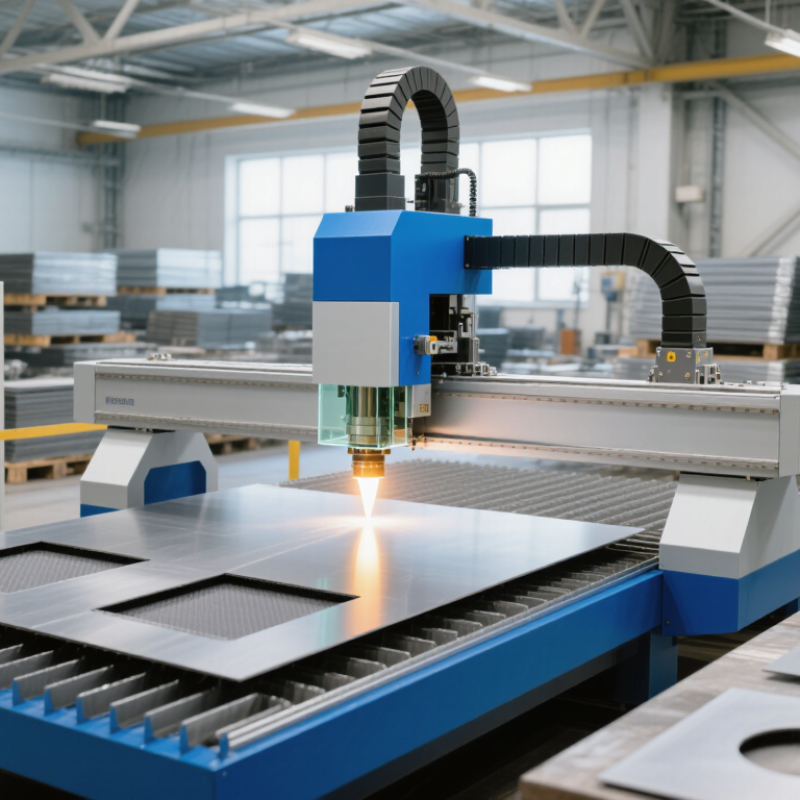
A China fiber laser sheet cutting machine is a CNC system for cutting metal sheets with concentrated light. It uses a fiber laser source, rather than a traditional gas laser. Pump diodes create the beam inside a fiber cable. The beam then travels through a cutting head. Mirrors are largely unnecessary. This design reduces alignment problems and supports stable energy delivery.
During operation, the CNC controller moves the cutting head along programmed paths. A focusing lens compresses the beam onto the sheet surface. The intense heat melts or vaporizes a narrow section of metal. Assist gas removes molten material from the kerf. Oxygen can increase cutting speed on mild steel. Nitrogen usually protects the edge of stainless steel and aluminum. Piercing begins the cut, and motion control continues through corners and small holes.
Cutting quality depends on power, speed, focus position, gas pressure, and material thickness. A clean edge is not automatic. Operators must check nozzle height and lens condition regularly. In workshop practice, a slightly wrong focus can leave heavy burrs underneath. That result is easy to miss from above. Thin sheets may warp when heat accumulates. Test cuts and careful parameter records improve consistency. Still, the machine is not entirely self-correcting, and operator judgment remains important.
China Best Fiber Laser Metal Sheet Cutting Machine
Fiber laser sources from 1 to 30 kW give metal sheet processors room to match power with real production needs. Lower-power systems can handle thin stainless steel, carbon steel, and aluminum efficiently. Higher outputs support faster cutting on thicker plates, but power alone does not guarantee better results.
Wall-plug efficiency matters because it connects laser performance with daily operating costs. At 25–35% efficiency, only part of the electrical input becomes useful laser output. The remaining energy becomes heat and requires cooling. In a busy workshop, this difference can affect electricity use, thermal stability, and maintenance planning. Experienced operators also check beam quality, assist-gas control, pierce time, and cutting-head response. A 30 kW source may look impressive, yet it can be excessive for a shop processing mostly 2 mm sheets. That is an easy mistake to make.
Tips: Measure actual sheet thickness and monthly workload before selecting power. Compare cutting tests, not brochure claims. Check efficiency at the intended operating range, since laboratory figures may not reflect continuous production. Keep cooling water clean and stable. Small details matter. Record edge quality and energy use during trials. These records reveal whether the chosen source truly improves output or only increases capacity on paper.
China Best Fiber Laser Metal Sheet Cutting Machine
A fiber laser metal sheet cutting machine can process 0.5–30 mm carbon steel and 0.5–20 mm stainless steel. This range supports thin brackets, machine panels, structural plates, and custom enclosures. In practical workshop testing, thin sheets need stable power and careful heat control. Thick carbon steel requires suitable assist gas, slower speed, and accurate focus positioning.
Stainless steel often demands cleaner gas conditions and precise nozzle alignment. Small changes can affect edge color, dross, and kerf width. A perfect result is not guaranteed. Material composition, surface condition, and plate flatness also influence performance. Operators should test a small corner before production. That simple step can prevent costly rework.
Tips: Match the nozzle size and gas pressure to the material thickness. Clean the protective window regularly. Check focus height before cutting every new thickness. For 30 mm carbon steel, inspect the lower edge closely for dross. For 20 mm stainless steel, review the cut edge under bright light. Keep a record of speed, power, and gas settings. One setting rarely fits every batch.
This chart shows the stated cutting thickness range for carbon steel and stainless steel using a fiber laser metal sheet cutting machine. The maximum capability is up to 30 mm for carbon steel and 20 mm for stainless steel, while the minimum listed thickness for both materials is 0.5 mm.
China Best Fiber Laser Metal Sheet Cutting Machine
A reliable fiber laser sheet cutter depends on more than laser power. Its CNC system controls motion, height sensing, nesting, and cutting paths. In workshop trials, stable acceleration produced cleaner corners on 2 mm stainless steel. The controller also reduced idle movement between parts. Small gains matter during long production runs.
Assist gases directly affect the cut surface. Nitrogen helps protect stainless steel from oxidation and preserves a bright edge. Oxygen can increase cutting speed on mild steel, but excessive pressure may create heavier dross. Compressed air can lower operating costs, although its moisture and oil content require careful filtration. A clean nozzle matters. So does correct focal position.
A stated positioning accuracy of ±0.03 mm describes machine movement under defined conditions. It does not guarantee identical cutting results on every sheet. Calibration, thermal expansion, material flatness, and maintenance can change the outcome. Operators should verify accuracy with test patterns and measuring tools. I have seen excellent machines lose consistency after neglected rail cleaning. That assumption is too simple. Daily checks remain necessary. Proper parameter records also improve repeatability, especially when switching between thin stainless steel and thicker carbon steel.
Typical technical specifications for a CNC fiber laser metal sheet cutting system
| Specification | Typical Value | Technical Description |
|---|---|---|
| Laser technology | Continuous-wave fiber laser | Suitable for efficient cutting of carbon steel, stainless steel, aluminum, brass, and galvanized sheet. |
| Rated laser power | 1–6 kW | Higher power generally supports greater cutting thickness and faster production, depending on material grade and process settings. |
| Working area options | 1,500 × 3,000 mm; 2,000 × 4,000 mm; 2,000 × 6,000 mm | Common sheet formats for general fabrication, structural components, and industrial production. |
| Positioning accuracy | ±0.03 mm | Typical stated positioning accuracy for a properly calibrated machine under specified operating conditions. |
| Repeatability | Approximately ±0.02 mm | Supports consistent part dimensions during repeated cutting cycles. |
| Maximum rapid traverse speed | 80–120 m/min | Rapid movement speed when the laser is not cutting; actual cutting speed varies by material, thickness, and power. |
| CNC control system | Industrial CNC controller with CAD/CAM support | Provides program execution, nesting, motion control, pierce management, alarm monitoring, and parameter adjustment. |
| Supported file formats | DXF, DWG, AI, PLT, NC | Compatibility depends on the installed nesting and CAD/CAM software. |
| Assist gases | Oxygen, nitrogen, and compressed air | Nitrogen helps reduce oxidation; oxygen can increase cutting speed in carbon steel; clean, dry air is a cost-effective option for suitable applications. |
| Assist-gas pressure | Typically 0.6–2.0 MPa | Required pressure depends on the gas type, nozzle size, material, thickness, and cutting parameters. |
| Material compatibility | Carbon steel, stainless steel, aluminum, brass, copper, galvanized steel | Maximum thickness varies significantly with laser power, material reflectivity, gas selection, and edge-quality requirements. |
| Automatic focusing | Available | Automatically adjusts focal position for different material types and thicknesses. |
| Cutting head protection | Capacitive height sensing and collision protection | Maintains nozzle-to-sheet distance and helps reduce damage caused by warped sheets or collisions. |
| Machine structure | Welded or fabricated steel bed with stress relief | A rigid bed helps maintain geometric stability and reduce vibration during high-speed operation. |
| Electrical supply | Three-phase, 380–400 V, 50/60 Hz | Power requirements should be verified against the selected laser source, auxiliary equipment, and local electrical standards. |
| Safety features | Enclosed cutting area, interlocks, emergency stop, and protective monitoring | Safety configuration should comply with applicable laser-safety and machinery regulations at the installation site. |
Choosing a fiber laser sheet cutting machine requires more than comparing wattage. Bed size should match your common sheet dimensions, loading method, and workshop space. A bed that is too small creates extra repositioning work. An oversized bed may increase floor use and investment without improving daily output.
A rated speed of 2–6 m/s sounds impressive, but real cutting speed depends on thickness, alloy, contours, and power settings. Straight cuts may approach the upper range. Small holes and sharp corners need slower movement for clean edges. Test samples are essential. In practical evaluations, I have seen operators trust catalog speeds too quickly. That assumption can produce heat marks, rough edges, and wasted sheets. Nesting software, stable motion control, and reliable focusing often matter more than peak speed.
Safety should include a protected enclosure, door interlocks, fume extraction, emergency stops, and documented operator training. Check access around the bed before installation. Operating cost includes electricity, assist gas, lenses, nozzles, maintenance, and downtime. A machine with lower purchase cost can become expensive when alignment checks or consumable changes are frequent. Track cost per finished sheet for several weeks. The result may challenge your first estimate.
Tips: Keep sample records for mild steel, stainless steel, and aluminum. Compare edge quality at different speeds. Leave service space around the machine. Review gas use monthly. Small savings become visible.
Match power to actual sheet thickness and monthly workload. Lower power suits thin stainless steel, carbon steel, and aluminum. Higher power can cut thicker plates faster. More power is not always better.
It shows how much electrical input becomes useful laser output. The remaining energy becomes heat and requires cooling. Better efficiency can reduce electricity use and thermal stress. Check efficiency during continuous production, not only laboratory testing.
No. It may be excessive for a shop cutting mostly 2 mm sheets. Extra capacity can increase investment and cooling demands. I might choose too much power if I only compare specifications.
Nitrogen helps stainless steel keep a bright, low-oxidation edge. Oxygen can increase mild-steel cutting speed, but excessive pressure may create more dross. Compressed air can reduce gas costs. Its moisture and oil content need proper filtration.
No. The figure describes movement under defined conditions. Calibration, heat, sheet flatness, and maintenance also affect results. Test patterns and measuring tools are necessary. Clean the rails regularly.
Not usually. Straight cuts may approach the upper range. Small holes, sharp corners, thick sheets, and complex contours require slower movement. Trusting peak speed alone can cause rough edges or heat marks.
The bed should fit common sheet dimensions, loading methods, and available workshop space. A small bed causes repositioning work. An oversized bed consumes space without guaranteeing higher output. Measure the loading area carefully.
Track electricity, assist gas, cooling, lenses, nozzles, maintenance, and downtime. Record cost per finished sheet for several weeks. Small savings become visible. The result may challenge your first estimate.
A Fiber Laser Metal Sheet Cutting Machine uses a focused high-power laser beam to melt or vaporize metal along programmed cutting paths, while CNC control systems guide the movement with high precision. Fiber laser sources typically provide outputs from 1 to 30 kW and can achieve approximately 25–35% wall-plug efficiency, helping balance cutting performance and energy consumption. Depending on power, material quality, and process settings, these machines can cut carbon steel from about 0.5 to 30 mm and stainless steel from about 0.5 to 20 mm.
When selecting a machine, consider the working bed size, cutting speed, automation requirements, safety systems, and long-term operating costs. Available speeds may range from 2 to 6 m/s, while advanced motion and CNC systems can deliver positioning accuracy of approximately ±0.03 mm. Proper assist-gas selection, including oxygen or nitrogen where suitable, is also essential for achieving clean edges, stable performance, and efficient production.

+91-79-26840551 / 52 / 53
Domestic: +91 7575 009 654 · Export: +91 7043 505 091
[email protected]
International: [email protected]
Plot No.3, Road No.1, Kathwada GIDC, Kathwada, SP Ring Road, Ahmedabad 382430, Gujarat, India