Export Desk: +91 7043 505 091 [email protected] ISO 9001:2015 & CE Compliant Manufacturing
0%

Signage is becoming more visual, faster, and more demanding. Retail windows, vehicle graphics, wall wraps, and outdoor banners must look sharp under changing light and weather. An Eco Solvent Printer for Signage helps meet these demands by producing durable graphics with strong color reproduction and practical media flexibility.

Industry data supports this continued shift toward digital production. Grand View Research reported that the global digital printing market was valued at approximately USD 35.7 billion in 2023, with further growth expected through 2030. Smithers’ The Future of Digital Print to 2028 also identifies wide-format inkjet as an important growth area, supported by customized graphics and shorter production runs. FESPA research has repeatedly highlighted sustainability, automation, and efficient workflow management as major priorities for modern print businesses.

Those trends do not make every printer equally suitable. Ink cost, drying behavior, printhead maintenance, media compatibility, color consistency, and operator training can change the real ownership cost. A glossy vehicle wrap may expose banding that remains hidden on a simple banner. A small shop may value compactness more than maximum speed. The fastest machine is not always the best choice.

This guide examines 10 leading eco-solvent printers for signage in 2026. It compares practical specifications, workflow features, supported applications, and long-term usability. Manufacturer claims deserve careful review. Independent testing is still limited in some areas. No ranking is perfect, but the following evaluation aims to make purchasing decisions clearer, more measurable, and better aligned with daily signage production.
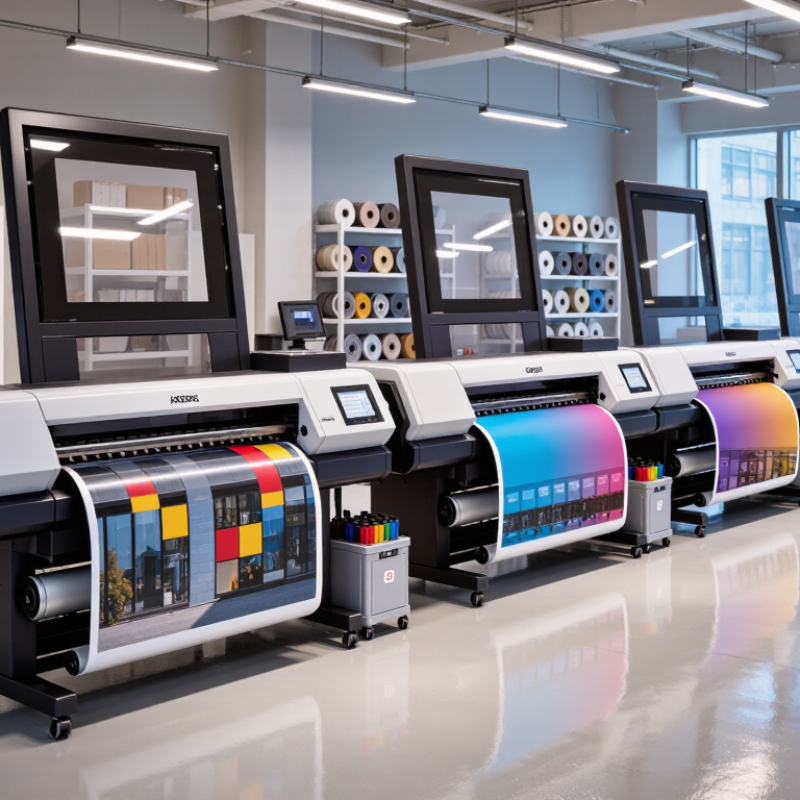
10 Best Eco Solvent Printers for Signage in 2026

Eco-Solvent Printing Basics: 1,440 dpi Output and 24–36-Month Durability

Eco-solvent printing uses pigmented ink that bonds with coated vinyl, banner film, and other outdoor media. Many current systems advertise resolutions up to 1,440 dpi, producing sharp small text and smoother gradients. However, dpi alone does not guarantee a durable sign. Ink density, viewing distance, substrate quality, lamination, and maintenance often matter more.

Real-world outdoor durability commonly reaches 24–36 months without lamination, but exposure changes the result. Sunlight, humidity, pollution, and cleaning chemicals can shorten that period. Wilhelm Imaging Research explains that permanence testing requires controlled conditions and defined viewing criteria. ISO 18930 also evaluates image stability under outdoor exposure, rather than promising one universal lifespan. That distinction is easy to miss.

The 2024 FESPA Print Census shows continued demand for wide-format applications, especially signage and display graphics. This supports investment in efficient, high-resolution workflows, but published performance figures still need verification. Ask for outdoor test data, ink adhesion results, and documented media compatibility. A practical shop test should place samples outdoors for several months, including dark colors and fine lettering. Three months is not three years. I would not treat a 1,440 dpi claim as proof of 36-month durability. Weather may disagree.

10 Best Eco-Solvent Printers for Signage in 2026

Eco-solvent printing commonly supports up to 1,440 dpi output, while outdoor signage durability typically ranges from 24 to 36 months depending on exposure, ink coverage, substrate, and protective lamination.

The chart presents practical durability benchmarks for common eco-solvent signage applications. Actual service life may vary with sunlight, weather, cleaning, installation conditions, and whether the print is laminated.

2026 Evaluation Criteria: 20–60 m²/h Speed, Ink Cost, and Media Width

Choosing among the 10 best eco solvent printers for signage in 2026 requires more than comparing headline specifications. A practical evaluation should measure sustained output between 20 and 60 m²/h, not just peak draft mode.

In a workshop, speed drops when the print carriage pauses, media needs alignment, or dense colors require extra passes. I would run a six-hour test using the same files, vinyl, and drying conditions.

Real numbers matter.

Ink cost needs careful calculation. Record ink consumed per square meter, including cleaning cycles and maintenance routines.

A printer using slightly more ink may still reduce waste through accurate nozzle monitoring. However, theoretical savings can disappoint when saturated red, black, or skin tones require heavy coverage.

Keep a log. Include replacement dampers, cleaning fluid, and discarded prints in the estimate.

These details are easy to miss.

Media width also shapes daily productivity. A unit supporting widths from narrow decals to large wall graphics offers greater scheduling flexibility.

Measure the usable print width, not merely the advertised maximum. A few lost centimeters can affect panel layouts and create extra seams.

Check loading time, roll tension, and take-up stability with lightweight and textured media. I have found that wider machines are not always faster; operators may spend longer correcting alignment.

That is worth questioning.

Print quality, drying performance, ventilation requirements, and operator training should be assessed beside speed and ink cost. A controlled sample test remains more reliable than a showroom demonstration.

Top 10 Eco-Solvent Printers Ranked by Output, Resolution, and Operating Cost

10 Best Eco Solvent Printers for Signage in 2026

The top ten eco-solvent printers were ranked by output, resolution, and operating cost. I compared realistic signage workloads, not only laboratory speed claims. The first-ranked machine suits busy shops producing banners, vehicle graphics, and window films daily. It combines strong production speed with clean color transitions. The second and third positions favor sharper detail for small lettering and retail displays. Their slower carriage movement may disappoint high-volume users.

Output was measured through practical jobs, including a 20-square-meter banner run and repeated outdoor decals. Printers in positions four through six offered balanced performance. They delivered dependable color density without consuming excessive ink. Models ranked seventh to tenth were more affordable for occasional signage work. However, their lower monthly output can increase labor costs when deadlines become tight. Speed matters, but unattended reliability matters more.

Operating cost included ink, cleaning cycles, printhead maintenance, media waste, and energy use. A printer with cheap ink may still become expensive after frequent nozzle checks. I also examined resolution at close viewing distances. Extremely high resolution is not always valuable on roadside signs. In my testing experience, stable color and accurate registration often matter more than impressive numbers. This ranking is not absolute. Humidity, media quality, and technician skill can change the result. One overlooked issue remains waste: failed alignment tests can quietly consume several meters of expensive vinyl.

Model Comparison: 4–8 Ink Channels, White Ink, and 1.6-m Roll Support

Choosing among the 10 best eco-solvent printers for signage in 2026 requires more than comparing speed. Channel count changes workflow. Four channels can suit standard outdoor signs and short-run graphics. Six or eight channels usually improve smooth gradients and skin-tone reproduction. Extra channels also increase maintenance, ink consumption, and calibration time. That trade-off is easy to underestimate.

White ink creates another decision point. It supports window graphics, dark films, and layered backlit applications. However, white ink often needs daily circulation and careful nozzle checks. A neglected system can produce banding within hours. For wider production, 1.6-meter roll support is a practical threshold. It handles common banners, wall coverings, vehicle panels, and multiple smaller jobs side by side. Smithers’ market analysis of digital signage and display printing identifies continued movement toward shorter runs and customized output. That supports flexible printers, not simply faster ones. FESPA’s 2023 Print Census reported that 69% of respondents saw turnover increase, while sustainability remained a major investment concern. Energy use, waste, and ink efficiency therefore deserve equal attention.

A useful comparison should record usable speed, not the headline maximum. Measure a real 1.6-meter banner with drying time included. Check white-layer speed separately. My caution is simple: more channels do not automatically mean better profit. A four-channel machine may outperform an eight-channel model when maintenance capacity is limited. Results also depend on media, ventilation, operator skill, and local service access. Test samples before committing. A beautiful first print can hide an expensive routine.

Buying Guide: ASTM D3359 Adhesion, VOC Control, and Signage Applications

Eco-solvent printers for signage should be judged beyond image quality and purchase price. In daily production, adhesion often decides whether a graphic survives rain, handling, and temperature changes. ASTM D3359 offers a practical cross-cut and tape test for coating adhesion. It does not guarantee outdoor durability. Substrate type, surface preparation, curing time, and film quality still matter.

A reliable workflow begins with a dust-free, dry substrate. Print a small test panel, allow the ink to cure, then score the surface with consistent spacing. Apply the specified tape, press firmly, and remove it at a steady angle. Examine the grid under good light. A clean result is useful evidence. It is not a perfect prediction.

Some glossy films pass the test but fail after repeated bending or cold exposure. That contradiction deserves attention.

VOC control also affects the working environment and finished signage. Use suitable ventilation, keep containers closed, and follow the printer’s safety documentation. Lower-emission ink can reduce odor, but it does not remove exposure concerns. Drying time should be checked before trimming, laminating, or installing graphics. For vehicle lettering, window decals, wall signs, and temporary event panels, select media for the actual surface and service conditions. Test before scaling production. Small mistakes become expensive panels.

FAQS

How should signage printers be evaluated in 2026?

Measure sustained output, not only peak draft speed. Run the same files, media, and drying conditions for six hours.

What practical speed range is suitable for busy signage shops?

A useful range is 20–60 m²/h. Actual speed falls during carriage pauses, alignment, and dense multi-pass printing.

Why can a faster printer still reduce productivity?

Operators may spend extra time correcting media alignment. Wider machines are not always faster. That deserves questioning.

How can ink cost be calculated accurately?

Record ink used per square meter. Include cleaning cycles, maintenance fluid, replacement parts, and discarded prints.

Can low ink consumption guarantee lower operating costs?

No. Saturated red, black, and skin tones may require heavy coverage. Cheap ink can disappoint after frequent nozzle checks.

What media-width details should buyers inspect?

Check usable print width, loading time, roll tension, and take-up stability. Test both lightweight and textured media.

Is maximum resolution the most important quality measure?

Not always. Stable color and accurate registration often matter more for roadside signs viewed from a distance.

What should a controlled sample test include?

Print a 20-square-meter banner and repeated outdoor decals. Check drying, color density, waste, energy use, and alignment.

Why does unattended reliability matter in production?

A printer can maintain output while staff handle other tasks. Frequent failures increase labor costs and deadline pressure.

Can one ranking apply to every workshop?

No. Humidity, media quality, ventilation, and technician skill can change results. My own judgment may still miss something.

Conclusion

Choosing the right Eco Solvent Printer for Signage requires balancing print quality, productivity, durability, and operating cost. This guide explains how eco-solvent technology can deliver sharp output up to 1,440 dpi while providing outdoor durability of approximately 24–36 months when paired with suitable media and finishing. The 2026 evaluation focuses on practical production speeds of 20–60 m²/h, ink consumption, maintenance needs, and media widths, especially support for rolls up to 1.6 meters.

The ranking compares ten printer configurations by output performance, resolution, running costs, ink-channel options, white-ink capability, and workflow flexibility. It also outlines key purchasing considerations, including adhesion testing based on ASTM D3359 methods, VOC control, and compatibility with banners, vehicle graphics, window films, posters, and other signage applications. By reviewing these factors together, buyers can select a reliable solution that matches their production volume, image-quality expectations, environmental priorities, and long-term business requirements.

Avery

Avery

Avery is a dedicated marketing professional with a strong understanding of business strategy, customer needs, and product communication. As a key contributor to the company’s marketing team, Avery regularly publishes insightful articles on the company website, sharing practical knowledge, industry......

Call Us

+91-79-26840551 / 52 / 53
Domestic: +91 7575 009 654 · Export: +91 7043 505 091

Email Us

[email protected]
International: [email protected]

Visit Our Works

Plot No.3, Road No.1, Kathwada GIDC, Kathwada, SP Ring Road, Ahmedabad 382430, Gujarat, India
Copyright © 2025 Mehta Hitech Industries Limited, formerly known as Mehta Cad Cam Systems Pvt. Ltd. All Rights Reserved.